
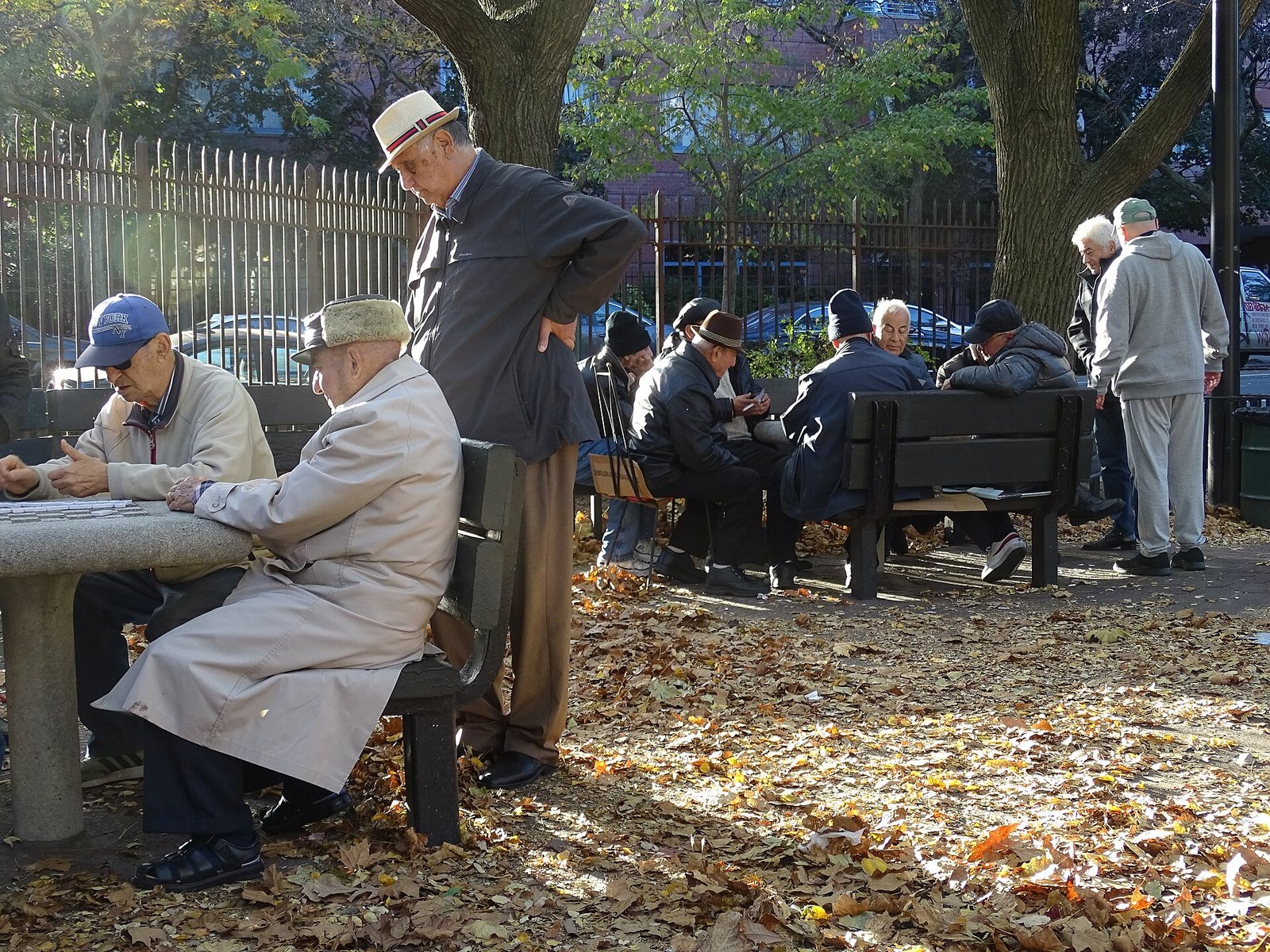
We talk a lot about protecting the brain with crosswords, diet, and exercise. All of that matters. But one of the most powerful protectors against dementia gets almost no airtime — and it’s not a pill, a puzzle, or a superfood. It’s other people.
If you’ve grown more isolated over the years — a partner lost, friends moved or passed, kids busy with their own lives, days that pass without a real conversation — this matters more than you’ve been told. Loneliness isn’t just painful. It’s a genuine risk factor for your brain.
What the science actually says
In 2024, the Lancet Commission on dementia — the most authoritative review of its kind — identified 14 modifiable risk factors that together account for nearly half of the world’s dementia cases. Alongside the ones you’d expect, like hearing loss, high blood pressure, and inactivity, sits social isolation. It’s on the list not because someone thought it sounded nice, but because the evidence keeps pointing the same way.
An earlier meta-analysis pulling together many studies found that poor social connection — loneliness, isolation, few relationships — was associated with a meaningfully higher risk of developing dementia. Your brain, it turns out, is a social organ. Conversation, shared plans, and being counted on all keep it working in ways solitude never can.
Every real conversation is a workout for your brain. You can’t do that one alone.
Why connection protects the brain
Think about what a genuine social interaction demands. You listen, remember, respond, read a face, recall a shared history, hold a thread of conversation. That’s your memory, attention, and reasoning all firing at once. Isolation removes that daily exercise — and it tends to drag depression, poor sleep, and inactivity along with it, each its own hit to the brain.
This is the good news hiding inside the bad: social connection is a risk factor you can actually do something about. You can’t change your genes. You can change whether you have lunch with a friend this week.
How to rebuild connection after 50
It doesn’t require becoming a social butterfly. It requires small, repeated contact:
- Anchor one standing date. A weekly coffee, walk, or phone call with the same person beats scattered good intentions.
- Join something that meets regularly — a class, a walking group, a card game, a place of worship, a volunteer shift. Regular is what matters.
- Pair it with movement. A walking buddy protects your brain twice — connection and exercise in one.
- Be the one who reaches out. Most people are waiting to be invited. Be the inviter. Make the call you keep meaning to make.
If you’ve drifted into isolation, know that it happened quietly and can be reversed the same way — one small connection at a time. You don’t need a crowd. You need a few people you see and talk to regularly.
Protecting your mind isn’t only about what you eat or how you move. It’s about staying in the game with other people. Start this week: make one plan, with one person, and put it on the calendar.
And if you’d like a simple, encouraging way to get moving — ideally with a friend — grab my free 5-Day Fit & Strong Reset. Download it here and take the first step together.
The Solitude Trap: How Isolation Quietly Compounds
One of the harder things to accept about social isolation is that it tends to make itself worse. When you stop seeing people regularly, the small social muscles start to atrophy. Conversations that used to feel easy begin to feel like more effort. Reaching out feels awkward when you’ve been out of contact for too long. So you wait for the right moment, and the wait gets longer. This is not a character flaw — it is a well-documented psychological loop. Isolation erodes the confidence and momentum that social engagement requires, which makes further isolation more likely.
There’s also the practical dimension: when older adults lose a spouse or retire, the built-in social scaffolding of daily life collapses. The regular contact that came automatically through work, shared household responsibilities, or neighborhood routines simply disappears. What looked like a social life turns out to have been a life structured around roles that no longer exist. Without intentional replacement, the void fills with solo hours and screens.
Understanding this isn’t about assigning blame. It’s about recognizing that rebuilding connection after a period of isolation almost always requires deliberate structure. It doesn’t happen organically the way it did at 30. You have to plan for it the way you’d plan a medication regimen or a physical therapy schedule — because in terms of brain health, the evidence suggests that’s exactly what it is.
What Actually Counts as Connection
Not all social contact is created equal when it comes to brain protection. Passive exposure to people — being in a coffee shop, watching TV programs with social content, scrolling through social media — provides almost none of the cognitive benefit of genuine interaction. What the brain benefits from is active engagement: listening and responding in real time, tracking the thread of a conversation, managing the subtle social cues of tone and expression, recalling shared history.
This matters because it is easy to feel socially connected while still being neurologically understimulated. A retired person who watches six hours of television in a day and sends a few text messages has technically been exposed to many words and faces — but the cognitive demands of active social exchange are largely absent. The difference is not trivial: research on social cognition suggests that real-time face-to-face interaction, and to a lesser degree phone calls, engage the prefrontal cortex, hippocampus, and language-processing regions in ways that passive media consumption simply does not.
Video calls occupy a middle position — better than text, comparable to phone calls in some respects, though still missing the full richness of physical presence. In-person contact, particularly in emotionally meaningful relationships, remains the gold standard. That said, regular phone calls with someone you care about are not nothing. For people with mobility limitations or who live in rural areas, they can constitute a meaningful and protective form of connection when they happen consistently.
The Neuroscience in Plain Terms
Here is what is happening inside the brain when connection protects it. Social interaction requires the simultaneous activation of multiple cognitive systems. The prefrontal cortex handles the higher-order processing of social rules, turn-taking, and managing the competing demands of listening and planning what to say next. The hippocampus retrieves memories of shared experiences that give conversation its depth and continuity. The amygdala processes emotional tone. The language network — Broca’s and Wernicke’s areas — handles the production and comprehension of speech at the rate of roughly 150 words per minute.
All of this happens in parallel, effortlessly, in a normal conversation — and that simultaneous activation is precisely what makes conversation so cognitively valuable. It is, in a very real sense, a whole-brain exercise. The more consistently the brain is called upon to perform this coordinated task, the more robust the underlying neural networks remain. Conversely, when that activation is absent for extended periods, the networks that support social cognition show reduced efficiency on neuroimaging studies. Use it or lose it applies as directly here as it does in physical conditioning.
There is also an inflammatory pathway worth noting. Chronic loneliness is associated with elevated levels of inflammatory markers, including CRP and IL-6. Neuroinflammation is increasingly recognized as a key mechanism in the progression of Alzheimer’s disease. The connection between social isolation and dementia risk is not purely behavioral — there are underlying biological pathways, which is part of why the effect shows up so consistently across populations and study designs.
What to Expect When You Start Reconnecting
If you have been genuinely isolated for a period of months or years, re-engaging socially may feel uncomfortable before it feels good. That awkwardness is real and is worth naming because many people interpret it as a sign that they are ‘not a social person anymore’ and pull back. The more accurate interpretation is that social confidence is a skill that requires practice to maintain, and like any skill, it comes back with repetition.
The research on social reconnection in older adults suggests that the benefits accumulate over three to six months of consistent engagement. Mood typically improves first, within the first few weeks. Cognitive sharpness — the subjective experience of feeling more mentally quick and engaged — tends to follow. The structural brain benefits, to the extent they can be measured, emerge over longer timescales, which is precisely why starting before there is an obvious problem matters so much more than starting afterward.
One realistic goal: by the end of a month, have at least two standing social commitments in your calendar that happen every week without requiring you to decide to attend each time. Reduce the friction, automate the presence, and let the benefit accumulate. That is the core strategy, and it is simpler than most people expect.
Sources
Livingston G, et al. — “Dementia prevention, intervention, and care: 2024 report of the Lancet standing Commission” — The Lancet, 2024 — thelancet.com
Kuiper JS, et al. — “Social relationships and risk of dementia: A systematic review and meta-analysis” — Ageing Research Reviews, 2015 — pubmed.ncbi.nlm.nih.gov
Image credit: Cover — older adults playing board games, by Adam Jones, CC BY 2.0, via Wikimedia Commons.