

You’ve probably written walking off. It doesn’t feel like “real” exercise — no sweat dripping on a gym floor, no barbell loaded up, no app telling you that you crushed it. I get it. I spent decades thinking the same way, chasing heavier weights and harder sessions, right up until my shoulders and rotator cuffs told me otherwise. What brought me back from years off wasn’t some elite program. It was walking, consistently, before anything else.
Here’s what I wish someone had told me thirty years ago: walking is not the consolation prize of fitness. It’s one of the most studied, most protective things you can do for your body after 50, and the research backs it up in a way that should make you rethink what “counts.” If you’re sedentary right now, or if you’ve tried other things and quit, walking is where this story starts — and it might be where everything else starts too.
The Numbers Are Not Subtle
A large study following adults with diabetes found that those who walked at least a mile a day were half as likely to die from any cause, and less than a fifth as likely to die from non-heart-related cardiovascular disease, compared to those who didn’t walk at all. Even among people 85 and older, just one hour of walking a week was tied to a lower risk of death and cardiovascular disease compared to those who stayed sedentary.
Pace matters too. Research comparing walking speeds found that brisk walkers had a 38% (men) to 53% (women) lower risk of dying from cardiovascular disease compared to slow walkers. You don’t need to run. You need to walk like you have somewhere to be.
A 2023 review in GeroScience examined the health benefits of walking across populations — including the famous Blue Zones where people live to 100 — and found walking to be one of the most reliable common threads. Not structured gym workouts, not running, not supplements. Walking, as a daily habit embedded in life. The research is consistent enough that walking is no longer just “a nice thing to do.” It is a medical intervention you can start this afternoon without a prescription.
You don’t need permission to start. You don’t need the right shoes, the right playlist, or the right weather. You need one foot in front of the other, today.
What Walking Actually Does Inside Your Body
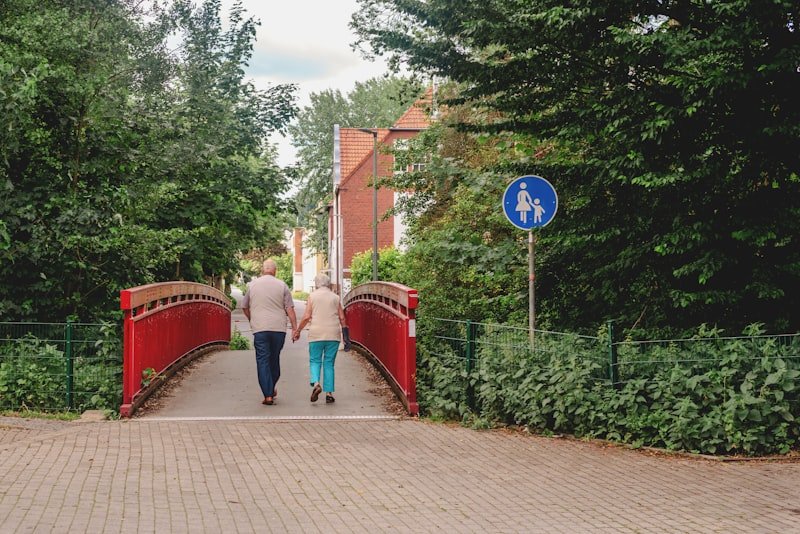
When you walk at a brisk pace, your heart rate rises, your large muscle groups activate, and your body starts burning fuel more efficiently. Over time, consistent walking lowers resting blood pressure, improves the elasticity of your blood vessels, and helps your heart pump more blood with each beat. These are the kinds of structural changes that protect you from heart attacks and strokes — not just tomorrow, but for years.
Blood sugar regulation is another major benefit that doesn’t get enough attention. When your leg muscles contract during a walk, they pull glucose out of your bloodstream for fuel — without requiring insulin to do it. This is why a 15-minute walk after a meal can dramatically flatten the blood sugar spike that would otherwise follow. For adults managing or trying to prevent Type 2 diabetes, this single habit is worth more than most people realize.
Walking also preserves something most sedentary adults are quietly losing: muscle and bone density. It’s not as dramatic as lifting weights, but the impact loading from walking — each step your heel strikes the ground — sends a mild mechanical signal to your bones that tells them to stay dense. That signal matters after 50, when bone remodeling naturally slows. Your joints benefit too. Contrary to the old idea that walking “wears out” your knees, research shows that regular moderate walking actually maintains cartilage health by promoting circulation in the joint tissue.
And then there’s the brain. Studies have repeatedly linked regular walking to improved executive function, better memory recall, and a reduced risk of dementia. Walking increases blood flow to the prefrontal cortex, stimulates the release of brain-derived neurotrophic factor (BDNF) — essentially a growth protein for your neurons — and reduces cortisol levels, the stress hormone that, when chronically elevated, accelerates cognitive decline.
Why This Actually Works for You
If you’re sedentary right now, walking solves the problem that kills most fitness plans before they start: it’s too easy to skip. There’s no gym bag, no drive, no intimidation factor, and no coach who expects you to show up. You can do it in your living room, around your block, or in a mall if the weather’s bad.
That accessibility is the whole point. The “perfect” workout you never do loses to the “good enough” workout you actually finish — every time. Walking is also one of the only forms of exercise that doesn’t require a recovery day. Because it’s low impact and doesn’t tax your central nervous system the way intense training does, you can walk every day without digging yourself into a hole. That consistency is exactly what produces long-term change.
Walking after years of being sedentary also does something weightlifting can’t do safely for most people just starting out: it builds a cardiovascular base without punishing joints that aren’t ready for impact yet. Your tendons, ligaments, and connective tissue adapt more slowly than your muscles do. Walking gives them time to catch up before you start asking more of your body.
The Obstacles People Use to Avoid Starting
“My knees hurt.” This is the most common one, and it’s often the one thing people think disqualifies them. In most cases, it’s actually the opposite. Mild to moderate knee pain — the kind that comes from arthritis or years of inactivity — typically improves with walking, not worsens. Movement is what lubricates the joint. Sitting is what stiffens it. Start shorter, walk on softer surfaces, and build gradually. Check with your doctor if you’ve been told to avoid weight-bearing activity specifically.
“I don’t have time.” A 10-minute walk after dinner is enough to start changing your blood sugar response and building the habit. You don’t need 30 minutes on day one. You need consistency over weeks, and the time required for that is smaller than most people think.
“It won’t do anything.” That belief is the most damaging one, and it’s also the one most directly contradicted by the research. The data on walking for adults over 50 is not ambiguous. The improvements in cardiovascular health, blood sugar, brain function, and mortality risk are not marginal. They are substantial, documented, and reproducible.
How to Actually Do This
Start where you are, not where you think you should be. If that’s five minutes around the block, that’s your starting line — not your ceiling.
- Aim to build toward 30 minutes of brisk walking, five days a week — that’s the threshold tied to real reductions in age-related disease risk.
- Brisk means you can talk, but singing is a stretch. If you’re strolling, pick up the pace a notch.
- Walk after meals when you can. It’s a small habit with an outsized payoff for blood sugar control.
- Track consistency, not intensity, for the first month. Four short walks beat one “perfect” long walk you never repeat.
- Add hills or slight inclines when flat walks start feeling easy. Grade increases intensity without adding joint stress the way running does.
- Use a simple pedometer or your phone’s built-in step counter. Seeing the numbers creates accountability without requiring a coach.
I still walk most mornings. It’s not glamorous. It doesn’t look impressive on a fitness app. But it’s the one thing that’s been consistently sustainable, and I’m convinced it’s the reason I can still do everything else without pain.
What to Expect in Your First Month
The first week, you may not feel much different. That is normal. Walking works by creating cumulative adaptations in your cardiovascular system and metabolism, and those adaptations take two to three weeks to become noticeable. What you will notice right away is that you slept better on days you walked, that your mood was slightly better, and that getting started the next morning felt marginally easier than it did the day before.
By the end of week two, most people report that their pace feels more natural and that the same distance takes less perceived effort. That is your aerobic base beginning to form. By week four, if you have been consistent three to five times per week, you will likely have measurable improvements in resting heart rate and a noticeable difference in how you feel climbing stairs or walking up a slight hill.
The month is not the destination. It is proof that you can do this, which makes everything that comes after it easier to build on.
Ready to build this into a real routine instead of a New Year’s resolution? Grab the free 5-Day Fit & Strong Reset at silverfitplus.com — it’s beginner-friendly and only needs a resistance band to get you moving the right way, starting today.
Sources
Williams, P.T. — “Walking Provides Strong Protection From Cardiovascular Disease Mortality in Older Adults With Diabetes” — American Journal of Medicine (via PMC) — https://pmc.ncbi.nlm.nih.gov/articles/PMC2542980/
Fukuoka Y., et al. — “Health Benefits of Daily Walking on Mortality Among Younger-Elderly Men” — Journal of Epidemiology (via PMC) — https://pmc.ncbi.nlm.nih.gov/articles/PMC4626390/
“The multifaceted benefits of walking for healthy aging: from Blue Zones to molecular mechanisms” — GeroScience, 2023 — https://pubmed.ncbi.nlm.nih.gov/37495893/