
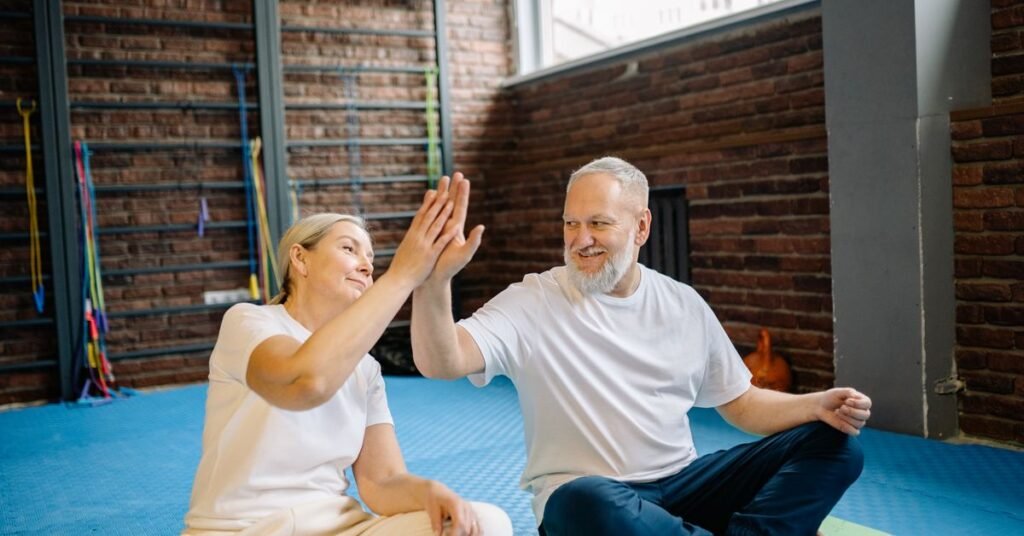
You’ve thought about it. Maybe more than once. You’ve sat in the parking lot, looked at the door, and driven home without ever walking in. Or you’ve never even gotten that far, because just picturing the room — the mirrors, the younger bodies, the equipment you don’t know how to use — was enough to talk yourself out of it before you left the house.
If that’s you, I want to say something plainly: that fear is common, it’s normal, and it has nothing to do with your worth or your ability to get stronger. It’s not weakness. It’s a completely rational response to walking into an unfamiliar space where you feel like you’ll be watched and judged.
I’ve spent 40 years in gyms, and I’ve watched grown adults — people who run companies, raise families, handle real hardship without blinking — freeze up at a gym door. It’s one of the most under-discussed barriers in fitness, and it hits adults over 50 especially hard, because so many of you are walking in after years away, into a space that’s changed since you last stepped foot in one.
I know this fear from the inside, too, just from a different angle. When I came back to training in my sixties after years off — my shoulders wrecked, sarcopenia already taking muscle I used to have — I wasn’t walking into a room full of strangers. I was walking back into my own body as a stranger. The equipment was familiar. What I could actually do with it wasn’t. That gap between what you remember being capable of and what you’re not sure you can do now is exactly what keeps so many people standing outside that door.
Why This Fear Is So Common After 50
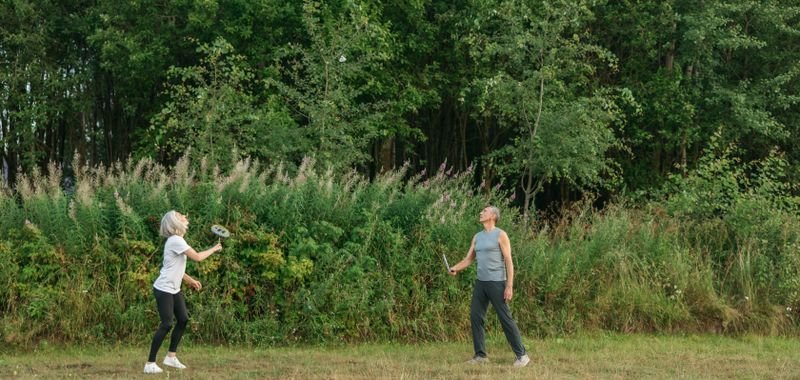
Researchers who study why older adults avoid exercise programs have found intimidation and embarrassment come up again and again as real, specific barriers. A study on physical activity program use among older adults found that many participants described feeling self-conscious about their appearance and abilities in gym settings, and some were discouraged by the competitive atmosphere or worried they wouldn’t be able to keep pace with everyone else.
That’s not a personal failing. That’s a documented, common experience. You are not the only person who has felt this.
Here’s what’s happening underneath it. When you haven’t exercised in years, you lose more than muscle — you lose your sense of what’s “normal” for your body to do. That uncertainty breeds fear: fear of looking foolish, fear of doing an exercise wrong, fear of getting hurt in front of strangers. Psychologists call this a self-efficacy gap — a loss of confidence in your own physical capability, separate from your actual physical capability.
The gym was never built to intimidate you. Your fear built that story, and you can build a different one.
The good news is that self-efficacy isn’t fixed. Research on older adults consistently shows that confidence in your ability to exercise is one of the strongest predictors of whether you’ll stick with it — and that confidence grows through small, repeated wins, not through forcing yourself into your worst fear on day one.
Researchers who study this describe it as a cycle: low confidence leads to avoidance, avoidance leads to more deconditioning, and more deconditioning further erodes confidence. The way out isn’t a pep talk. It’s breaking the cycle at the easiest point to break it — taking one small action that proves the fear wrong, even slightly, even for five minutes.
What’s Actually Happening in Your Body and Brain When You’re Anxious About This
Exercise anxiety isn’t just “in your head” in the dismissive sense people mean when they say that. It’s a real physiological response — elevated heart rate, tension, a mind racing through worst-case scenarios — triggered by a perceived social threat.
Here’s the part that should give you real hope: the very thing you’re afraid of is one of the most effective treatments for that fear. A 2024 meta-analysis of eleven randomized controlled trials involving older adults found that physical activity produced a significant reduction in anxiety symptoms, with a strong overall effect. Exercise doesn’t just build your body while you work up the nerve to face your anxiety — it actively lowers the anxiety itself, often within weeks of starting a consistent routine.
That’s the paradox. The thing you’re avoiding because it makes you anxious is the same thing that, done right, calms your nervous system down. You don’t have to wait to feel confident before you start. You start, and the confidence follows.
This is also why easing in matters more than gutting it out. If your very first experience is overwhelming — a crowded gym floor, a machine you don’t understand, a class moving too fast to follow — you’re not building the calming effect of exercise, you’re reinforcing the exact fear you walked in with. The goal isn’t to tough out a bad first experience. It’s to set up a first experience small enough that it can’t go badly.
How to Walk In Without the Overwhelm
You don’t have to solve this all at once. Here’s how to make the first steps smaller than the fear.
- Go at off-peak hours. Mid-morning on a weekday, most gyms are quiet — often populated by other adults over 50 doing exactly what you’re about to do. Fewer people means fewer eyes, real or imagined.
- Take a tour before you commit to a workout. Call ahead and ask for a walkthrough. Learning where things are and how machines work when nobody’s watching you learn removes most of the fear of “doing it wrong” in public.
- Start at home first. Building a baseline of strength and familiarity with basic movements before you ever set foot in a gym means you walk in already knowing your body can do this. That’s exactly what a program like the 5-Day Fit & Strong Reset is designed for.
- Bring a friend, or ask staff for a beginner orientation. Most gyms offer a free intro session. Use it. You are allowed to ask for help — that’s not a sign you don’t belong there, it’s how everyone starts.
- Pick one exercise, not a whole routine. Your first visit doesn’t need a full workout. Walk in, do one machine or one set of exercises you already practiced at home, and leave. You just proved to yourself the door isn’t locked.
None of this requires you to feel brave first. It requires you to do the smaller, manageable version of the scary thing, and let the confidence catch up afterward.
There’s also a simple, practical trick a lot of people never think of: wear something you’d wear to run errands, not workout gear that makes you feel like you’re supposed to already look like an athlete. And bring water and a small towel — small, ordinary props that make you look and feel like someone who belongs there, because you do.
Nobody in That Gym Is Watching You the Way You Think
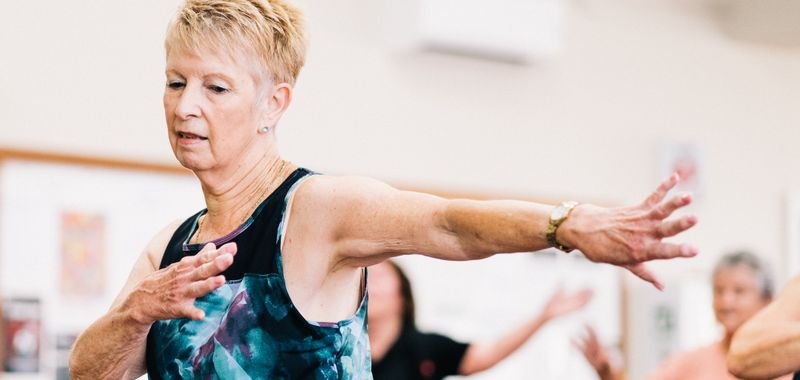
Here’s something I’ve learned after four decades of walking into gyms, watching thousands of people walk in for the first time: almost everyone is too focused on their own workout, their own form, their own effort, to be cataloguing yours. The room you’re afraid of is mostly populated by people who once stood exactly where you’re standing now, wondering the same thing.
And the people who do notice a new face over 50 walking in for the first time? In my experience, most of them are quietly rooting for you. They remember their own first day.
You don’t owe anyone a flawless first workout. You don’t owe anyone confidence you don’t feel yet. You owe yourself one thing: showing up anyway, even scared, even unsure, even after years of telling yourself you’d start “when you’re ready.” You’re not going to feel ready. Start anyway.
That’s not a cliché I picked up somewhere. It’s how I came back from years off after my shoulders gave out and sarcopenia had already taken hold. I didn’t feel motivated. I didn’t feel ready. I showed up anyway, and the motivation caught up with me weeks later, not before.
I also had to relearn my own body from scratch, training around pain-free angles instead of the way I used to lift at twenty. That meant a lot of humbling first days — lighter weights than I remembered, exercises I had to modify, moments where I felt like a beginner in a body I thought I already knew. None of that meant I didn’t belong in the gym. It meant I was exactly where I needed to be to build something real again.
Your First Step Doesn’t Have to Be the Gym Door
If the gym still feels like too big a first step, that’s fine. Start where the fear is smaller.
Vinny’s free 5-Day Fit & Strong Reset is built for exactly this — beginner-friendly movement you can do at home with nothing but a resistance band, so you walk into whatever comes next already knowing your body can do this. And when you’re ready for a complete plan, Build Strong After 50 lays out 12 weeks of joint-safe training, step by step, so nothing about getting started has to be a mystery. Visit SilverFitPlus.com to get started.