
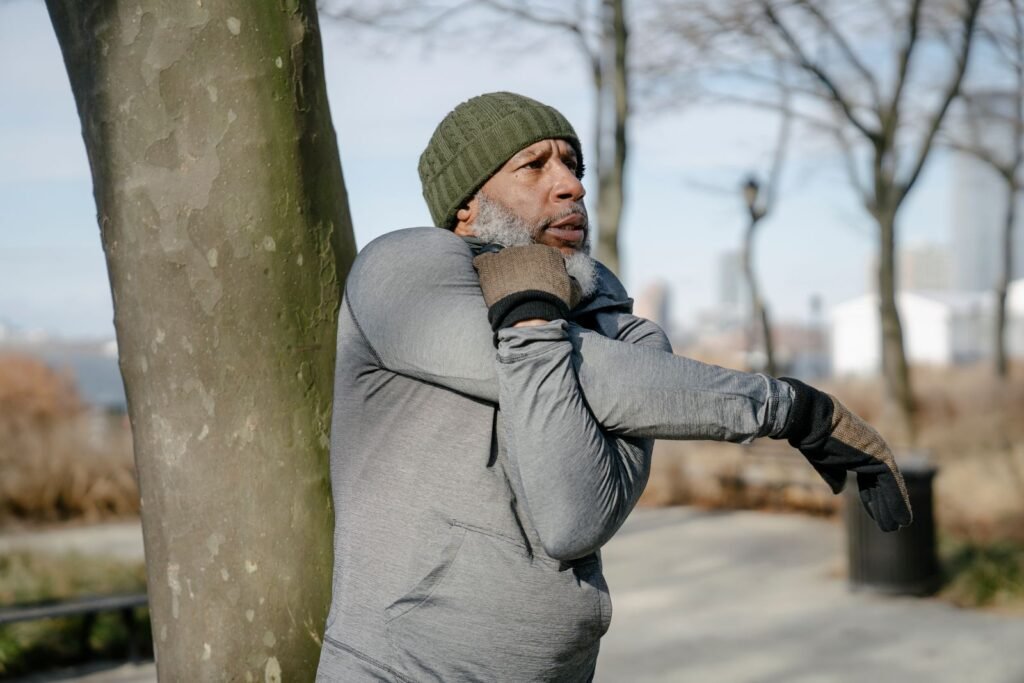
I was in my early forties the first time I felt something give in my shoulder. Not a pop, not a dramatic tear — just a dull warning ache that I decided to ignore, because that’s what you did back then. You pushed through. You trained under old-school bodybuilders who treated pain like weakness leaving the body, and you didn’t dare admit that something as small as a shoulder was slowing you down.
That decision cost me years. Bilateral shoulder arthritis. Torn rotator cuffs on both sides. A training career I loved, put on hold because I didn’t understand what was actually happening inside my own joints.
It wasn’t just the physical setback. It was the identity hit. I’d spent almost three decades as someone who trained hard, and suddenly I was someone who couldn’t lift a bag of dog food without wincing. Nobody warns you how much that changes how you see yourself.
If you’re 50 or older and your shoulder aches when you reach for something on a high shelf, or you’ve quietly stopped doing certain movements because they “just don’t feel right anymore,” I want to walk you through what’s actually going on — and what to do about it before it becomes what happened to me.
What the Rotator Cuff Actually Is (And Why It Fails Quietly)
Your rotator cuff isn’t one muscle. It’s a team of four small muscles and their tendons — supraspinatus, infraspinatus, teres minor, and subscapularis — that wrap around your shoulder joint like a sleeve. Their job is to hold the ball of your upper arm bone snugly in its shallow socket while your bigger, showier muscles do the heavy lifting.
Here’s the part nobody tells you: these muscles get thinner and less elastic with age, whether you notice it or not. A mass-screening study of 664 residents in one village, published in the Journal of Orthopaedics, found that full-thickness rotator cuff tears were present in 10.7% of people in their fifties, climbing to 15.2% in their sixties, 26.5% in their seventies, and 36.6% in their eighties.
The unsettling part isn’t just how common tears are. It’s that nearly two-thirds of all tears found in that study caused no symptoms at all. Your shoulder can be quietly failing you for years before it ever announces itself with pain.
That’s exactly what happened to me. By the time I felt real pain, the damage wasn’t new — it had been building for a long time.
The “Push-Through” Mistake That Made Things Worse
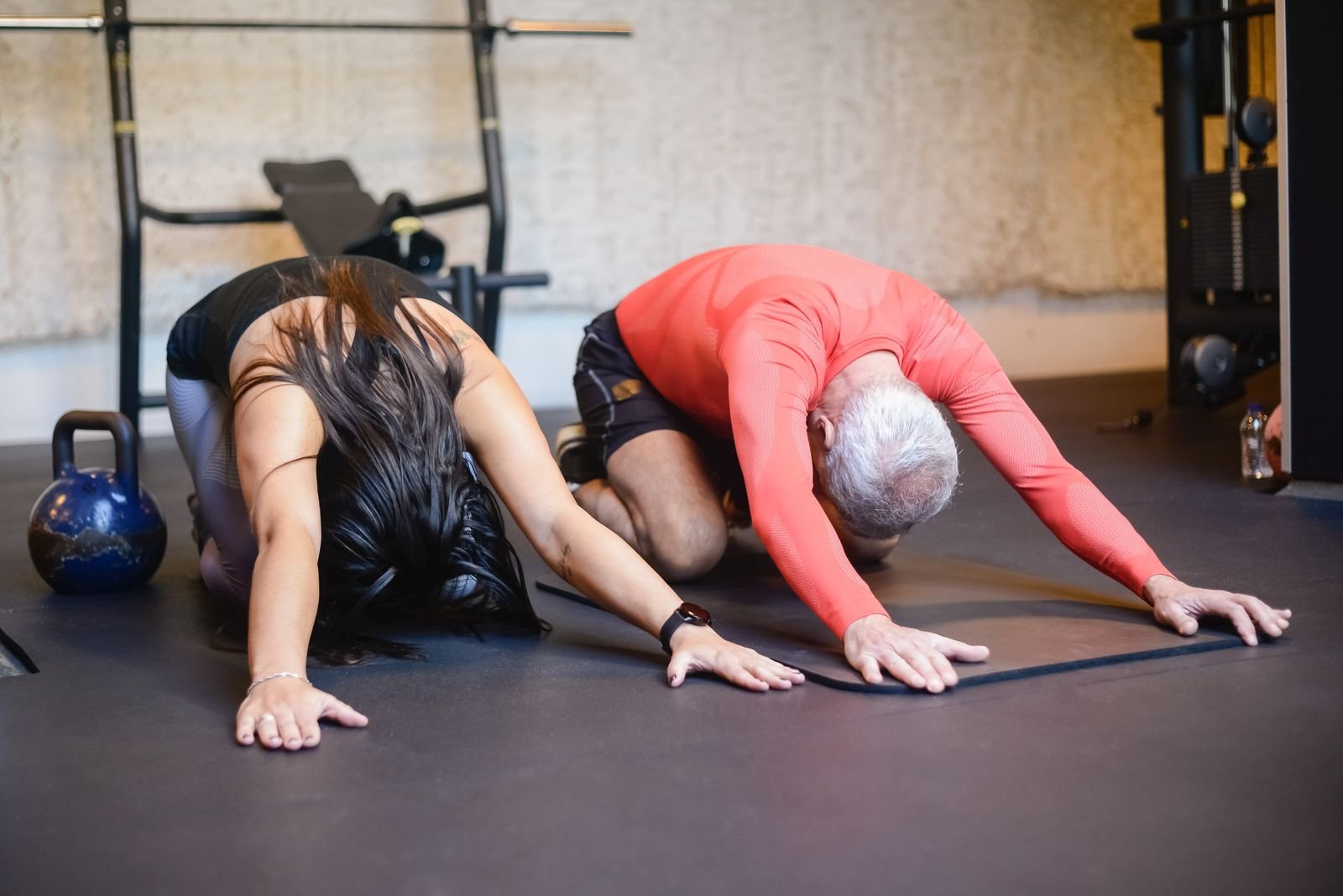
I trained the way most people my generation did: if it hurt, you worked around it, iced it, and got back under the bar the next day. Nobody talked about tendons needing recovery time the way muscles do. Nobody talked about protecting a joint proactively, only about fixing it after it broke.
That mindset is precisely backwards for a shoulder. Tendons have far less blood flow than muscle, which means they heal slower and get angrier when you keep irritating them. Pushing through shoulder pain doesn’t build resilience — it just adds damage on top of damage until something finally gives.
The strongest shoulder isn’t the one that ignores pain. It’s the one trained smart enough to never have to.
This is the single biggest shift I’d ask you to make if you take nothing else from this article: stop treating shoulder discomfort as something to grind through. Start treating it as information.

How to Actually Protect It — Pain-Free Angles, Not Avoidance
Here’s what surprised me most when I finally started rebuilding: avoiding the shoulder entirely was just as wrong as pushing through pain. The answer isn’t rest. It’s smarter movement.
A systematic review and meta-analysis published in Musculoskeletal Science and Practice looked at people with large to massive rotator cuff tears — the kind many assume require surgery — and found that structured exercise therapy produced improvements in quality of life, disability, and pain that were comparable to surgical repair. Movement, done correctly, is medicine here. Not a last resort.
The key phrase is “done correctly.” That means working within pain-free ranges of motion rather than forcing a stretch or lift because it “used to” feel fine. Mayo Clinic’s guidance on rotator cuff exercises consistently emphasizes controlled, low-resistance movements — think gentle external and internal rotations with a light resistance band, not heavy overhead presses — as the safest way to strengthen the cuff without aggravating it.
A few practical starting points I use with clients who are exactly where you might be right now:
- Begin every shoulder session with 5 minutes of arm circles and gentle pendulum swings to get blood into the joint before loading it.
- Use a light resistance band for external rotation drills — elbow tucked at your side, forearm rotating outward — rather than jumping straight to dumbbells.
- Never train through sharp, pinching pain. Dull fatigue is normal. A pinch or catch is your body telling you to change the angle, not push harder.
- If overhead movements bother you, train the same muscles from a lower angle first. There’s no rule that says you have to reach for the top shelf to get stronger.
None of this requires a gym membership or fancy equipment. It requires patience and a willingness to listen to your body instead of overriding it.
I also learned to respect the warm-up in a way I never did in my thirties. Cold tissue is stiff tissue, and stiff tissue tears easier. Five minutes of deliberate, gentle movement before any shoulder work isn’t optional anymore — it’s the price of admission. I do it before I pick up a single band or dumbbell, every time, no exceptions.
One thing I had completely backwards for decades: I assumed the goal was always more weight, more reps, more intensity. With a rotator cuff, the angle you train at often matters more than how much resistance you’re using. Overhead pressing is one of the most common ways people aggravate an already-compromised shoulder, because it forces the joint into a position where there’s less room for the tendons to move freely.
Training the same muscles from a lower, more controlled angle — like a seated row or a low cable pull — builds real strength without putting the joint in that vulnerable position. This was the actual breakthrough for me. I didn’t need to stop training my shoulders. I needed to stop training them the way I did at 25.
Building It Back Without Re-Injury
Coming back from shoulder trouble in my sixties taught me something I wish I’d known at forty: consistency beats intensity every single time with a joint like this. Two or three short sessions a week of controlled, pain-free strengthening will do more for your shoulder over six months than one brutal session that flares things up and sets you back three weeks.
Progress with a rotator cuff is quiet. You won’t feel dramatically stronger after one workout. You’ll notice it in small ways first — reaching into the back seat of the car without that twinge, sleeping on your side again without waking up at 3 a.m., carrying a grocery bag without bracing for pain. Those are the wins that matter.
Sleep, honestly, is where a lot of people feel shoulder trouble the most and think about it the least. If you’re a side sleeper and one shoulder aches every morning, try a pillow between your arm and your torso to keep the joint from collapsing into an awkward internal rotation for eight hours straight. It sounds too simple to matter. It matters.
Keep a simple log, even if it’s just notes on your phone: what exercises you did, what resistance you used, and how the joint felt afterward, not just during. Shoulders have a habit of feeling fine in the moment and complaining twelve hours later. That delayed feedback is exactly why so many people re-injure themselves — they judge a session by how it felt at the time, not by how it felt the next morning.
If you’re dealing with existing shoulder pain, arthritis, or a suspected tear, please loop in a physical therapist or physician before starting anything new. What I’m describing here is a general, cautious approach — not a diagnosis, and not a replacement for someone who can actually look at your shoulder and tell you what’s going on inside it.
But if your shoulder is just achy, stiff, or “not what it used to be,” you don’t have to accept that as permanent. You don’t have to wait until it’s a full tear, either. The best time to protect a rotator cuff is before it needs protecting — and the second-best time is right now.
I spent years sidelined because I didn’t know any of this. You don’t have to.
If you’re ready to start moving again — safely, at your own pace, with a plan built for joints that have some mileage on them — download my free 5-Day Fit & Strong Reset. All you need is a resistance band and 20 minutes a day. Visit SilverFitPlus.com to grab it.
Sources
- Minagawa H, Yamamoto N, Abe H, Fukuda M, Seki N, Kikuchi K, Itoi E — “Prevalence of symptomatic and asymptomatic rotator cuff tears in the general population: From mass-screening in one village” — Journal of Orthopaedics, 2013 — https://pubmed.ncbi.nlm.nih.gov/24403741/
- Fahy K, Galvin R, Lewis J, Mc Creesh K — “Exercise as effective as surgery in improving quality of life, disability, and pain for large to massive rotator cuff tears: A systematic review & meta-analysis” — Musculoskeletal Science and Practice, 2022 — https://www.sciencedirect.com/science/article/pii/S2468781222000972
- Mayo Clinic — “Rotator Cuff Exercises” — Mayo Clinic Patient Care & Health Information — https://www.mayoclinic.org/rotator-cuff-exercises/img-20142222