

In my early sixties, I noticed something that scared me more than any injury ever had. I hadn’t stopped training. I was still showing up. But my arms looked smaller. My grip felt weaker opening jars. Clothes that fit a year earlier hung differently on me.
I later learned there’s a name for what I was experiencing: sarcopenia, the age-related loss of muscle mass and strength. And underneath it, for men specifically, there’s often another quiet culprit working against you — declining testosterone.
What made it worse was the confusion. I’d spent 40 years in this field. I knew how to build muscle. And still, for a while, I couldn’t tell if what was happening to me was normal aging, something medically wrong, or a sign I should just accept a smaller version of myself. That confusion is exactly where I meet most of the men I train now.
If you’re a man over 50 and you’ve noticed your strength slipping even though you haven’t necessarily gotten lazier, you’re not imagining it, and you’re not broken. Something real and measurable is happening in your body. The good news is that it responds to the right kind of effort, at any age.
What’s Actually Happening to Your Muscle After 50
Muscle loss doesn’t wait for a milestone birthday. Research on human skeletal muscle aging shows that after roughly age 30, muscle mass declines at a rate of about 3 to 8 percent per decade, and that decline accelerates after age 60. Strength fades even faster than size — some estimates put strength loss at 2.5 to 4 percent per year once you’re past your mid-seventies.
Testosterone plays a direct role in this for men. It’s not just the hormone associated with libido or aggression that pop culture likes to joke about. Testosterone supports protein synthesis in muscle tissue, meaning it directly affects your body’s ability to build and maintain the muscle you already have.
As testosterone gradually declines with age, that muscle-building signal gets quieter. Combine a quieter hormonal signal with a less active lifestyle — which happens to almost everyone as work, family, and just plain fatigue eat into the time you used to spend moving — and you get a slow, invisible slide that most men don’t notice until their pants don’t fit the way they used to, or they can’t do something physical they used to take for granted.
There are other factors quietly compounding the problem, too. Poor sleep suppresses testosterone production — most of it is released during deep sleep, so chronically short or fragmented nights work directly against you. Carrying extra body fat, especially around the midsection, is linked to lower testosterone levels as well, creating a frustrating cycle where low muscle and hormone levels make it easier to gain fat, which further suppresses the hormone that would help you build muscle back.
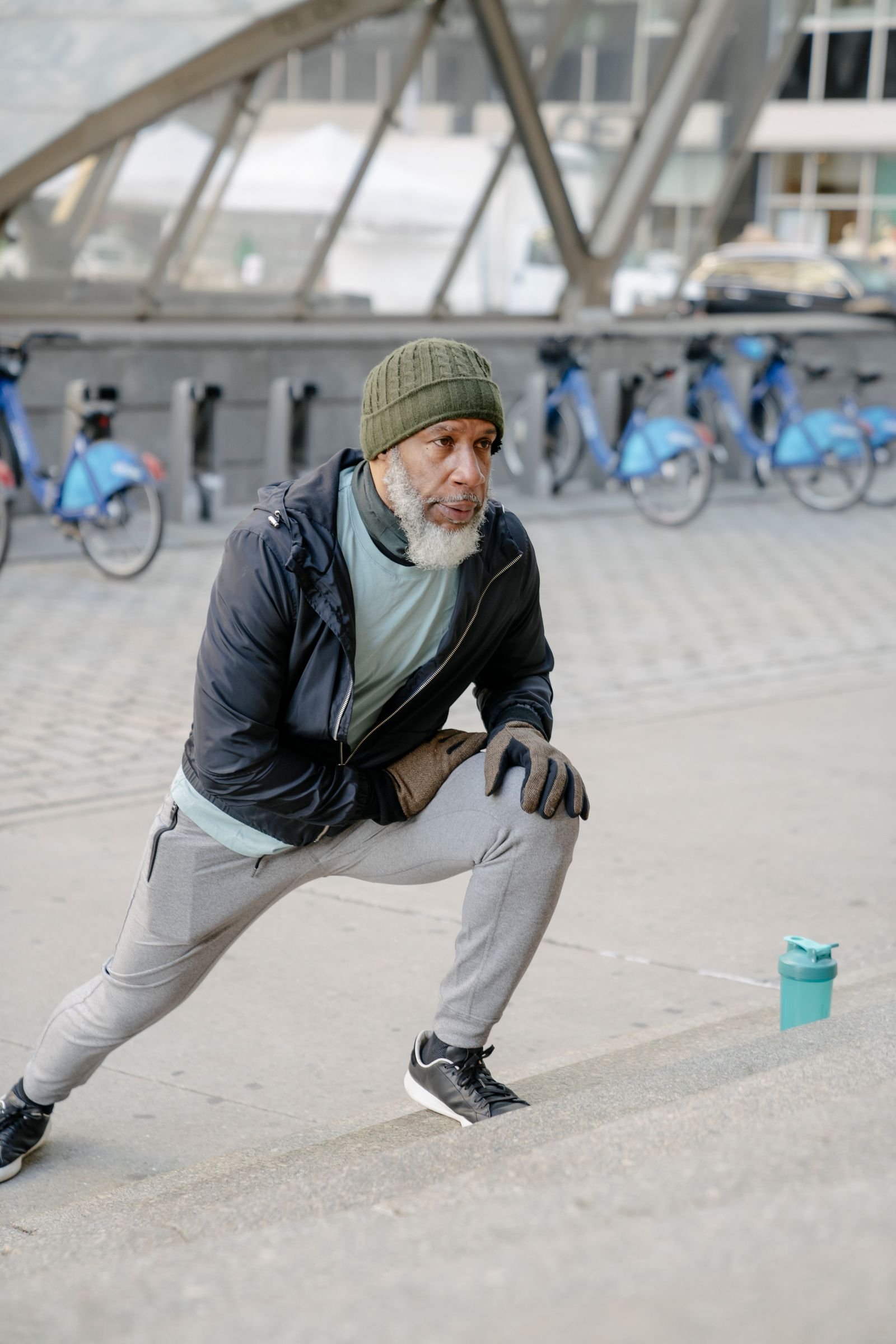
Why “Just Getting Older” Isn’t the Full Story
Here’s where I want to push back on the resignation I hear constantly from men my age: “It’s just what happens when you get older.” That framing lets you off the hook in the worst way, because it implies there’s nothing to be done.
There is something to be done. Muscle tissue remains remarkably responsive to the right stimulus well into your seventies and eighties. Your hormone levels may be lower than they were at 30, but your muscle fibers haven’t forgotten how to grow when you challenge them.
You didn’t lose your strength overnight, and you’re not going to get it back overnight either — but every rep you do today is a vote for the body you want in ten years.
The mistake isn’t aging. The mistake is assuming aging means surrender.
There’s also a quieter, more emotional layer to this that men don’t talk about enough. A lot of guys tie their sense of self to physical capability — being the one who carries the heavy boxes, who doesn’t need help, who’s still strong. When that capability starts slipping, it doesn’t just feel like a physical loss. It feels like losing a piece of who you are. I’m not going to pretend that’s a small thing. But I will tell you that piece of your identity is more recoverable than you think, and it doesn’t require becoming who you were at 30. It requires becoming strong for who you are now.
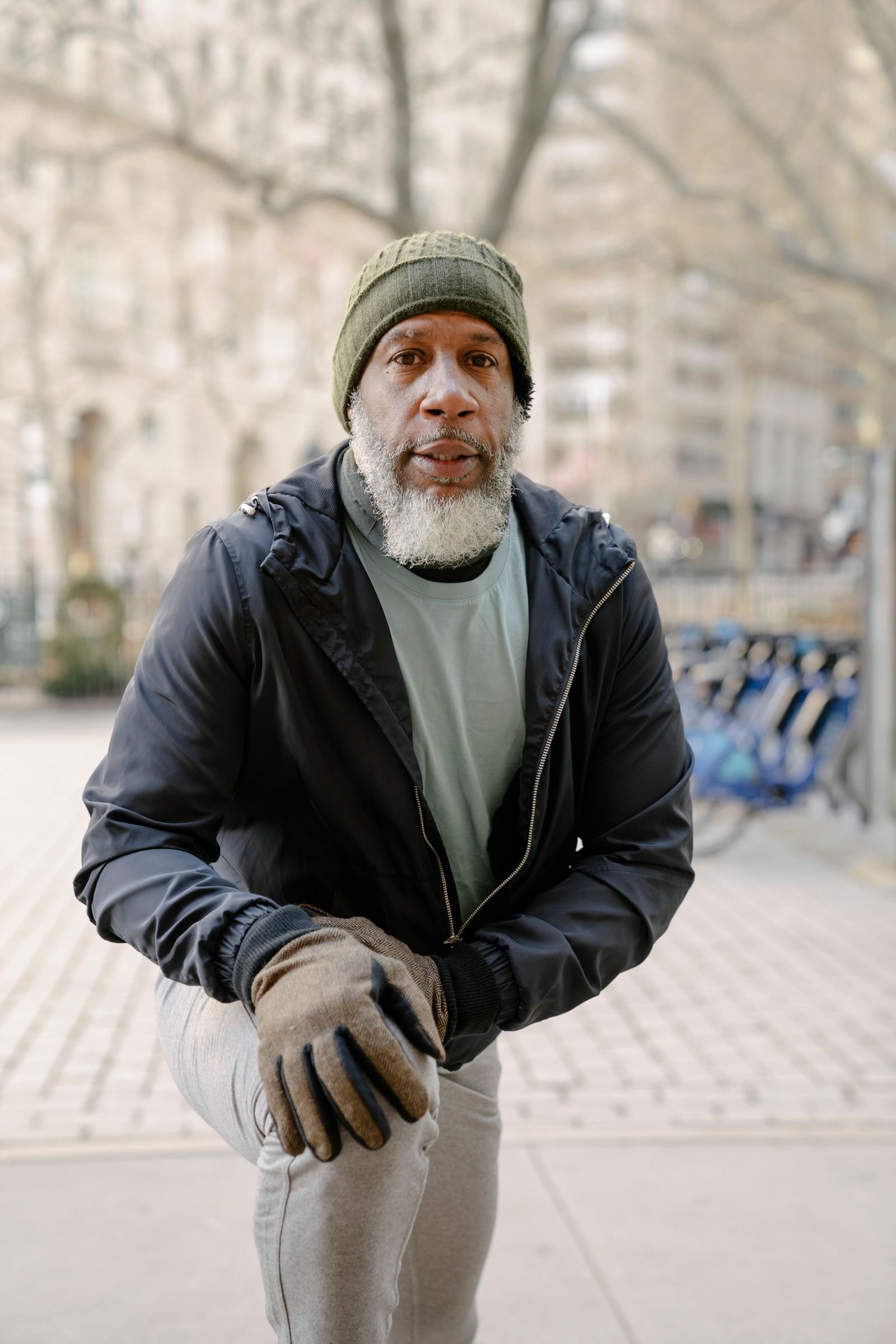
What the Research Actually Shows Resistance Training Can Do
This isn’t just motivational talk — it’s backed by real clinical research. A randomized controlled trial published in The Aging Male followed 148 older men, age 70 and above, who had low testosterone and mobility problems. Participants were split into four groups: testosterone therapy alone, progressive resistance training alone, both combined, or neither.
At the one-year follow-up, the men who did progressive resistance training saw meaningful improvements in physical performance and reduced fatigue — and the combination of training with testosterone therapy produced even greater gains in fat-free mass and reduced fat mass than either intervention alone. The takeaway that matters most for you, though, is this: resistance training worked on its own. You do not need a prescription to start rebuilding muscle. You need a program that progressively challenges your muscles, applied consistently.
Progressive overload sounds technical, but it just means this: you gradually ask your muscles to do a little more over time, whether that’s more resistance, more reps, or better range of motion. It doesn’t require lifting anything heroic. It requires lifting something, regularly, and nudging that something upward as you’re able.
Protein matters here too, more than most men over 50 realize. Muscle protein synthesis becomes less efficient with age, meaning your body needs more dietary protein to build the same amount of muscle it once did with less. Spreading protein intake across your meals — rather than loading it all at dinner — gives your muscles a steadier supply of what they need to actually respond to the training you’re doing.
Building a Realistic Plan for Where You Are Right Now
I’m not going to tell you to run out and get your testosterone checked and start hormone therapy — that’s a conversation to have with your doctor if you’re genuinely concerned, and it’s a legitimate option for some men. What I want you to understand is that resistance training is available to you today, works independently of what your hormone panel says, and has research behind it showing real results even for men in their seventies with existing mobility problems.
Here’s how I’d suggest starting if you haven’t trained in years, or ever:
- Pick two to three days a week for strength work — not seven. Recovery is when the muscle actually rebuilds, and older muscle needs more of it, not less.
- Focus on compound movements that work multiple muscle groups: squats to a chair, push-ups against a wall or counter, rows with a resistance band. You get more out of your limited time and energy this way.
- Track something. Reps, resistance band color, how many push-ups you can do. If you’re not tracking, you can’t tell if you’re actually applying progressive overload — and that’s the variable that makes this work.
- Give it real time. The clinical trial I mentioned measured results at one year. Muscle rebuilding is a long game, not a two-week transformation.
- Protect your sleep like it’s part of the program, because it is. Aim for a consistent bedtime and a dark, cool room. This isn’t a minor lifestyle tip — it’s directly tied to the hormonal environment your muscles are trying to rebuild in.
- Don’t compare your week one to someone else’s year three, whether that’s a younger version of yourself or the guy at the gym who never stopped training. Your only competition is the version of you from last month.
I know the frustration of watching your body change in ways that feel out of your control. I lived it in my sixties, after four decades in this field, after thinking I understood my own body better than that. What got me back wasn’t a supplement or a hormone. It was showing up consistently and trusting that the process still worked, even though I was older than I’d ever been when I started it the first time.
There’s no version of this where you wake up one morning and it’s suddenly fixed. That’s not how muscle works at any age, and it’s especially not how it works once you’re past 50. What changes is the trajectory. Every session either adds to the slide or starts reversing it. There is no neutral option — you’re moving in one direction or the other, whether you’re paying attention or not.
It still works for you too. The only way to start when you’re not motivated is to do it anyway.
If you’re ready to start rebuilding real strength with a structured plan, download my free 5-Day Fit & Strong Reset — beginner-friendly, and all you need is a resistance band to get going. Ready for a complete plan? Check out Build Strong After 50, my 12-week, joint-safe strength program. Visit SilverFitPlus.com to get started.
Sources
- Mitchell WK, Williams J, Atherton P, Larvin M, Lund J, Narici M — “Sarcopenia, Dynapenia, and the Impact of Advancing Age on Human Skeletal Muscle Size and Strength; a Quantitative Review” — Frontiers in Physiology, 2012 — https://www.ncbi.nlm.nih.gov/pmc/articles/PMC3429036/
- Rasmussen RS, et al. — “Testosterone and resistance training improved physical performance and reduced fatigue in frail older men: 1 year follow-up of a randomized clinical trial” — The Aging Male, 2024 — https://www.tandfonline.com/doi/full/10.1080/13685538.2024.2403519
- Harvard Health Publishing — “Preserve Your Muscle Mass” — Harvard Health, Harvard Medical School — https://www.health.harvard.edu/staying-healthy/preserve-your-muscle-mass