
Most people talk about exercise after 50 like it’s only about your body. Stronger legs. Better balance. Lower blood sugar. All true, all important, and all beside the point on the days when getting off the couch feels impossible.
Here’s what almost nobody tells you up front: movement is one of the most effective tools you have for your mood, your anxiety, and your ability to feel like yourself again. Not as a side benefit. As a primary one, backed by research that stacks up against medication in a lot of cases.
I’ve watched this play out in my own life. When my shoulders fell apart in my early forties and I stopped training, I didn’t just lose strength. I lost the version of myself that felt capable and steady. Getting back into movement, slowly and on pain-free terms, gave me that back before it gave me my muscle back.
The Research Is Not Subtle About This
A major 2024 systematic review and network meta-analysis published in The BMJ looked at exercise as a treatment for depression across dozens of randomized controlled trials. The effect was substantial — comparable to, and in some analyses exceeding, the effect typically seen with psychotherapy or antidepressant medication, with researchers reporting a number needed to treat of under three, meaning roughly one in three people saw meaningful benefit directly attributable to exercise (Noetel et al., 2024).
Let that sit for a second. This isn’t a wellness blog claim. It’s a peer-reviewed analysis pooling results across a large body of clinical trials, published in one of the most respected medical journals in the world.
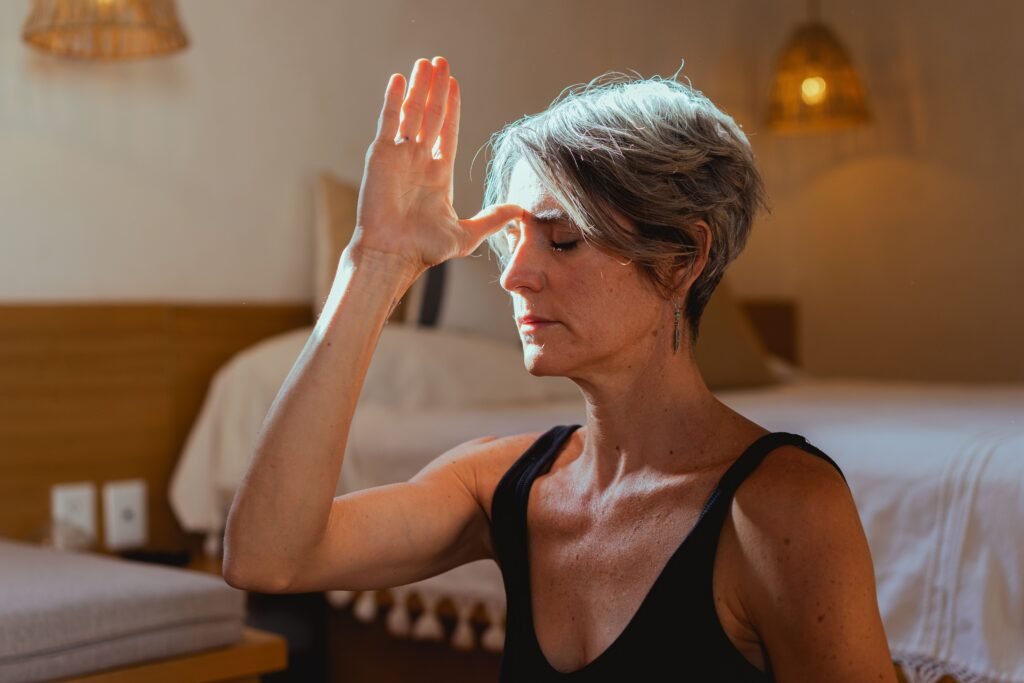
A separate systematic review and network meta-analysis focused specifically on older adults found that mind-body exercises — tai chi, qigong, yoga, and similar practices — significantly outperformed inactive control groups for reducing both anxiety and depressive symptoms, with tai chi ranking among the most effective options studied for both conditions (systematic review and network meta-analysis on mind-body exercise, 2024).
“You don’t need to feel motivated to start. You need to start, and the motivation shows up later — usually about ten minutes in.”
You don’t have to become a tai chi expert or train for hours to get these effects. The research is consistently clear that moderate, regular movement — walking, resistance training, structured group classes — produces real, measurable improvement in how people report feeling, not just how they perform physically.
[CONTENT_IMAGE_1]
Why Exercise Works on Your Mood When Nothing Else Seems To

Part of it is physiological. Movement changes brain chemistry — it influences serotonin, dopamine, and norepinephrine, the same systems targeted by many antidepressant medications, but through a mechanism your body already knows how to use.
Part of it is also structural. Depression and anxiety often shrink your world. You stop doing things, which gives you less to feel good about, which makes you want to do even less. It’s a downward spiral that has almost nothing to do with willpower and everything to do with how these conditions actually operate in your brain and your daily patterns.
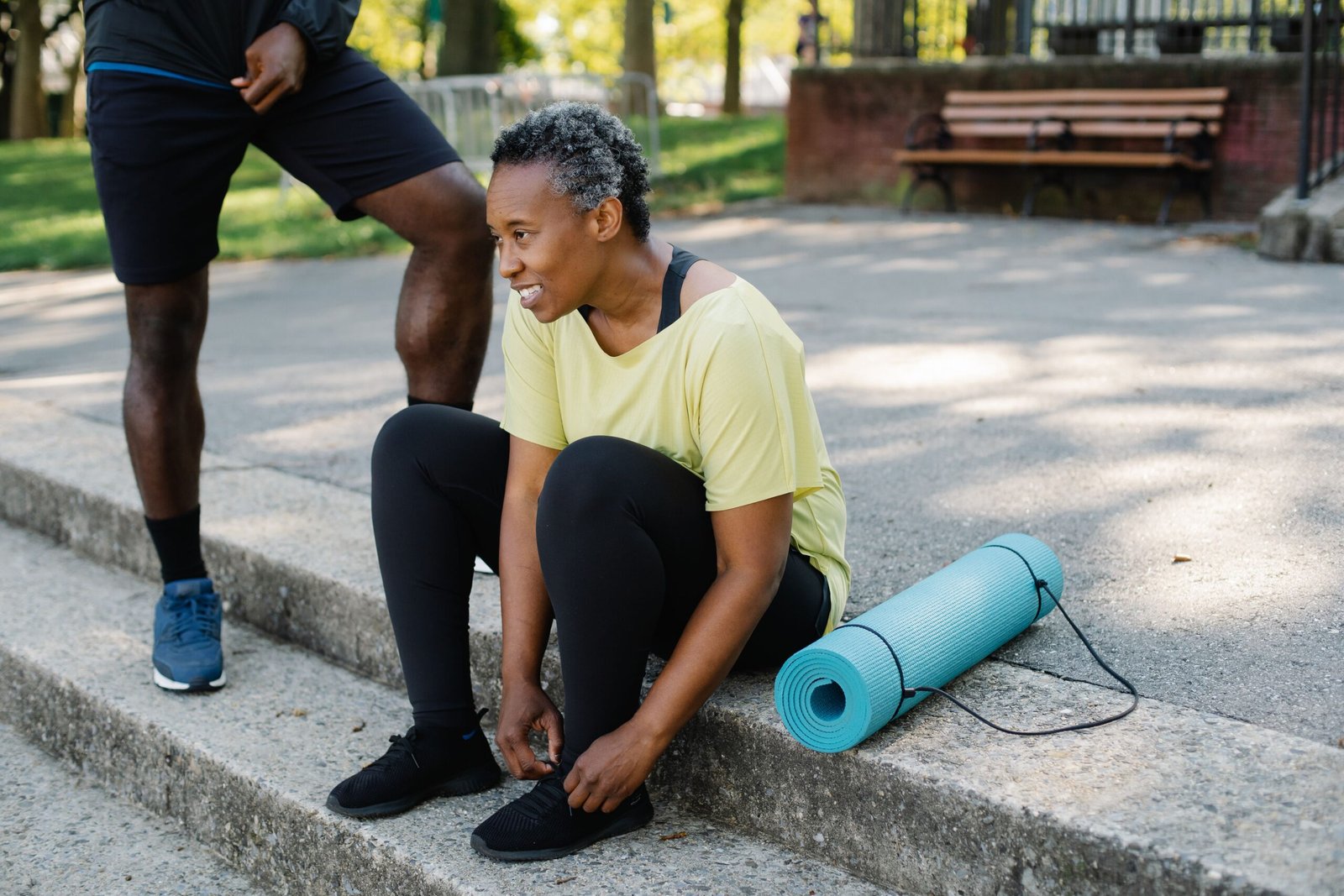
Exercise interrupts that spiral in a very physical, very concrete way. It gets you out of the house, gives you a small, achievable win, and creates a routine that isn’t dependent on how motivated you feel that morning. For a lot of people over 50 — especially those managing retirement transitions, loss, or the isolation that can creep in as social circles shrink — that routine matters as much as the biochemistry.
There’s also the sleep connection. Regular movement improves sleep quality, and poor sleep is one of the strongest known contributors to worsened mood and anxiety in older adults. Fix one, and you often start fixing the other without any extra effort.
None of this requires you to enjoy exercise, at least not at first. It requires you to do it anyway, on the days you don’t feel like it, because those are usually the days it matters most.
[CONTENT_IMAGE_2]
What This Actually Looks Like for Someone Starting From Zero
You don’t need a gym membership or a fitness tracker buzzing at you every hour. You need something simple enough that you’ll actually repeat it.
Start with a 15 to 20 minute walk, most days of the week. Not for your heart rate. Not for calories. For the simple act of getting outside, moving your body, and giving your brain a break from whatever loop it’s been stuck in.
Add two short sessions a week of basic resistance work — a resistance band, bodyweight movements, or light dumbbells. Strength training has its own well-documented mood benefits, separate from cardio, and it gives you something concrete to track and improve on, which matters when you’re rebuilding confidence along with muscle.
Consider a class or group setting if isolation is part of what you’re dealing with. A tai chi class, a walking group, a beginner strength class at a local community center. The social piece isn’t incidental — it’s doing real work alongside the exercise itself, and the research on mind-body practices in particular tends to involve group settings for exactly this reason.
It’s worth naming the fear a lot of people carry into this: showing up somewhere new, out of shape, and feeling judged by people who look like they’ve been doing this for years. That fear is common, and it’s rarely justified. Most people in a beginner class or a walking group are there for the same reason you are, and the ones who’ve been at it longer usually remember exactly what it felt like to start. If the fear of walking into a gym or a class is what’s actually stopping you, that’s worth naming honestly, because it’s solvable — starting at home with a resistance band or a walk around your own neighborhood removes that barrier entirely while you build confidence.
Give it four to six weeks before you judge whether it’s “working.” Mood changes from exercise tend to build gradually, not overnight, and the studies showing the strongest effects were built on weeks of consistent practice, not a single good workout.
A simple way to stay consistent is to stack movement onto something you already do. Walk while you listen to a podcast you were going to listen to anyway. Do your resistance band routine while dinner is in the oven. Attach the new habit to an old one instead of trying to carve out a completely separate block of willpower, which is the part most people run out of by week two.
It also helps to track how you feel, not just whether you showed up. A simple 1-to-10 mood check before and after a walk, jotted in a notebook or your phone, builds evidence you can look back on during the weeks when your brain insists none of this is working. Most people are surprised at how consistently the numbers move, even on days the walk itself felt unremarkable.
A Word on When to Get More Help
Exercise is a genuinely powerful tool, and the research backing it is real. It is not, on its own, a replacement for professional care if you’re dealing with persistent depression, anxiety that’s interfering with daily life, or thoughts that scare you.
Think of movement as one leg of the chair, not the whole chair. Use it alongside your doctor, a therapist, or medication if that’s part of your care plan. The strongest outcomes in the research tend to come from combining approaches, not choosing exercise instead of professional support when professional support is what’s actually needed.
If you’re not in that territory and you’re simply dealing with the low mood, low energy, and quiet dread that can creep in with age, isolation, or a body that doesn’t feel like it used to — movement is one of the most accessible, most researched tools available to you, and it’s available today, for free, starting with a walk around the block.
You Don’t Have to Wait to Feel Ready
Nobody feels ready. I didn’t feel ready when I came back from my own shoulder injuries in my sixties, dealing with the muscle loss that comes with years off. I did it anyway, because waiting for motivation to show up first has never worked for anyone I’ve trained in 40 years.
“The only way to start when you’re not motivated is to do it anyway.”
Your mood doesn’t need you to run a marathon. It needs you to move, consistently, in whatever small way you can manage this week. That’s the whole secret, and it’s simpler than the fitness industry wants you to believe.
If you want a structured, beginner-friendly place to start, my free 5-Day Fit & Strong Reset gives you five days of simple, guided movement using nothing but a resistance band — built for exactly the person who hasn’t moved much in a while and isn’t sure where to begin. Visit SilverFitPlus.com to get it and take the first step today, not once you feel like it.
Sources
Noetel, M., et al. — “Effect of Exercise for Depression: Systematic Review and Network Meta-Analysis of Randomised Controlled Trials” — The BMJ, 2024 — https://pmc.ncbi.nlm.nih.gov/articles/PMC11131084/
“The Effects of Mind-Body Exercise on Anxiety and Depression in Older Adults: A Systematic Review and Network Meta-Analysis” — 2024 — https://www.ncbi.nlm.nih.gov/pmc/articles/PMC10879425/
Centers for Disease Control and Prevention — “How Physical Activity Improves Mental Health” — CDC — cdc.gov