
Most nutrition advice for people over 50 is about eating less. Cut the sugar. Watch the portions. Skip the late-night snack. And for plenty of people, that’s fair.
But there’s a problem that almost nobody talks about, and it hits a lot of the folks I hear from: you’re not overeating. You’re barely eating at all.
Coffee for breakfast. Maybe half a sandwich around two. A small dinner you push around the plate. You’re not dieting, you’re just not hungry. And because nobody ever warned you about it, you figure that’s fine. Less food, less weight, right?
Here’s the truth. When your appetite fades and you stop eating enough, your body doesn’t just burn fat. It starts taking the muscle you need to get out of a chair, climb stairs, and carry your groceries. That’s the part nobody explains.
The Appetite Drop Has a Name, and It’s More Common Than You Think
Researchers call it the “anorexia of aging.” It has nothing to do with the eating disorder. It’s simply the gradual, age-related loss of appetite that sneaks up on a lot of us after 50 and picks up speed in our 60s and 70s.
A 2024 review by Natalie Cox in Clinical Interventions in Aging pulled together what we know. Somewhere between 11% and 28% of older adults living in the community show signs of it. In hospitals, that number climbs to as high as 60%. And it isn’t harmless. The review links it to malnutrition, sarcopenia (age-related muscle loss), weaker physical performance, and higher mortality.
So why does it happen? There isn’t one cause. It’s a pile-up of small changes:
- Your resting metabolism slows down, so your body sends weaker hunger signals.
- Your sense of taste and smell dulls, so food just isn’t as rewarding as it used to be.
- Your stomach empties more slowly, so you feel full sooner and stay full longer.
- Medications, dental problems, and digestive issues can all take the edge off your appetite.
- Eating alone, after a spouse passes or the kids move out, makes meals feel like a chore instead of an event.
Notice something about that list? Almost none of it is your fault. And almost none of it is something your doctor brings up during a ten-minute appointment, especially if your weight looks “normal” on the chart.
I learned this the hard way. When sarcopenia caught up with me in my early sixties, I had decades of training behind me, and I still got blindsided. You can’t build or keep muscle out of thin air. If the raw materials aren’t coming in, your body has to find them somewhere, and it finds them in you.
Why Eating Too Little Is a Muscle Problem, Not Just a Weight Problem
When you eat less than your body needs, especially less protein, your body starts breaking down muscle tissue to cover the gap. After 50, you’re already fighting a slow, natural decline in muscle mass. Undereating speeds that decline up.
And this is where it turns into a vicious circle. Less muscle means a lower metabolism. A lower metabolism means even less appetite. Less appetite means less food, which means even less muscle. Round and round it goes, and every lap makes you a little weaker.
That’s why the target for protein actually goes up as you get older, not down. In 2013, an international group of experts called the PROT-AGE Study Group published recommendations in the Journal of the American Medical Directors Association. They concluded that adults over 65 need at least 1.0 to 1.2 grams of protein per kilogram of body weight per day just to maintain and regain lean muscle and function. And if you’re active and exercising, they recommend 1.2 grams or more.
Let’s put that in real numbers. If you weigh 170 pounds, that’s about 77 kilograms. At 1.0 to 1.2 grams per kilo, you’re looking at roughly 77 to 92 grams of protein a day.
Now compare that to the coffee-and-half-a-sandwich routine. You might be getting 25 or 30 grams. That gap is where your strength is quietly leaking out.
You don’t need more willpower to eat right after 50. You need a plan that doesn’t depend on being hungry.
How to Eat Enough When You’re Just Not Hungry
If your appetite has faded, telling you to “eat three big balanced meals” is useless advice. You can’t force yourself to be hungry. What you can do is change how you eat so that smaller amounts do more work. Here’s what I tell people:
Eat on a schedule, not on a feeling. If you wait until you’re hungry, you might wait all day. Set times for meals and snacks, and treat them like appointments. Put an alarm on your phone if you need to. Your appetite will often show up once the food is in front of you.
Go small and frequent. Four or five smaller meals and snacks are a lot easier to get down than three big ones when you fill up fast. A hard-boiled egg here, a cup of Greek yogurt there, a handful of nuts in the afternoon. It adds up.
Protein first. When you sit down to eat, start with the protein on your plate: the chicken, the fish, the eggs, the beans. If you fill up halfway through, you’ve already gotten the most important part in.
Make every bite count. If you can only eat a little, make that little bit dense. Add an extra egg to your scramble. Stir powdered milk or a scoop of protein powder into oatmeal. Put cheese on your vegetables. Drizzle olive oil on everything. You don’t need bigger portions. You need richer ones.
Drink some of your nutrition. A lot of people who struggle to eat solid food can still drink a smoothie. Blend milk or Greek yogurt with frozen fruit and a spoon of peanut butter, and you’ve got 25 grams of protein or more without having to chew through a big meal.
Don’t drink water right before you eat. Hydration matters, but a big glass of water just before a meal fills up the limited space you’ve got. Sip with your meal and drink the bulk of your water between meals.
Wake up your taste buds. If food tastes bland, it’s not in your head. Lean on herbs, spices, garlic, citrus, and vinegar. They add flavor without adding salt, and a meal that tastes good is a meal you’ll actually finish.
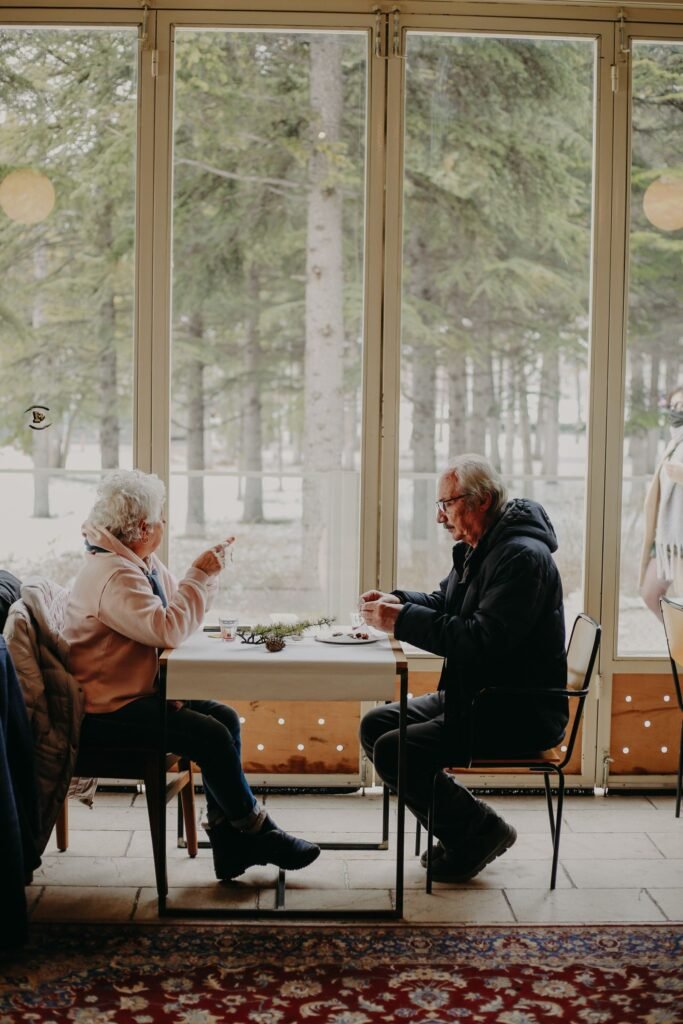
Eat with someone when you can. People tend to eat more in company than alone. If you live by yourself, set up a regular lunch with a friend, a neighbor, or a family member. Even a video call during dinner can help a meal feel like a meal again.

The Move That Brings Your Appetite Back: Lift Something
Here’s the part that surprises people. One of the best ways to get your appetite back isn’t in the kitchen at all. It’s strength training.
In a 2021 randomized controlled trial published in Nutrients, Kelsie Johnson and colleagues put healthy adults in their mid-sixties on a 12-week program of resistance training plus protein supplementation. By the end, the training group had gained about 1.2 kilograms of lean muscle. They also felt hungrier after meals, and they were eating about 133 more calories a day than when they started, without anyone telling them to.
The researchers found that the gain in muscle accounted for a big chunk of the jump in appetite. In plain English: more muscle made them hungrier, which helped them eat enough to build and keep that muscle. The vicious circle runs in reverse.
That’s exactly why I don’t treat nutrition and exercise as two separate things for people over 50. They feed each other, literally. Food without movement doesn’t build much. Movement without food can’t build anything. Put them together and they start pulling each other up.
And no, you don’t need a gym or heavy weights to start. When I came back from years of not training, from shoulder arthritis and torn rotator cuffs to sarcopenia in my sixties, I started with the lightest work I could do without pain. A resistance band, a chair, and a few minutes a day. That’s enough to start sending your body the signal: I need this muscle, so feed it.
A Simple Starting Plan for This Week
You don’t have to overhaul your whole life. Start here:
- Pick three set eating times and one snack time, and stick to them for seven days whether you feel hungry or not.
- Add one protein source to every meal and snack. Eggs, yogurt, cottage cheese, fish, chicken, beans, tofu, or a protein shake.
- Make one smoothie a day if solid food is a struggle.
- Do 10 to 15 minutes of easy resistance work three times this week. Chair stands, band rows, wall push-ups.
- Eat at least one meal this week with another person.
And one important note. If you’ve lost weight without trying, if food has stopped tasting like anything, or if you’re having trouble chewing or swallowing, talk to your doctor. Unplanned weight loss after 50 is worth a real conversation, and some causes are very treatable.
Losing your appetite can feel like just another part of getting older, something to shrug off. It isn’t. It’s a signal. And the fix isn’t complicated: eat on purpose, put protein first, and give your muscles a reason to ask for more.
I’ll say it the way I always do. You’re probably not going to feel motivated to eat that extra egg or do those chair stands. That’s fine. The only way to start when you’re not motivated is to do it anyway.
Ready to give your muscles a reason to ask for more? Grab my free 5-Day Fit & Strong Reset. It’s a beginner-friendly PDF built for people starting from zero, and all you need is a resistance band. Five days, simple moves, no gym required. Visit SilverFitPlus.com to download it today.
Sources
Cox NJ — “Consequences of Anorexia of Aging in Hospital Settings: An Updated Review” — Clinical Interventions in Aging, 2024;19:451-457 — https://doi.org/10.2147/CIA.S431547
Bauer J, et al. (PROT-AGE Study Group) — “Evidence-Based Recommendations for Optimal Dietary Protein Intake in Older People: A Position Paper From the PROT-AGE Study Group” — Journal of the American Medical Directors Association, 2013;14(8):542-559 — https://doi.org/10.1016/j.jamda.2013.05.021
Johnson KO, Holliday A, Mistry N, et al. — “An Increase in Fat-Free Mass is Associated with Higher Appetite and Energy Intake in Older Adults: A Randomised Control Trial” — Nutrients, 2021;13(1):141 — https://www.ncbi.nlm.nih.gov/pmc/articles/PMC7824356/