
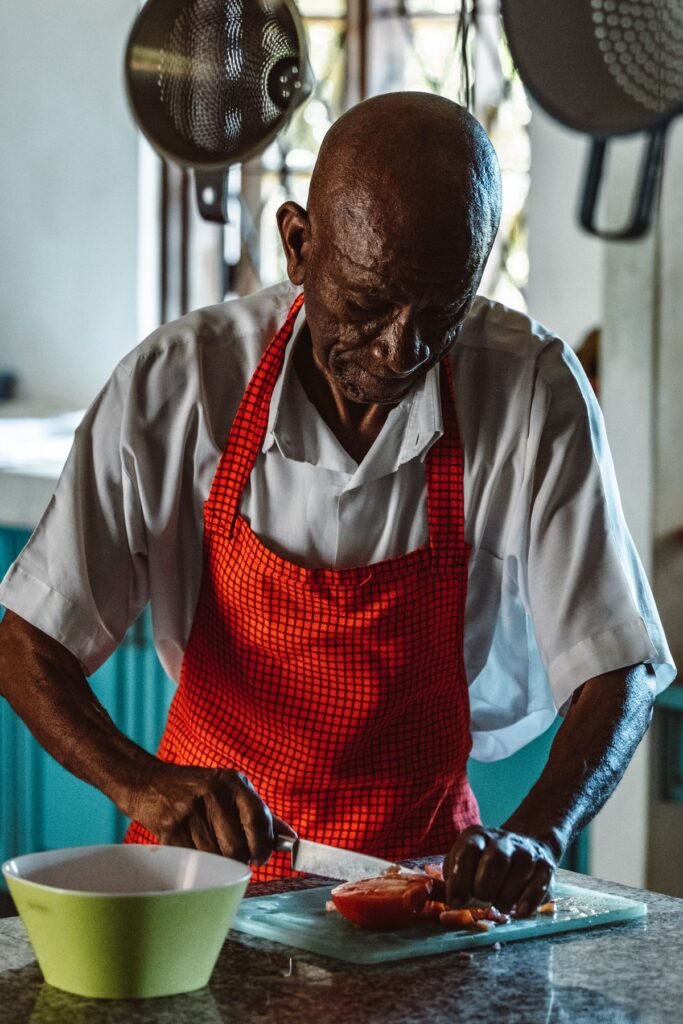
You get home. The house is quiet. You open the fridge, stare at it for a minute, and grab whatever takes the least effort. Crackers and cheese. A bowl of cereal. Toast. Maybe a handful of something from the bag on the counter.
If that sounds familiar, you are not lazy and you are not failing. You are doing what most people do when cooking feels like a lot of work and nobody is there to cook for.
But here is something almost nobody tells you: who you eat with, or whether you eat with anyone at all, may shape what ends up on your plate. And after 50, what ends up on your plate is a big part of whether you keep your strength, your energy, and your independence.
I have spent more than 40 years around people who train and eat for a living, and I have also lived through the years when I stopped training altogether. I can tell you that the habits nobody talks about, the small ones around meals, are usually the ones that quietly decide how things go.
What the Research Says About Eating Alone
In 2025, researchers at Flinders University and colleagues published a systematic review in the journal Appetite. They pulled together 20 studies covering more than 80,000 adults aged 65 and older who lived in their own homes, across 12 countries. (Wyman and colleagues; see Sources.)
Most of those studies pointed the same direction. Older adults who regularly ate alone tended to have poorer diet quality than those who ate with other people. They ate fewer protein-rich foods, less fruit, less vegetables, and less meat. Several studies also linked eating alone with a greater chance of weight loss and a higher risk of frailty.
Now, a fair warning. This kind of research shows an association, not a guarantee. A few of the studies in that review found no difference at all, and people who eat alone may differ from others in ways that are hard to measure. Nobody is saying a quiet dinner will break your body.
What the authors did suggest is useful, though: mealtime behavior may be something we can change. That is good news, because it means this is not about your age or your genes. It is about habits, and habits can be rebuilt.
You do not need a bigger appetite. You need a better reason to sit down and eat a real meal.
The Appetite Piece Nobody Mentions
There is another layer to this. A 2022 study in the journal Nutrients looked at 818 community-dwelling older adults, with an average age of about 77, and measured their appetite with a standard questionnaire. (Mikami and colleagues; see Sources.)
Among the people with poor appetite, 38 percent ate alone. Among those with a good appetite, only 20 percent did. After the researchers adjusted for other factors, eating alone was still linked to poor appetite, with roughly 1.75 times the odds.
Again, this is a snapshot in time. It cannot prove that eating alone causes a poor appetite. A poor appetite could also make someone less likely to join a meal. But the pattern fits what many of us feel. When no one is across the table, food stops being an event and starts being a chore.
This matters more than it sounds. If you have been following my other posts, you know that after 50 your body gets less efficient at building and keeping muscle. When you eat less overall, and especially less protein, that process speeds up. I know this firsthand. In my early 60s I dealt with sarcopenia, the age-related loss of muscle, and I had to take eating seriously again, not just training.
So if your appetite has quietly shrunk and your meals have gotten smaller and simpler, do not just shrug it off as getting older. Pay attention to it. It is a signal worth acting on.
Why a Quiet Kitchen Makes Everything Harder
Think about how most of us really eat when we are by ourselves.
We skip the cooking, because cooking for one feels pointless. We eat standing up or in front of the television, so we barely notice what or how much we ate. We buy food in family-sized packages, then let half of it spoil. And we fall back on whatever is easy, which is usually bread, crackers, cereal, and snacks.
None of that makes you a bad person. It makes you human. But all of those choices push in the same direction: fewer vegetables, less protein, and less variety. Over months and years, that adds up.
The good news is that you do not need a dinner party to fix it. You need a few small systems that make a real meal easier than a snack. Here is what I would start with.
- Cook once, eat twice. Make a pot of chili, soup, or a sheet pan of chicken and vegetables, and portion it into containers. Tomorrow’s meal is already done.
- Anchor every meal with protein. Eggs, Greek yogurt, canned fish, chicken, beans, cottage cheese, or tofu. If the protein is on the plate first, the rest tends to follow.
- Buy smaller or frozen. Frozen vegetables and single-serve packs cost less in waste and keep you from skipping the greens.
- Sit down. Use a real plate and a real chair, even for a ten-minute lunch. It sounds small, but it turns grazing into a meal.
- Turn the screen off for at least one meal a day, so you can actually notice when you are hungry and when you are full.
One more thing worth saying. If your appetite is small, do not force giant plates. Smaller, more frequent meals can work better. A yogurt with fruit mid-morning, a hard-boiled egg in the afternoon, or a cup of soup before bed all count. The goal is steady nourishment, not a heroic dinner. If you are losing weight without trying, mention it to your doctor, because unplanned weight loss is worth a conversation.
I learned this the hard way during my own muscle-loss years. Eating “enough” did not mean eating a lot at once. It meant not letting whole days pass on coffee and crackers. When I started treating each meal as a small deposit instead of a big event, it got easier to stay consistent.
How to Bring People Back to the Table
Fixing the food is only half of it. The other half is the table itself.
You do not have to eat every meal with another person, and some of us genuinely enjoy our own company. But if most of your meals are solo, try to add even one shared meal a week. One is a start.
Here are some low-pressure ways to do it. Invite a neighbor over for soup. Say yes the next time a friend suggests lunch. Look up a community center, church, or senior center that offers group meals, since many do at low cost or no cost. Try a potluck with two or three people, where everyone brings one dish and nobody has to do the whole thing.
If family lives nearby, ask to set a standing dinner, even every other week. If they live far away, a video call during dinner counts more than you would think. Eat while you talk. It changes the feel of the meal.
And if you really do eat alone most days, you can still borrow what works about company. Put on music or a podcast you enjoy. Set the table. Make something you actually look forward to, like a favorite spice or a dish from your childhood. Give the meal a little ceremony, and you will tend to give it more attention.
Start Smaller Than You Think
If you have been eating the same easy, beige foods for a long time, do not try to overhaul everything by Friday. That is how people burn out and quit.
Pick one meal. Maybe it is dinner, maybe it is breakfast. For the next week, make that one meal include a protein, a vegetable or fruit, and a seat at the table. That is the whole assignment.
Next week, add a second shared meal or a second cooked meal. Then a third. Small, repeatable wins beat a perfect plan you drop after four days.
I have never been a fan of waiting until you feel ready. When I came back to training after years away, I did not feel ready either. My shoulders hurt and my confidence was gone. What got me moving was a rule I still live by: the only way to start when you are not motivated is to do it anyway. That applies to a cooking pot and a dinner chair as much as it applies to a resistance band.
Your plate matters. Your strength matters. And you matter enough to sit down and eat something good, whether anyone is across the table or not.
Ready to put some of this into action? Pair better meals with a little strength work. Grab my free “5-Day Fit & Strong Reset”, a beginner-friendly PDF you can do at home with just a resistance band. Visit SilverFitPlus.com to download it today, and take the first step even if you do not feel like it.
Sources
- Wyman C, Thomas J, Lawless M, Yaxley A. — “Associations between nutritional and physical outcomes of community-dwelling older adults eating alone versus with others: A systematic review” — Appetite, 2025 — https://doi.org/10.1016/j.appet.2025.108327
- Mikami Y, Motokawa K, Shirobe M, et al. — “Relationship between Eating Alone and Poor Appetite Using the Simplified Nutritional Appetite Questionnaire” — Nutrients, 2022;14(2):337 — https://www.mdpi.com/2072-6643/14/2/337