
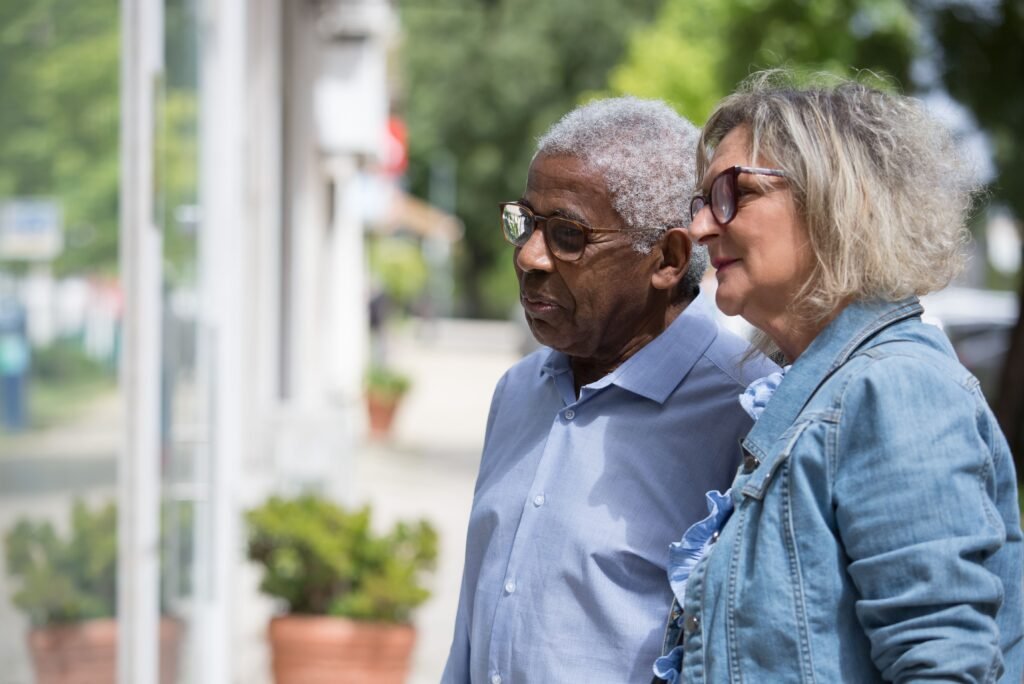
Let me describe a Tuesday you might recognize. You wake up, you make coffee, and you think about moving more. Nobody expects you anywhere. Nobody would notice if you skipped it. So you skip it, and the day closes up a little tighter than the one before.
I’ve lived versions of that day. When my shoulders gave out in my early forties, I stopped training, and the gym wasn’t the only thing I lost. I lost the guys I trained with, the hellos, the ribbing, the sense that someone would wonder where I was.
If you’re reading this and nodding, I want you to know that the quiet you feel isn’t a character flaw. A lot of people over 50 lose their built-in social structure without noticing. Work ends. Kids move out. Friends move away or get sick. The places where we used to move around other people simply disappear, and nobody replaces them for us.
For years I treated that as a motivation problem. I now think it was partly a connection problem. And the research suggests that for adults over 50, those two problems are tangled together more tightly than anyone told us.
What Being Alone Does to Your Body
Start with the sobering part. In 2015, Julianne Holt-Lunstad and her colleagues published a meta-analysis in Perspectives on Psychological Science that pulled together research on loneliness and social isolation as risk factors for early death. Their search covered studies from 1980 through early 2014.
After accounting for other factors, they found that social isolation was linked to a 29 percent higher likelihood of dying, loneliness to 26 percent higher, and living alone to 32 percent higher. These were associations, not proof that loneliness itself causes death, and people who are isolated often face other health challenges. Still, the pattern held across many studies and many years.
I’m not telling you this to scare you. I’m telling you because it reframes the question. When you can’t get yourself to exercise, you may assume you’re lazy. You’re not. You may be missing the piece that makes everything else easier.
There’s a second thing worth saying. Isolation and inactivity feed each other. When you move less, you go out less. When you go out less, you see fewer people. When you see fewer people, there’s less reason to move. It’s a slow loop, and it can run for years before anyone names it. Breaking it at either end helps, and the movement end is the one you can start tomorrow.
Think about the people who are quietly doing well in their sixties and seventies. They usually aren’t the ones grinding alone in a basement. They’re the ones with a standing walk with a neighbor, a Thursday class, a group that notices when they miss. The movement is the same. The environment is different.
Does Exercising With Other People Really Help?
Here the research is honest about its limits, and I’ll be honest about them too. The evidence on group exercise for older adults is promising but still young.
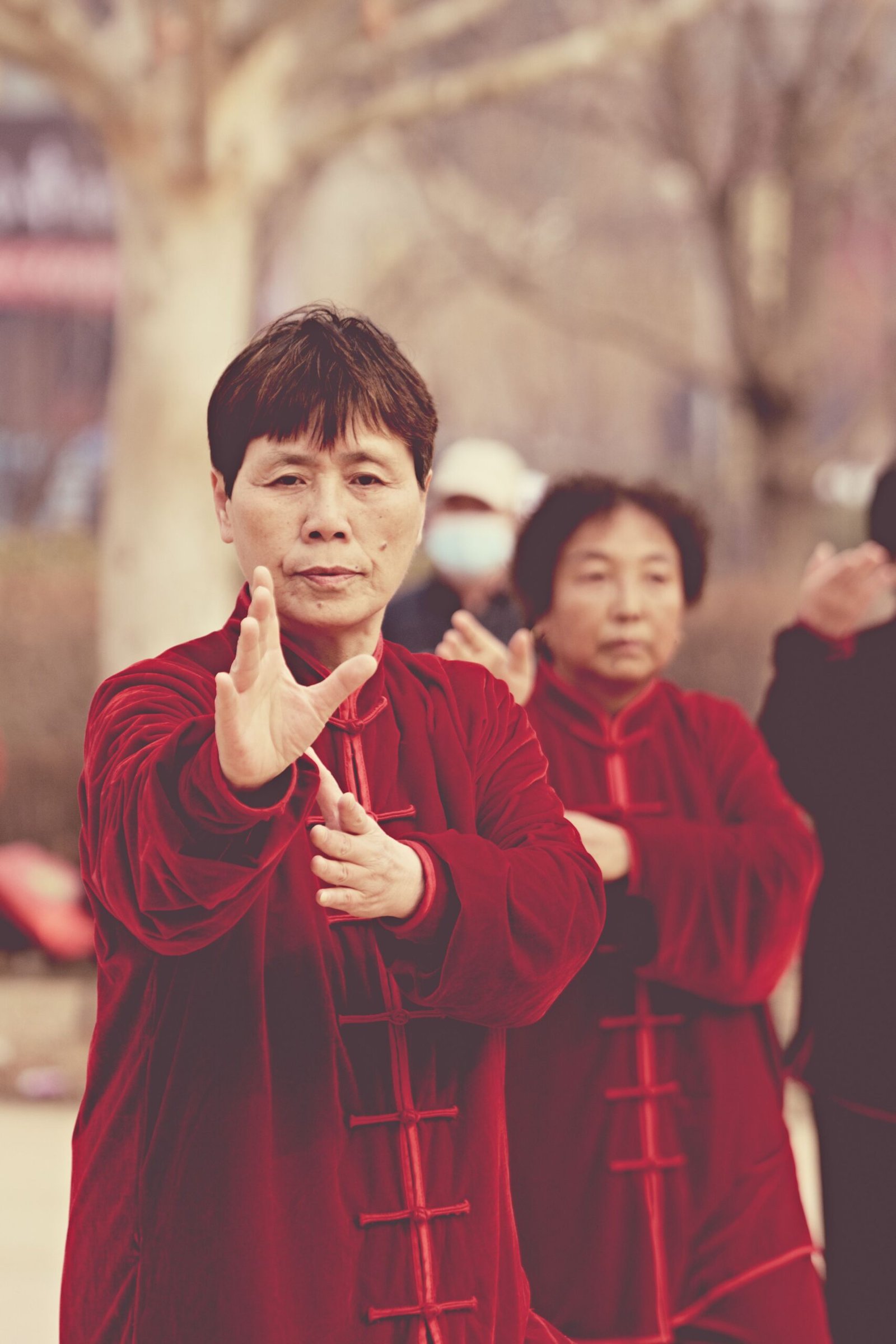
Emerson Sebastião and Daniel Mirda reviewed the literature in a 2021 paper in Aging Clinical and Experimental Research. They noted that older adults who exercise in groups get the usual physical benefits and also seem to gain social connectedness, which may help with isolation and loneliness. They also wrote that research on this question is scarce and more is needed. I appreciate a scientist who says that out loud.
One small study gives a taste of what this can look like. Baez and colleagues, in a 2017 pilot trial published in PeerJ, followed 37 adults aged 65 to 87 for eight weeks. Half did online group exercise and half trained individually at home.
The group did something the solo exercisers struggled with, which was showing up. Persistence was about 85 percent in the social group compared with about 64 percent for the home-based group. Both groups got stronger in the legs and faster in walking speed, and both reported less loneliness. In the group, people who exchanged more private messages saw bigger drops in loneliness.
Notice something else in that trial. In the home group, the people who were already fitter stuck with the program better. In the social group, how strong someone was at the start didn’t predict whether they kept coming. For a beginner, that detail matters. A group can level the field when you’re starting from the couch.
Take that with the right grain of salt. It was a small, short pilot, mostly women, and the researchers called the results preliminary. But the practical lesson fits what I see in real life. The exercise itself may not be magic, but the reason to show up is.
Finding Your People Without Dreading It
I know what some of you are thinking. You’re not a joiner. You don’t want to be the oldest person in the room, or the slowest, or the one who can’t get down on the floor. I’ve been the person standing in a parking lot, talking myself out of walking in.
So here’s how I’d approach it if I were starting from zero. Aim small, and give yourself an easy way out.
- Pick one low-pressure setting. A walking group at a park, a chair-based class at a community or senior center, a tai chi session, or a water exercise class. Look for words like “beginner,” “gentle,” or “all levels.”
- Call or message ahead. Ask what a first class looks like and whether you can watch for a few minutes. Most instructors love that question.
- Go for four weeks before judging it. The first visit is awkward for nearly everyone. The third is better. By the fourth, someone knows your name.
- Bring a friend, or make one. Invite a neighbor, a sibling, or the person you keep meaning to call. A standing date is harder to skip than a private intention.
- If you can’t leave the house, start online. A video group where people say hello, or even a weekly call with someone while you both walk, counts.
The Baez study was an online program, and it still raised persistence and reduced loneliness. You don’t need a perfect room or a perfect crowd. You need a reason that’s bigger than your mood on a given Tuesday.
Motivation is unreliable. A person who expects you is not.
Here is what a good first visit looks like. You arrive five minutes early, so you’re not walking in at the busiest moment. You introduce yourself to the instructor and one other person, even if it’s just “first time here.” You do what you can, you leave when you’ve had enough, and you say “see you next week” on the way out. That’s all. You don’t have to be impressive. You have to be present.
If the first group isn’t a fit, try another. I’ve seen people quit after one bad class and decide they’re not group people, when they were really just in the wrong group. A louder crowd, a different time, a smaller circle, any of those can change the whole feeling.
Make It Joint-Safe and Make It Stick
Because many of you are carrying sore knees, stiff hips, or cranky shoulders, a quick word on choosing the right class. Joint safety matters as much as company does.
Tell the instructor about your limits before the class starts. A good one will offer a smaller version of any move. You’re allowed to sit out anything that pinches. If you feel sharp or stabbing pain, stop. Dull muscle effort is fine. Joint pain is a signal to change the angle or skip the move, and no group is worth hurting yourself for.
Watch for red flags too. A class that celebrates “feeling the burn” with deep lunges and fast jumps is probably not built for aging joints. A class that moves at a pace you can talk through, that welcomes modifications, and that lets you use a chair is usually a good sign. You’re shopping for a place you can stay for a year, not a place you can survive for a day.
Also, don’t wait to feel fit before joining. People often tell me they’ll go once they’ve lost weight, or gotten stronger, or gained some energy. It works in the other direction. You join, you move, and the fitness follows.
Between classes, keep a little strength work going at home. Two or three short sessions a week with a resistance band build the strength that makes every group activity feel easier. And the day you decide you’re going to skip, text someone who’ll ask where you were. A small accountability link is worth more than a big plan.
I’ll repeat what I tell everyone I coach: the only way to start when you’re not motivated is to do it anyway. Doing it anyway is a lot easier when somebody’s saving you a spot.
Your Next Step
If you’re not ready for a class yet, or you want to build a little confidence first, start with the 5-Day Fit & Strong Reset. It’s my free, beginner-friendly PDF with five short, joint-safe sessions, and all you need is a resistance band. Do it at home this week, and then take the next step toward other people. Visit SilverFitPlus.com to get it.
And if you’re already gym-ready and want a structured plan to follow, Build Strong After 50 is my paid 12-week strength program, built around pain-free angles for adults over 50.
You’ve carried a lot on your own. This part doesn’t have to be one of them.
Free 5-Day Guide
Get the Free 5-Day Fit & Strong Reset
A joint-safe, beginner-friendly start for adults over 50. Enter your email and the guide goes straight to your inbox.
No spam. Unsubscribe anytime.
Sources
Holt-Lunstad J, Smith TB, Baker M, Harris T, Stephenson D. “Loneliness and Social Isolation as Risk Factors for Mortality: A Meta-Analytic Review” — Perspectives on Psychological Science, 10(2):227-237, 2015 — https://pubmed.ncbi.nlm.nih.gov/25910392/
Sebastião E, Mirda D. “Group-based physical activity as a means to reduce social isolation and loneliness among older adults” — Aging Clinical and Experimental Research, 33(7):2003-2006, 2021 — https://experts.illinois.edu/en/publications/group-based-physical-activity-as-a-means-to-reduce-social-isolati/
Baez M, et al. “Effects of online group exercises for older adults on physical, psychological and social wellbeing: a randomized pilot trial” — PeerJ, 5:e3150, 2017 — https://www.peerj.com/articles/3150