Here is a question nobody asks at the doctor’s office: when was the last time you carried something heavy on purpose?
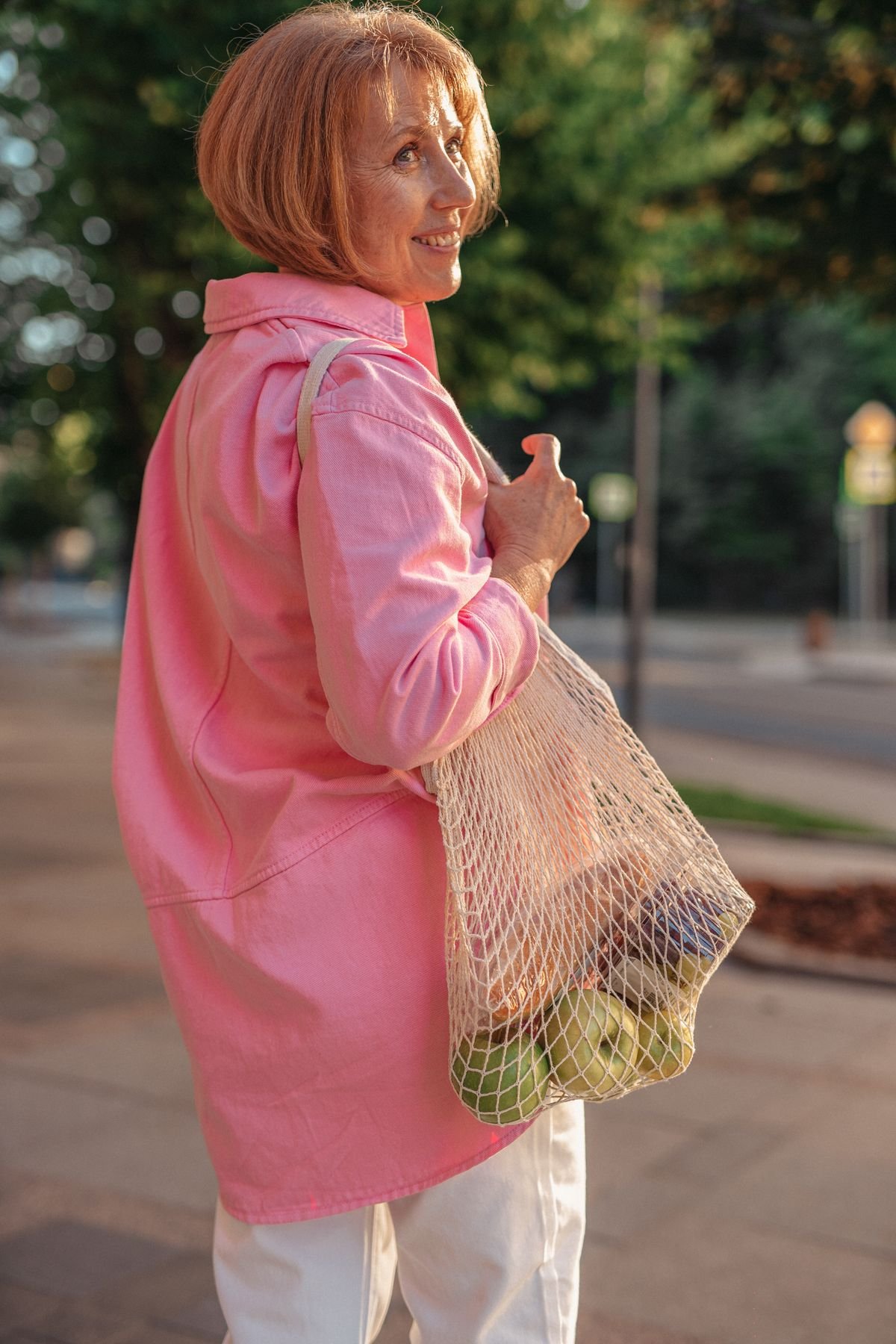
Not a gym machine. Not a dumbbell rack. Just a real, honest load: a bag of potting soil, a full laundry basket, two grocery sacks from the car to the kitchen. For a lot of adults over 50, the answer is “I avoid it.” The bags get split into six trips. The heavy stuff waits for somebody younger.
I understand that. After a shoulder injury years ago, I got careful about everything I picked up, and careful slowly turned into avoiding. Avoiding is what makes you weak.
This post is about the way back. It starts with something you already do, or used to do, every single day.
If you are starting from the couch, you are in the right place. Nothing here needs a gym, a perfect knee, or a good mood.
I will walk you through why grip and carrying matter, what the research actually shows, and exactly how to begin this week.
Why Grip Strength Says More Than You’d Expect
It sounds almost too simple, but how hard you can squeeze is one of the best quick snapshots of your overall strength. Doctors and researchers use it for a reason.
In 2015, Dr. Darryl Leong and colleagues published results from the PURE study in The Lancet, following nearly 140,000 adults across 17 countries. They found that weaker grip strength was linked with a higher risk of dying from any cause, and with more cardiovascular disease. For every 5 kg (about 11 pounds) drop in grip strength, the risk of death from any cause rose by roughly 16 percent.
Read that carefully. Your hand is not a magic organ. Grip is simply a window into how much usable muscle your whole body has left. A strong grip usually means a strong back, hips, and legs behind it.
And here is the good news: unlike your age, your grip can change. Muscle responds to being asked to work, even when you start late.
I think about this every time I see someone struggle with a heavy door or a full trash bag. It is not that they are failing at life. It is that nobody told them strength is a use-it-or-lose-it skill.
So if you remember one thing from this section, let it be this: your grip is not a fixed trait you were born with. It is a skill and a muscle, and both respond to practice. Start measuring it by how easily you can carry what you need, not by comparing yourself to anyone else.
The Strength You Need Is the Strength You Use
Sarcopenia, the age-related loss of muscle, does not announce itself. You do not wake up weak. You just notice, one day, that the jar will not open, the stairs feel steeper, and standing up from a low couch takes a push.
The European Working Group on Sarcopenia, led by Dr. Alfonso Cruz-Jentoft and published in Age and Ageing in 2019, updated its definition to focus on low muscle strength as the key feature of the condition. In other words, how strong you are matters more than how big you look.
That is good news for a beginner, because strength is built by doing the things your body was designed to do. Push, pull, squat, hinge, and carry. Of those five, carrying is the one most people have quietly stopped doing.
A carry works your grip, forearms, upper back, core, hips, and legs all at once. There is no fancy equipment and no floor work. You hold something, you stand tall, and you walk.
Here is how I explain it to new clients. Your muscles are like a bank account. Every time you carry, lift, or push, you make a small deposit. Every time you avoid it, you make a small withdrawal. After a few years of avoiding, the balance runs low.
The reverse is also true, and that is what keeps me doing this work. Deposits add up, even small ones, and even when you start late.
You do not need to feel strong to start. You get strong by starting.
How to Start Carrying (Without Hurting Anything)
I am not going to tell you to grab the heaviest thing in the garage. I will tell you what I tell myself, with my own shoulder history: start light, keep your arms at your sides, and let your legs and trunk do the work.
Carrying with your arms down by your hips is gentle on shoulders because the weight hangs instead of pressing overhead. That is why it has become one of my favorite pain-free movements. I want to be clear that this is my own coaching experience, not the result of a clinical trial, so go easy and listen to your body.
- Pick two equal loads: grocery bags, water jugs, a pair of light dumbbells, or filled milk jugs. Equal weight on both sides keeps you balanced.
- Stand tall with your shoulders relaxed and your ribs stacked over your hips. Do not lean or hike your shoulders up toward your ears.
- Walk 20 to 30 steps at a normal pace, turn around carefully, and walk back. Rest as long as you need.
- Start with 3 rounds. Choose a weight where the last round feels like work but you can still stand tall.
Do this two or three times a week and keep a simple note of how heavy the loads feel. When the last round starts to feel easy, add a little weight or a few more steps. Small, boring increases win.
If you have a heart condition, high blood pressure, balance problems, or joint trouble, check with your doctor before you start, and keep one hand free to steady yourself if needed.
A few form reminders help. Keep your chin level, look ahead instead of down at your feet, and take steady steps. If your hands tire before your legs do, that is useful information. It means your grip is the part that needs work, and carrying will build it.
On days your joints are sore or you are short on energy, cut the load in half and walk the same distance. Showing up lighter still counts. It keeps the habit alive, and the habit is what builds the strength.
Turn Daily Chores Into Your Training Plan
The U.S. Physical Activity Guidelines for Americans, 2nd edition, say older adults should do muscle-strengthening activity that works all the major muscle groups on 2 or more days a week. They also recommend multicomponent activity that includes balance training. (Not sure where your balance stands? Try the 10-second one-leg standing test.)
Notice what that does not say. It does not say you need a gym membership, a program with a fancy name, or an hour at a time. It says do something that challenges your muscles twice a week.
So let your house become the gym. Carry the laundry basket up the stairs in two smaller loads instead of avoiding the stairs. Park a little farther away and carry the bags the whole way. Take the watering can to the garden one full can at a time.
Add a few sit-to-stand repeats from a sturdy chair (my beginner chair workout shows you how), and you have covered legs, grip, and carrying in a single afternoon. That is strength training. It just happens to look like life.
One more thing about motivation. You do not have to feel ready. My motto has not changed in all my years: the only way to start when you are not motivated is to do it anyway. Pick up the bags. Walk to the door. The feeling follows the action, not the other way around.
Try this simple weekly pattern. On two days, do your carry rounds after you have eaten something and had a glass of water. On the other days, just walk and keep your normal chores moving.
That is it. Two short strength sessions and some walking meets the spirit of what the guidelines ask. You can build from there when you are ready, and not before.
If you are not sure where to start, go back to the grocery bags. This week, make one fewer trip from the car and carry a bit more per hand. Pay attention to your posture and your breathing. Notice how you feel afterward. That feeling, a small sense of capability, is the beginning of everything.
Ready for a Plan That Does the Thinking for You?
If you train at home, Thrive After 50 is my complete joint-safe program. It builds the strength behind every carry, including the hip hinge, squat and row, with four levels for each, from fully supported to loaded. Every exercise is shown with start and finish photos, and it’s an instant PDF download.
Already comfortable in a gym? Build Strong After 50 is my 12-week gym strength program.
Not ready to buy anything? Start with my free 5-Day Fit & Strong Reset in the box below. All you need is a resistance band.
Free 5-Day Guide
Get the Free 5-Day Fit & Strong Reset
A joint-safe, beginner-friendly start for adults over 50. Enter your email and the guide goes straight to your inbox.
No spam. Unsubscribe anytime.
Sources
- Leong DP, et al. — “Prognostic value of grip strength: findings from the Prospective Urban Rural Epidemiology (PURE) study” — The Lancet, 2015 — https://doi.org/10.1016/S0140-6736(14)62000-6
- Cruz-Jentoft AJ, et al. (European Working Group on Sarcopenia in Older People 2) — “Sarcopenia: revised European consensus on definition and diagnosis” — Age and Ageing, 2019;48(1):16–31 — https://doi.org/10.1093/ageing/afy169
- U.S. Department of Health and Human Services — “Physical Activity Guidelines for Americans, 2nd edition (Executive Summary)” — HHS, 2018 — https://odphp.health.gov/sites/default/files/2019-10/PAG_ExecutiveSummary.pdf