
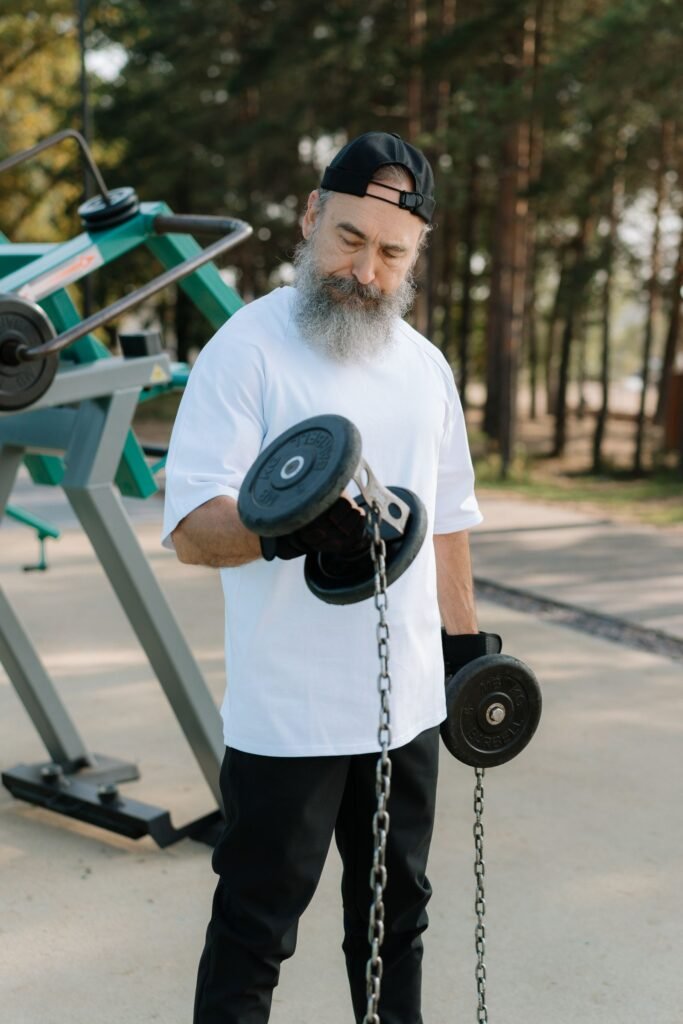
You’ve seen the ads. A guy with gray at the temples, looking twenty years younger, telling you that low energy, a soft middle, and a fading sex drive are “low T” and a clinic can fix it this week. Maybe you’ve wondered if that’s your problem. Maybe a buddy started on testosterone and swears by it.
I’m not here to tell you testosterone therapy is evil, and I’m not here to sell it to you either. I’m here to give you the straight story, the one the ads skip, so you can walk into your doctor’s office knowing what to ask.
Because here’s what I’ve seen over four decades in this game: a lot of men over 50 are looking for a prescription to fix a problem that started on the couch.
What “Low T” Really Means (and Why the Ads Oversimplify It)
Testosterone does decline with age, slowly, roughly a percent or so a year after your 30s or 40s for many men. But “lower than when you were 25” is not the same as a medical problem. Plenty of men in their 60s have perfectly normal levels.
A real diagnosis of low testosterone, what doctors call hypogonadism, takes two things together. First, symptoms that fit: low sex drive, fatigue, loss of muscle, reduced morning erections, low mood. Second, blood tests showing low levels, drawn in the morning when testosterone peaks, and confirmed by repeating the test. One afternoon blood draw at a strip-mall clinic doesn’t cut it.
Here’s the tricky part. Nearly every symptom on that list also shows up with poor sleep, extra belly fat, too much alcohol, stress, depression, certain medications, and plain old inactivity. So a man can feel exactly like the guy in the ad without his hormones being the main problem at all.
There’s also a common thread linking many of them. Inactivity tends to add belly fat, belly fat tends to drag testosterone down, and lower energy makes you less likely to move. It’s a loop, and it can spin for years before anybody names it.
That’s why the order of operations matters. If you skip straight to the prescription, you may never find out what was really dragging you down.

What the Big Safety Trial Found
For years, the worry about testosterone therapy was the heart. So researchers ran a large trial to settle it. The TRAVERSE trial, led by Dr. A. Michael Lincoff of the Cleveland Clinic and published in the New England Journal of Medicine in 2023, enrolled 5,246 men aged 45 to 80 who had low testosterone, symptoms, and existing heart disease or a high risk of it.
The men used either a testosterone gel or a placebo gel. Major heart events, meaning cardiovascular death, heart attack, or stroke, happened in 7.0% of the testosterone group and 7.3% of the placebo group. In plain English: for men who truly had low testosterone, the therapy did not raise the risk of those major heart problems.
That’s good news for men who need it. But the trial also found the testosterone group had more atrial fibrillation (an irregular heart rhythm), more acute kidney injury, and more blood clots in the veins. And it’s worth knowing the study was funded by a group of testosterone manufacturers.
It’s also worth knowing who wasn’t in the study. These were men with confirmed low levels and real symptoms. The results don’t tell us much about the man with normal testosterone who just wants an edge, and that’s exactly who a lot of online clinics are marketing to.
So the honest takeaway isn’t “testosterone is dangerous” or “testosterone is safe for everyone.” It’s this: for a man with a confirmed diagnosis, it can be a reasonable option to discuss with his doctor. It’s still a medication with real trade-offs, and it’s meant for a medical condition, not as a substitute for training.
“A prescription can change a number on your lab report. Only you can change what you do with the body you’ve got.”
I know the pull of a quick fix. When I hit sarcopenia in my early 60s, after years away from training because of arthritis and torn rotator cuffs in both shoulders, I felt weak in a way that scared me. What brought me back wasn’t a shortcut. It was showing up, finding pain-free angles, and doing the work even on days I didn’t want to.
What Exercise and Weight Loss Actually Do
Now for the part the clinics don’t advertise. Let’s be accurate about it, because this is where a lot of gym talk goes wrong too.
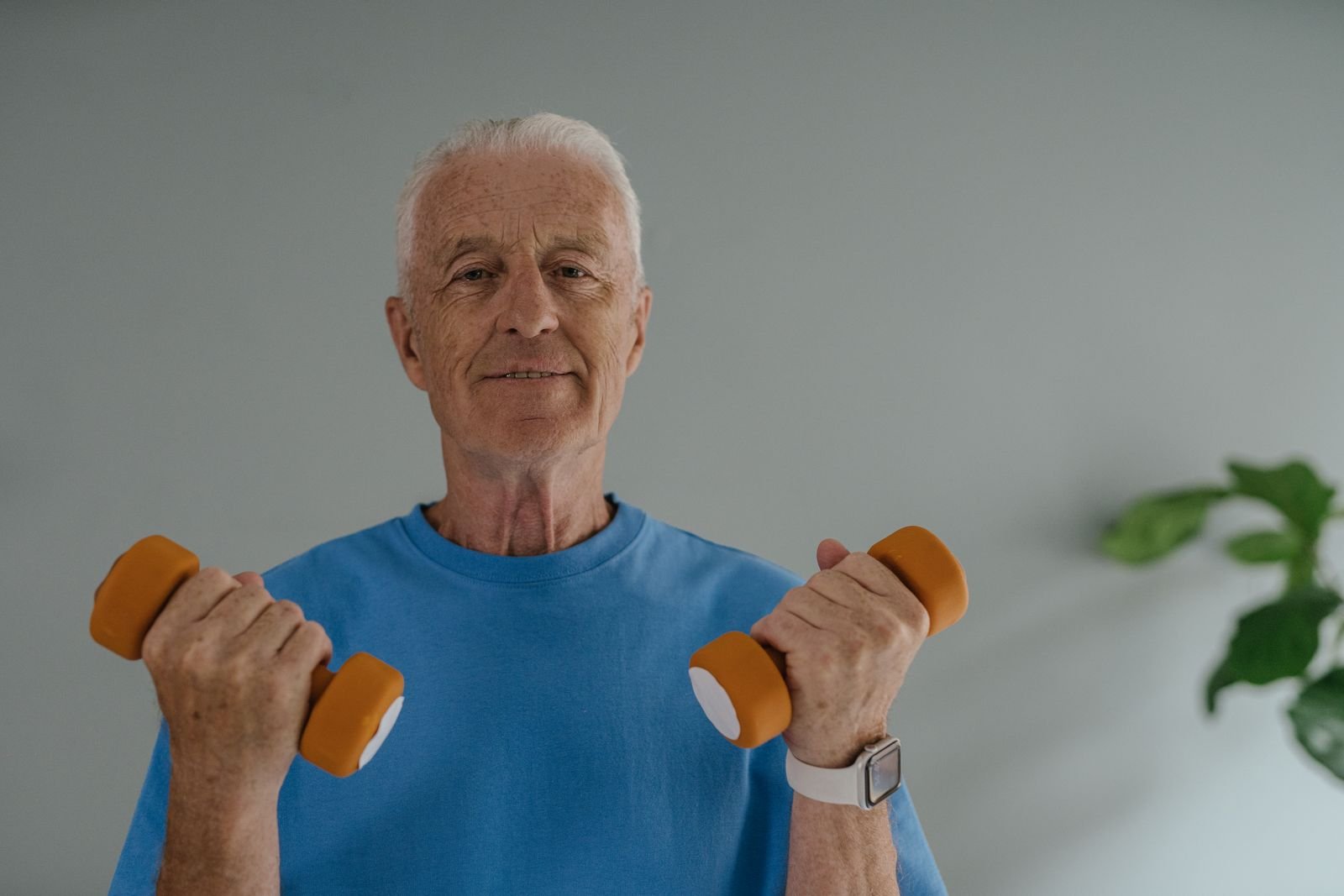
Lifting weights does not dramatically raise your resting testosterone. A 2019 systematic review and meta-analysis in Frontiers in Physiology, led by Lawrence Hayes, looked at 22 studies of men aged 60 and older. It found that resistance training did not significantly change their resting testosterone levels. Endurance and interval training produced small increases.
So why lift? Because strength training builds muscle and strength in older men whatever your testosterone number says. Muscle is what gets you up off the floor, carries the groceries, protects your blood sugar, and keeps you independent. The hormone is one ingredient. The training is the recipe.
Think of it this way. Testosterone is like the fertilizer, and training is the seed. You can pour all the fertilizer you want on an empty field and nothing grows. Plant the seed, water it twice a week with real effort, and you’ll get growth even if the soil isn’t perfect. That’s what I’ve watched happen with men in their 50s, 60s, and 70s who had never touched a weight.
Losing excess body fat is the other big lever. Belly fat turns testosterone into estrogen and helps suppress the hormone signals that tell your body to make more. A 2013 systematic review and meta-analysis by Giovanni Corona and colleagues in the European Journal of Endocrinology found that weight loss raised testosterone in men with obesity. The more weight men lost, the bigger the rise. Diet produced a modest increase. Bariatric surgery, with much larger weight loss, produced a bigger one.
One more warning while we’re here. Be skeptical of the “testosterone booster” supplements sold online and at the vitamin store. Most are blends of herbs and minerals with little solid evidence behind them, and supplements aren’t held to the same testing standards as prescription drugs. If a bottle promises to transform your body in 30 days, put it back on the shelf and spend that money on a resistance band.
Put that together and you get a clear picture. Lifting builds the muscle. Steady movement and fat loss help the hormones. Sleep and cutting back on alcohol help both. None of it requires a prescription, and all of it makes you healthier whether or not you ever need one.
The Order of Operations for a Man Starting From Zero
If you’re sedentary, over 50, and wondering about testosterone, here’s the sequence I’d follow:
- Get honest blood work. Ask your doctor for a morning testosterone test, repeated if it comes back low, along with the basics like blood sugar and thyroid. A real diagnosis comes from a real doctor, not an ad.
- Start strength training twice a week. A resistance band at home is plenty to begin with. Squats to a chair, rows, presses, and hip hinges, done slowly and with control.
- Walk most days. Twenty to thirty minutes is a great start. This is your endurance work, and it’s where the research saw a small hormone bump.
- Fix the big three: sleep, waistline, and alcohol. Seven or more hours of sleep, a little less around the middle, and fewer drinks each week can move how you feel more than you’d expect.
- Reassess in three months. Give it a real 12 weeks, then recheck with your doctor. If you still have symptoms and confirmed low levels, you’ll be having that conversation from a much stronger place.
Here’s what I see happen when men follow that sequence. Within a few weeks, sleep usually gets better. Within a month or two, the stairs and the yard work feel easier, pants fit a little looser, and mood lifts. Sometimes the symptoms that made a man think he had low T fade enough that the question answers itself. Sometimes they don’t, and that’s fine too. Then you’ve ruled out the easy fixes and you know the testosterone question is worth a closer look.
If you and your doctor decide testosterone therapy makes sense, keep training. Testosterone without training is a half-measure. Training without testosterone still works.
I know you might not feel like starting. Low energy is part of the problem, after all. But I’ve learned that the only way to start when you’re not motivated is to do it anyway. Do one set of chair squats today. Take one walk around the block. Your body will start answering back faster than you think.
Your Next Step
You don’t need to figure this out alone. My free 5-Day Fit & Strong Reset is a beginner-friendly PDF made for adults over 50 starting from the couch. All it takes is a resistance band and a few minutes a day, and it is an easy way to begin the twice-a-week strength work in the plan above.
Visit SilverFitPlus.com to download your free copy of the 5-Day Fit & Strong Reset today.
If you’re gym-ready and want a full plan, Build Strong After 50 is my paid 12-week strength program designed for men and women over 50 with aging joints.
Free 5-Day Guide
Get the Free 5-Day Fit & Strong Reset
A joint-safe, beginner-friendly start for adults over 50. Enter your email and the guide goes straight to your inbox.
No spam. Unsubscribe anytime.
Sources
- Lincoff AM, et al. (TRAVERSE Study Investigators) — “Cardiovascular Safety of Testosterone-Replacement Therapy” — New England Journal of Medicine, 2023 — https://newsroom.clevelandclinic.org/2023/06/16/cleveland-clinic-led-trial-finds-testosterone-replacement-therapy-does-not-increase-incidence-of-major-adverse-cardiac-events-for-men-with-low-testosterone/
- Hayes LD, Elliott BT — “Short-Term Exercise Training Inconsistently Influences Basal Testosterone in Older Men: A Systematic Review and Meta-Analysis” — Frontiers in Physiology, 2019 — https://pmc.ncbi.nlm.nih.gov/articles/PMC6339914/
- Corona G, et al. — “Body weight loss reverts obesity-associated hypogonadotropic hypogonadism: a systematic review and meta-analysis” — European Journal of Endocrinology, 2013 — https://pubmed.ncbi.nlm.nih.gov/23482592/
- Bhasin S, et al. (Endocrine Society) — “Testosterone Therapy in Men With Hypogonadism: An Endocrine Society Clinical Practice Guideline” — Journal of Clinical Endocrinology & Metabolism, 2018 — https://pubmed.ncbi.nlm.nih.gov/29562364/