
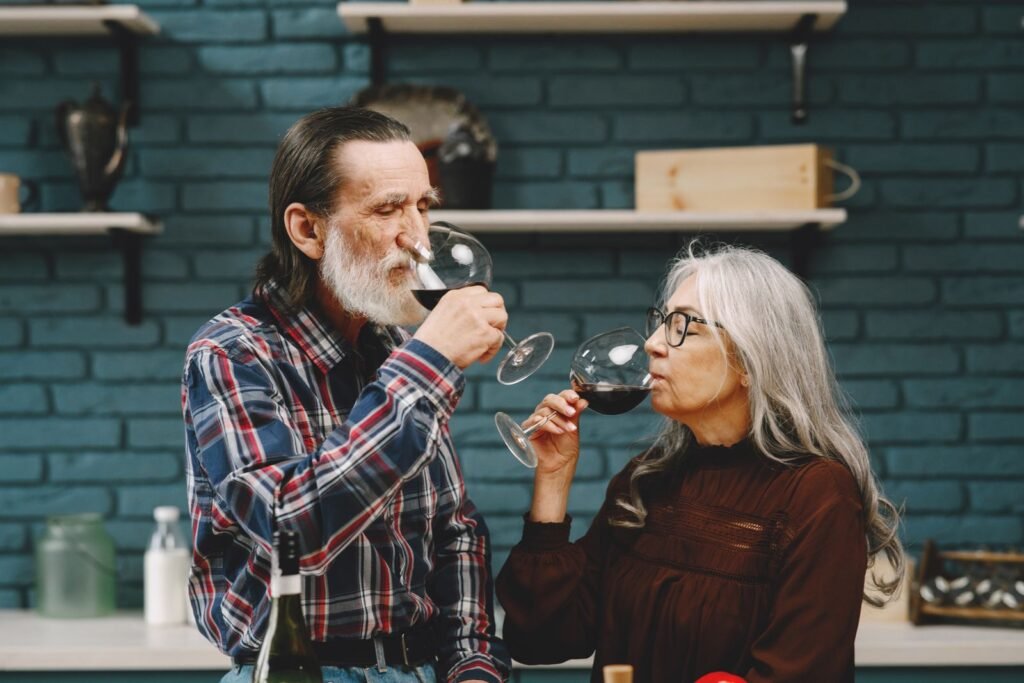
Let’s talk about the glass in your hand at 7 p.m.
Maybe it’s a glass of red with dinner. Maybe it’s two beers while the game is on. Maybe it’s a “small” pour of bourbon that turns into a second one because the day was long. You’re not a heavy drinker. You’d never call it a problem. It’s just how you wind down.
I’m not here to lecture you. I’ve spent more than 40 years in gyms, and I’ve seen every kind of habit walk through the door. But I’ve also watched a lot of people in their 50s and 60s do everything else “right” and still feel stuck. They’re tired. They’re not recovering. The scale won’t move. Their strength won’t come back.
And a lot of the time, nobody has ever sat them down and explained what that nightly drink is doing to a body that is no longer 35.
So let’s do that now. No shame. No sermon. Just the facts, and a plan you can actually live with.
Your Body Handles Alcohol Differently Now
Here’s something your doctor may never have mentioned. The same drink you had at 30 lands harder at 60.
According to the National Institute on Alcohol Abuse and Alcoholism (NIAAA), as we age our bodies carry less water and less muscle, and more fat, even if the scale reads the same. Alcohol spreads through the water in your body. Less water means the same glass of wine produces a higher blood alcohol level than it used to.
The NIAAA also notes that older adults are more sensitive to alcohol’s effects on balance, coordination, and attention. That matters. If you’re already a little unsteady getting up from the couch, alcohol makes a fall more likely. And for adults over 50, a fall is not a small thing.
Then there are your medications. Many common prescriptions and over-the-counter drugs, including some blood thinners, sleep aids, pain relievers, and diabetes medications, can interact badly with alcohol. If you take anything daily, this is a conversation worth having with your doctor or pharmacist this week.
None of this means you did something wrong. It just means the rules changed while you weren’t looking.
The Muscle Problem Nobody Connects to Their Drink
This is the one that hits home for me.
In my early 60s I dealt with sarcopenia, the age-related loss of muscle that creeps up on you. I’d been lifting since I was 14. I trained under old-school bodybuilders. And I still watched my strength slip away after years away from the gym. Getting it back took patience, pain-free angles, and every edge I could find.
Here’s why that matters for your evening drink. Muscle is built and repaired through a process called muscle protein synthesis. That’s how your body turns a workout and a protein-rich meal into stronger muscle.
In a 2014 study published in PLOS ONE, researcher Evelyn Parr and colleagues had participants complete a hard training session and then drink alcohol along with their recovery nutrition. Compared with protein alone, muscle protein synthesis dropped by 24% when alcohol was taken with protein, and by 37% when alcohol was taken with carbohydrates instead.
Now, to be fair, those were young, active men, and they drank a lot more than one glass. But think about what it means for you. If you’re over 50, you’re already fighting to hold onto muscle. Your body already responds less to protein than it did when you were younger. Adding alcohol to that equation is like trying to fill a bucket that’s already leaking.
If you’re working hard to get stronger, don’t let a nightly habit quietly undo the work.
You don’t have to be perfect. You just have to stop letting one small habit cancel out the hard work you’re finally putting in.
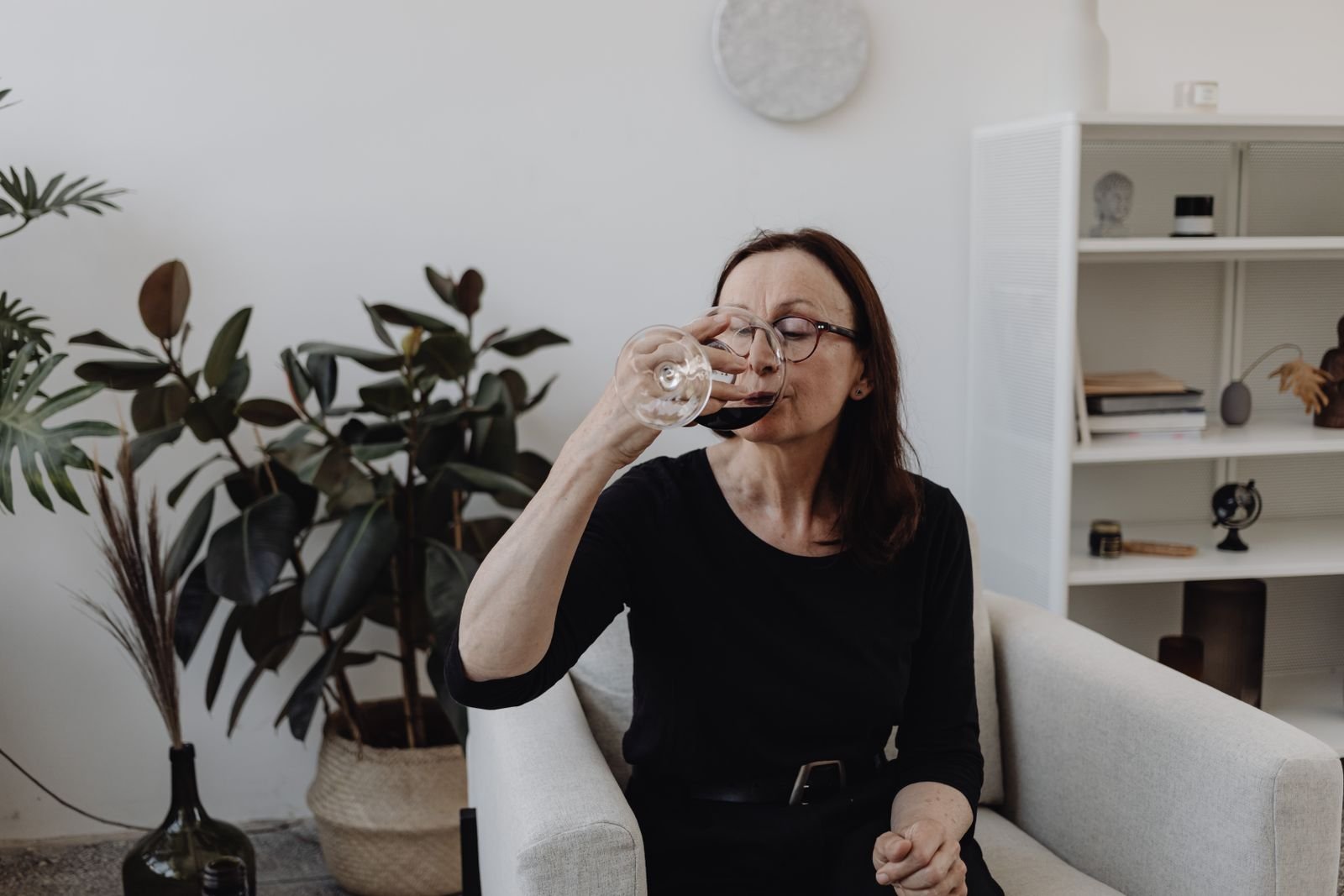
The Hidden Costs: Your Sleep and Your Long-Term Health
This is the most common thing I hear. “A drink helps me fall asleep.”
It might help you fall asleep faster. But falling asleep and getting restorative sleep are two very different things.
A 2018 study in JMIR Mental Health, led by Julia Pietilä, looked at heart-rate data from more than 4,000 Finnish adults on nights they drank and nights they didn’t. In the first three hours of sleep, the body’s physiological recovery dropped by about 9% after a low amount of alcohol (roughly one to two drinks), 24% after a moderate amount, and 39% after a heavy amount.
Read that again. Even one or two drinks measurably reduced how well the body recovered overnight. And those effects showed up in active people and sedentary people alike.
Sleep is when you repair muscle, balance your hormones, and clear waste from your brain. If you’re dragging through the afternoon, reaching for coffee at 3 p.m., and wondering why you “just don’t have the energy,” your evening drink may be part of the story.
Now for the part most people have never heard, and I want to be straight with you about it.
In January 2025, the U.S. Surgeon General issued an advisory on alcohol and cancer risk. It named alcohol as the third leading preventable cause of cancer in the United States, behind tobacco and obesity. It linked alcohol to at least seven types of cancer, including breast, colorectal, esophageal, liver, mouth, throat, and voice box cancers.
The advisory reported that alcohol contributes to roughly 100,000 cancer cases and about 20,000 cancer deaths in the U.S. every year. For breast cancer, risk begins to climb at levels as low as one drink per day.
And here’s the part that surprised me. Only about 45% of Americans recognize alcohol as a cancer risk, compared with 89% who know about tobacco.
What about the old line that red wine is good for your heart? For years, headlines leaned on studies showing that light drinkers seemed healthier than non-drinkers. The problem is that many of those “non-drinkers” had quit because they were already sick, which made moderate drinking look better than it really was. More recent research has been far less kind to that idea.
If you enjoy a glass of wine, that’s your call to make. Just don’t drink it as medicine. The antioxidants people point to in red wine are found in grapes, berries, and plenty of other foods that don’t come with the downsides.
I’m not telling you this to scare you. I’m telling you because you deserve to make this choice with all the information on the table, not just the part the wine commercials show you.
A No-Guilt Plan to Drink Less (Without Feeling Deprived)
You don’t need to announce you’re quitting forever. You don’t need a dramatic “dry month.” You just need a plan that works on a Tuesday night when you’re tired and the fridge is right there.
Here’s what I recommend to people who want to cut back without making it a whole identity crisis:
- Pick your drinking days in advance. Decide on Sunday which two or three evenings get a drink. Every other night, it’s off the table. Decisions made ahead of time beat decisions made at 7 p.m.
- Replace the ritual, not just the drink. Most of the pull is the routine: the glass, the chair, the exhale. Keep all of that. Fill the glass with sparkling water, lime, and a splash of tart cherry juice, or brew a pot of herbal tea.
- Eat first. Drinking on an empty stomach spikes blood alcohol faster. If you do have a drink, have it with a real meal that includes protein.
- Stop three hours before bed. That gives your body a head start on processing it before sleep, which protects more of your overnight recovery.
- Keep the pour honest. A standard drink is 5 ounces of wine, 12 ounces of regular beer, or 1.5 ounces of spirits. Most home pours are bigger than people think.
- Move after dinner. A 10-minute walk after your evening meal gives you something to do with that restless “I need to unwind” feeling, and it helps your blood sugar too.
Try it for two weeks. Then pay attention. How do you sleep? How do you feel at 3 p.m.? How do your workouts feel? Let your own body be the judge.
And if you find that cutting back is harder than you expected, that’s worth noticing too. There’s no shame in asking your doctor for help.
Here’s what I’ve learned after four decades of training, injuries, setbacks, and comebacks. The only way to start when you’re not motivated is to do it anyway.
You won’t always feel like skipping the drink. You won’t always feel like going for that walk. Do it anyway. Some nights you’ll slip, and that’s fine. One evening doesn’t define you. What you do most nights does.
The goal isn’t to become a different person. It’s to stop letting a small nightly habit steal the strength, the sleep, and the energy you’re working so hard to rebuild.
Your Next Step
Ready to put that reclaimed energy to work? Grab my free 5-Day Fit & Strong Reset, a beginner-friendly plan you can do at home with just a resistance band. It’s built for people who haven’t exercised in a while and want a safe, simple place to start. Visit SilverFitPlus.com to download it today.
Sources
National Institute on Alcohol Abuse and Alcoholism (NIAAA) — “Aging and Alcohol” — NIAAA, National Institutes of Health, accessed 2026 — www.niaaa.nih.gov
Parr EB, Camera DM, Areta JL, et al. — “Alcohol Ingestion Impairs Maximal Post-Exercise Rates of Myofibrillar Protein Synthesis following a Single Bout of Concurrent Training” — PLOS ONE, 2014 — journals.plos.org
Pietilä J, Helander E, Korhonen I, Myllymäki T, Kujala UM, Lindholm H. — “Acute Effect of Alcohol Intake on Cardiovascular Autonomic Regulation During the First Hours of Sleep in a Large Real-World Sample of Finnish Employees: Observational Study” — JMIR Mental Health, 2018 — mental.jmir.org
Office of the U.S. Surgeon General — “Alcohol and Cancer Risk: The U.S. Surgeon General’s Advisory” — U.S. Department of Health and Human Services, 2025 — pubmed.ncbi.nlm.nih.gov