
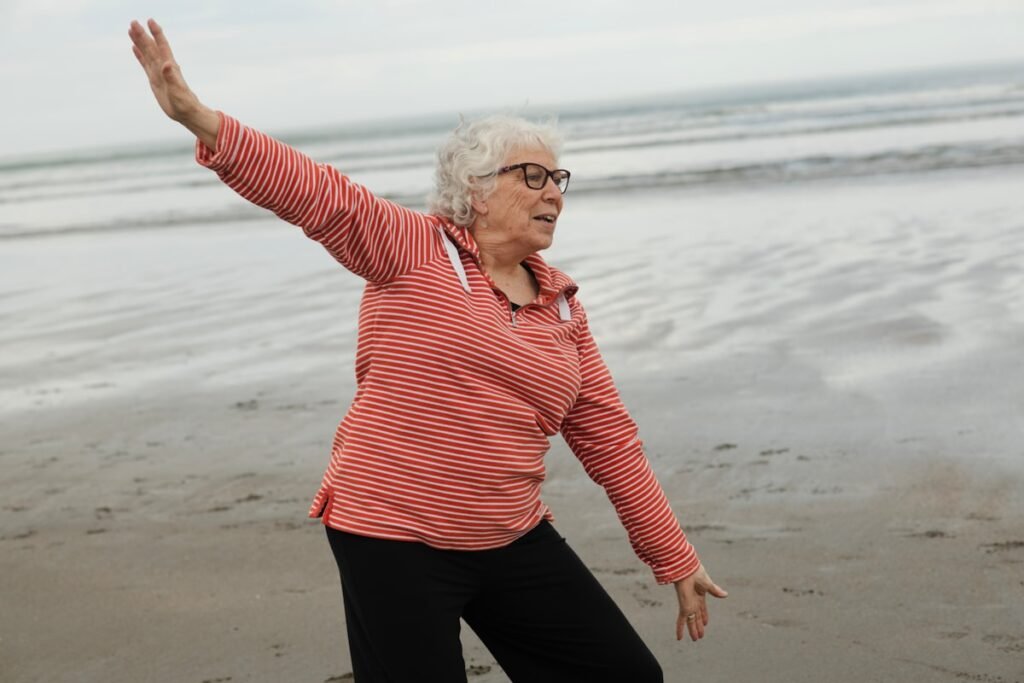
Nobody wants to think about falling. It feels like admitting something about getting older that you’re not ready to admit. But here’s the truth: balance is a trainable skill, not a fixed trait, and the research on preventing falls is some of the most encouraging in all of exercise science — provided you act before the fall, not after it.
The statistics around falls in older adults are serious. Falls are the leading cause of injury-related death in adults 65 and older in the United States, and the leading cause of both fatal and nonfatal injuries in that age group. But the statistics on what exercise does to fall risk are equally striking — and far less discussed. You have much more control over this than most people realize.
The Evidence Is Overwhelming
A systematic review of randomized controlled trials found that exercise interventions targeting balance, leg strength, and reactive control consistently reduced fall risk and improved function in adults living independently. The numbers vary by method, but they’re all meaningful: Tai Ji Quan-style training was linked to 31 to 58 percent reductions in falls, the Otago Exercise Program to 23 to 40 percent reductions, and combined strength-and-balance training to 20 to 45 percent reductions.
Even more striking, training that specifically challenges reactive balance — your ability to catch yourself when you’re unexpectedly thrown off balance — showed reductions in lab-tested falls of 50 to 75 percent. That’s not a small edge. That’s the difference between catching yourself and not catching yourself.
What the research also shows clearly is that the people who benefit most are the ones who start before they’ve had a serious fall. After a fall, fear of falling becomes its own obstacle. Strength and confidence built beforehand change the entire equation.
You don’t rise to the moment you almost fall. You fall to the level of the balance you never trained.
Why Balance Declines After 50
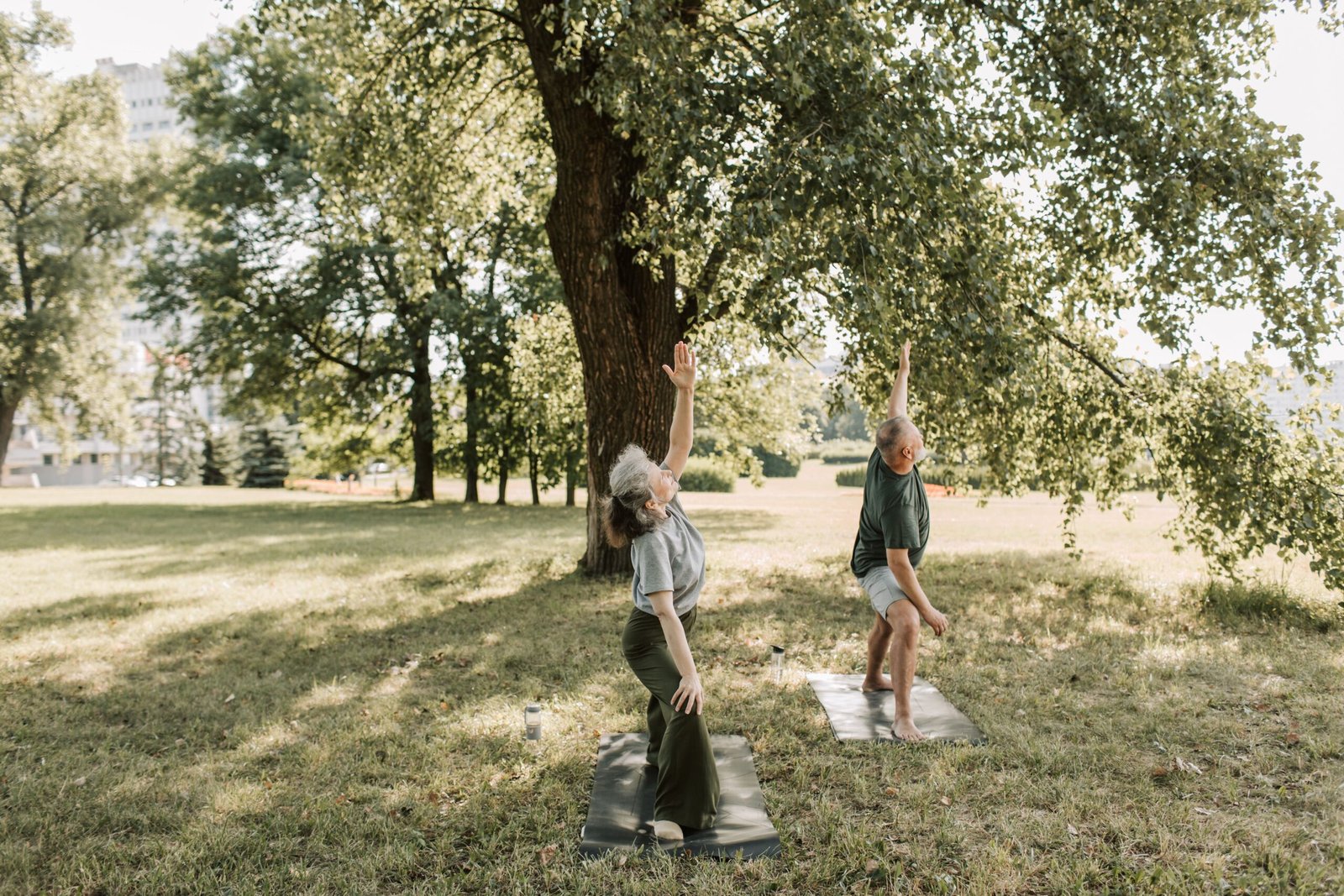
Balance depends on three systems working together: your vestibular system (the inner ear), your visual system (eyes), and your proprioceptive system (sensors in your muscles, joints, and skin that tell your brain where your body is in space). All three of these systems degrade with age if not actively challenged.
The vestibular system becomes less sensitive to small movements, making it harder to detect when you’re starting to sway. Vision changes — including reduced depth perception and slower adaptation to light changes — make uneven surfaces and low-light environments more hazardous. Proprioceptive sensitivity in the feet and ankles, which is the first line of detection for balance disturbances, declines significantly in sedentary adults after 60.
The good news is that all three systems respond to training. Balance training doesn’t just strengthen your legs — it literally re-trains the communication pathways between your body and your brain, sharpening the reflexes that catch you before a stumble becomes a fall.
Why This Gets Skipped
Balance training doesn’t get the attention strength or cardio does because it doesn’t feel like “working out” — there’s no burn, no sweat, sometimes not even much visible movement. But the functional payoff shows up everywhere: faster walking speed, quicker get-up-and-go reaction times, and real gains in the kind of full-body coordination that keeps you independent at home. Research also found meaningful improvements even from low-to-moderate intensity balance work — this isn’t about being an athlete. It’s about being consistent.
The fear-of-falling cycle is another reason people skip it. After a near-fall or an actual fall, people often become more sedentary out of fear. But reduced activity leads to weaker muscles and slower reflexes, which increases actual fall risk — making the fear a self-fulfilling prophecy. Movement, not avoidance, is what breaks that cycle.
Building Balance Into Your Week
You don’t need equipment or a class to start. These exercises can be done at home, near a counter or chair for support:
- Practice standing on one foot for 20 to 30 seconds per side, daily. Hold a counter lightly for safety; the goal is to reduce how much support you need over time.
- Try heel-to-toe walking across a room — placing one foot directly in front of the other as if walking a line — to challenge coordination and gait control.
- Add single-leg stands with your eyes closed once the open-eyes version feels easy. Removing visual input forces your proprioceptive system to work harder.
- Practice sitting down to and rising from a chair without using your hands, focusing on slow, controlled movement — this builds the leg strength and hip stability that supports real-world balance.
- If you want structured programming, Tai Chi and Otago-style programs have the strongest track records in the research. A local class or online video series is an excellent entry point.
- Layer balance work alongside strength training — the combination is what the research consistently shows works best, not either one in isolation.
Progressive Challenge: Making It Harder Over Time
Like any form of training, balance work needs to progress to keep producing results. Once standing on one foot for 30 seconds feels easy, extend the time to 45 seconds, then 60. Once that’s solid, try it on a slightly softer surface like a folded yoga mat. Eyes closed, firm surface, then eyes closed on a softer surface — each progression challenges the system in a new way and forces continued adaptation.
Reactive balance training — where you practice responding to unexpected shifts — is the most powerful category and the one tied to the strongest reductions in actual falls. Simple versions include having someone gently tap your shoulder unexpectedly while you stand on one foot, or practicing quick weight shifts side to side. These look deceptively simple, but they’re training the exact neuromuscular pathway that catches you when you trip on a sidewalk crack.
I think about balance training the same way I think about warming up: it’s the thing people skip because it doesn’t feel urgent, right up until the day it’s the only thing that matters. Don’t wait for that day.
What to Do When Balance Training Feels Impossible
A lot of older adults come to balance training with a specific fear: they’re afraid of falling while trying to do exercises designed to prevent falling. That fear is completely reasonable, and it’s also one of the most common reasons people avoid starting. But it’s worth naming it clearly, because working around it is straightforward once you do.
The principle is simple: every balance exercise has a regression. Standing on one foot too difficult? Practice weight shifts from foot to foot while holding a counter with both hands. Even rocking slightly side to side while standing builds the ankle and hip stabilizers that balance work targets. The goal of any session is to be challenged without being unsafe. If you need full counter support for six weeks before you can reduce it to fingertip contact, that’s not failure — that’s exactly how the adaptation process works.
People with neuropathy in the feet, post-stroke weakness on one side, or severe osteoporosis face real constraints that affect how they train. In those cases, a physical therapist who specializes in balance and fall prevention is the right starting point. They can design a progression that accounts for the specific sensory or motor deficits at play. What matters is not that you follow a generic program, but that you are doing something that progressively challenges your balance system within a safe range for your body.
The Long-Term Picture: What Consistent Balance Work Actually Buys You
The payoff for balance training isn’t just not falling. It shows up in the quality of ordinary movement. People who consistently train balance report faster walking speeds, less hesitation on stairs, greater confidence on uneven terrain like grass or gravel, and less fatigue from everyday movement. These aren’t trivial improvements. They’re the difference between moving through the world with ease and moving through it with constant low-grade vigilance.
Research also shows that balance ability is one of the strongest predictors of all-cause mortality in older adults, independent of other health markers. A 2022 study published in the British Journal of Sports Medicine found that inability to balance on one leg for ten seconds in midlife was associated with nearly double the risk of death from any cause over the next decade. Balance is not just a fall-prevention tool. It is a proxy for overall neuromuscular health, and it is among the most responsive of those markers to targeted training.
The window of opportunity here is real. You lose balance ability faster than you lose strength as you age, and you regain it faster too, given the right input. A month of consistent practice produces measurable changes in stabilization response times. Six months produces changes that carry over to real-world performance. A year of training can shift you from the high-risk to the low-risk category on standard fall-risk assessments. These are not small numbers.
If there is one physical capacity worth prioritizing in your fifties and sixties, balance is a strong candidate. Not because it is glamorous, but because the alternative — losing it quietly until a fall changes everything — is a trajectory you have real power to redirect. Start simple. Stay consistent. Progress gradually. That is the whole formula.
Visit silverfitplus.com for the free 5-Day Fit & Strong Reset to start building the strength and stability that keeps you upright and independent, on your terms.
Sources
“Effectiveness of Balance- and Strength-Based Exercise Interventions for Fall Prevention in Community-Dwelling Older Adults: A Systematic Review of Randomized Controlled Trials” — PMC, 2025 — https://pmc.ncbi.nlm.nih.gov/articles/PMC12842942/
“Effectiveness of exercise interventions on fall prevention in ambulatory community-dwelling older adults” — Frontiers in Public Health, 2023 — https://www.frontiersin.org/journals/public-health/articles/10.3389/fpubh.2023.1209319/full
“StayBalanced: implementation of evidence-based fall prevention balance training for older adults” — PMC — https://www.ncbi.nlm.nih.gov/pmc/articles/PMC7913398/