
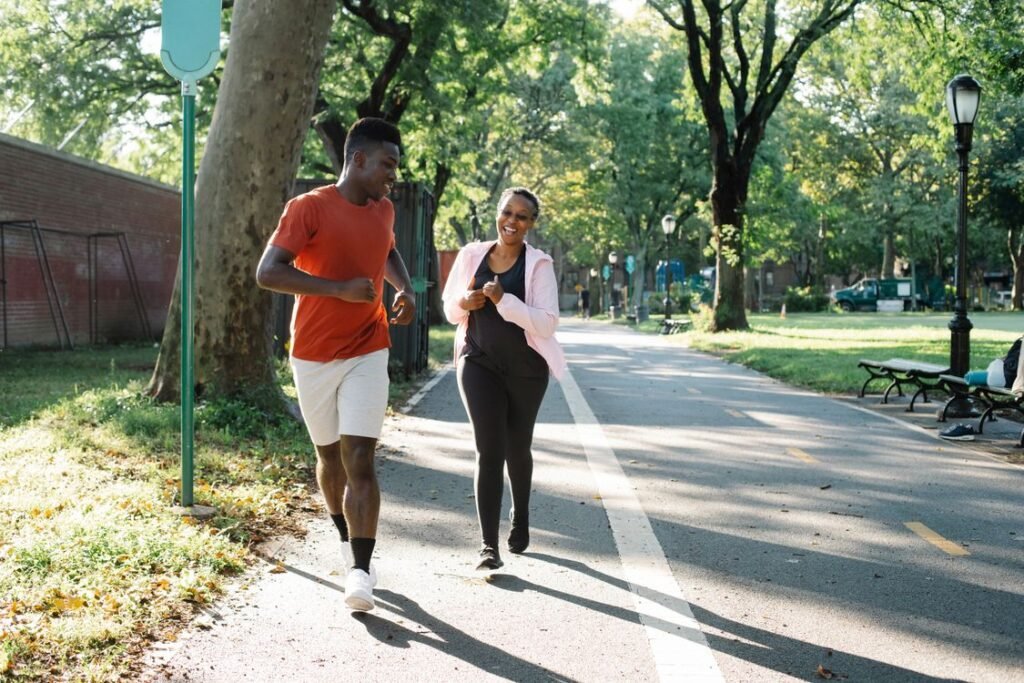
You’ve probably tried the solo approach. Bought the equipment, downloaded the app, promised yourself this time would be different. And then, three weeks in, life got busy and nobody noticed you stopped. That’s not a willpower failure. That’s what happens to any habit that depends entirely on you showing up for yourself, alone, with nobody expecting you.
It’s not a character flaw, and it’s not proof that you’re just not a disciplined person. It’s a predictable outcome of the way the plan was built in the first place.
Here’s what the research keeps finding, over and over, in study after study of older adults: the single biggest predictor of whether someone sticks with exercise for the long haul isn’t discipline, motivation, or even how much they enjoy the workout itself. It’s whether someone else is expecting them to show up.
That changes how you should think about starting. The goal isn’t to become a more disciplined person. The goal is to build yourself a reason to show up that doesn’t depend on discipline at all.
I’ve watched this play out with more clients than I can count. The ones who quietly disappear after a few weeks are almost never the ones who lacked drive on day one — plenty of them showed up more fired up than anyone else in the room. What they lacked was a structure that kept pulling them back once the initial motivation wore off, which it always does. The ones who are still training five years later almost all have one thing in common: somebody else in the picture who’d notice if they stopped.
Willpower Was Never the Problem
Fitness culture loves to sell willpower as the missing ingredient. Just want it more. Just push harder. If you’re not seeing results, you’re not trying hard enough.
That framing is convenient for selling programs, and it’s also mostly wrong for adults over 50 who are starting from a sedentary place. Willpower is a finite, exhaustible resource — it’s strongest first thing in a fresh decision and weakest at the end of a long day, which is exactly when most people are trying to talk themselves into a workout.
Social accountability doesn’t run out the same way. Knowing someone is waiting for you at the pool, in the parking lot, or on a video call doesn’t drain over the course of a tiring week the way pure self-motivation does. It’s a completely different mechanism, and it’s a far more reliable one.
Think about the commitments you never break, even on your worst days. You probably don’t skip a coffee catch-up with an old friend just because you’re tired, even though nothing bad would technically happen if you did. You show up because someone is expecting you, and letting them down feels worse than the effort of showing up. That exact same wiring is sitting there unused for most people’s fitness routines, simply because nobody built it into the plan.
What Isolation Actually Does to a Body
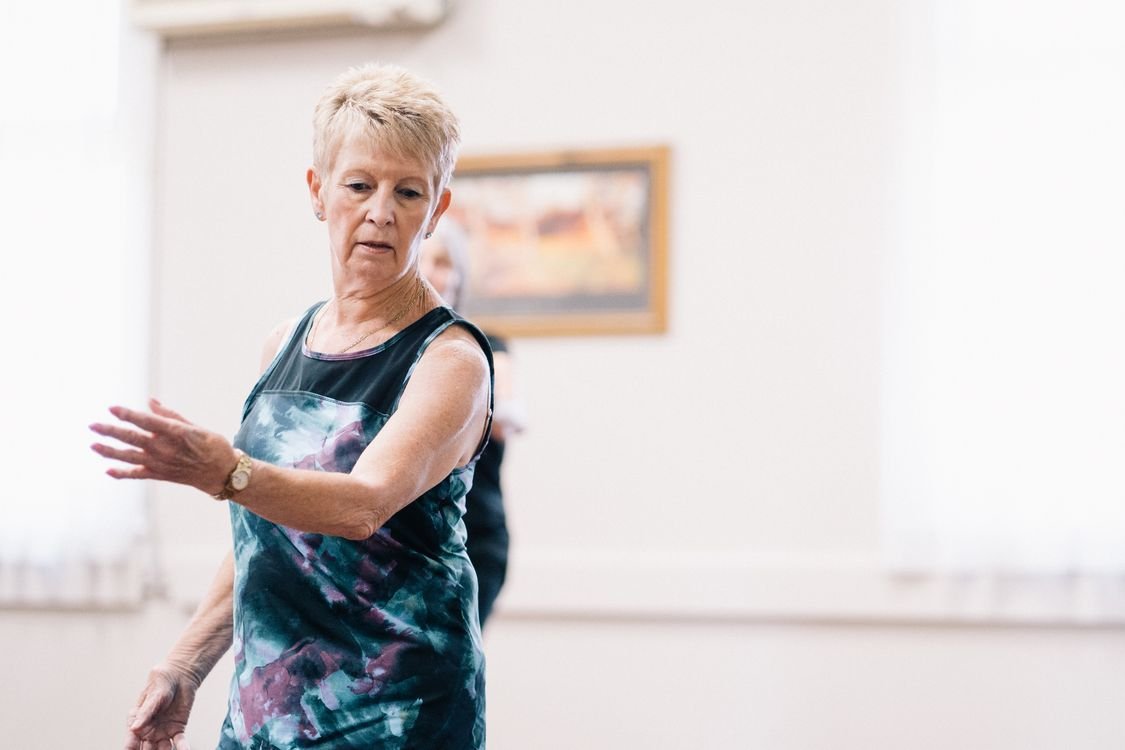
This isn’t just about workout attendance. Social connection — or the lack of it — has a measurable effect on how long you live.
A landmark 2015 meta-analysis by researcher Julianne Holt-Lunstad, pulling together data from more than 3.4 million people, found that social isolation, loneliness, and living alone were each independently linked to a roughly 26 to 32 percent increase in mortality risk. Flip that finding around, and the same body of research found that strong social connection increases the odds of survival by about 50 percent — a protective effect on the same order as quitting smoking, and larger than the risk posed by obesity.
None of that is exercise-specific on its own. But layer it onto what we know about training, and the picture gets clearer: showing up to move your body alongside other people isn’t a nice bonus on top of the physical benefit. For a lot of people, it’s what makes the physical benefit possible in the first place, because it’s what gets them through the door on the days motivation alone wouldn’t.
This hits differently after 50 than it did at 25, too. Retirement, grown kids moving out, friends relocating, a spouse’s schedule changing — the natural social scaffolding that used to exist around you thins out at exactly the life stage when you need it most. Nobody’s assigning you a gym buddy the way a coach did in school. You have to build that structure on purpose now, because it doesn’t happen automatically anymore.
The Research on Why Group Training Actually Sticks
This isn’t a hunch. It’s been measured directly in people over 60.
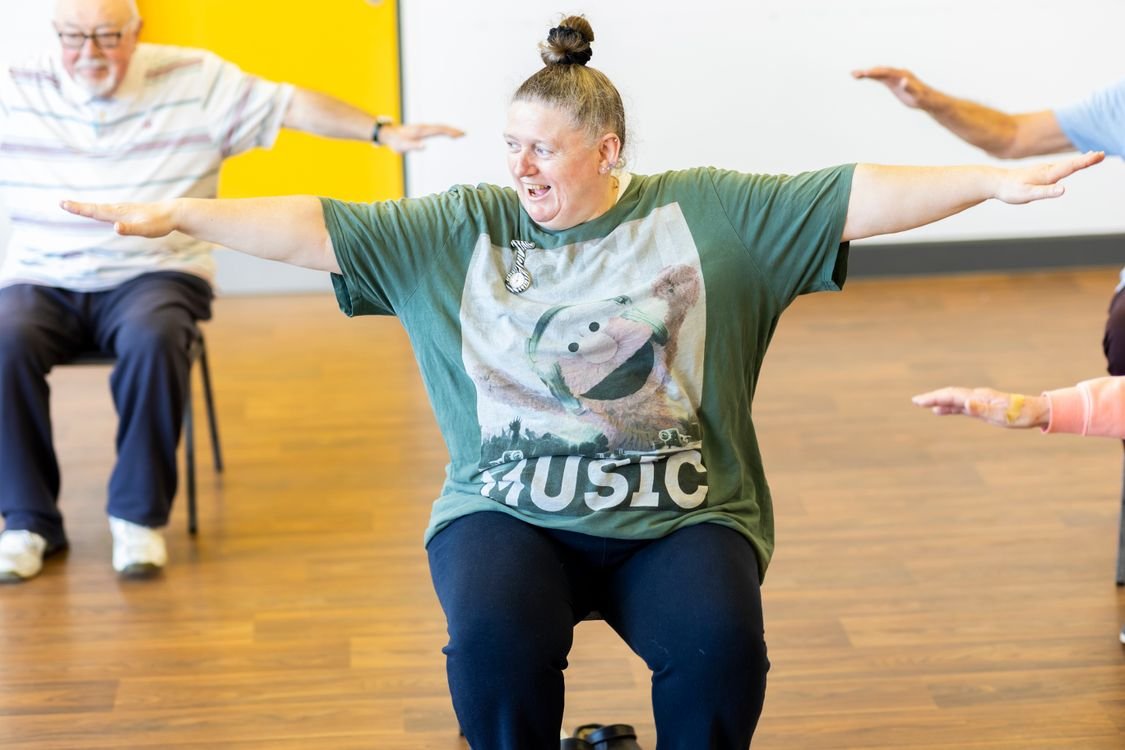
A nine-year study tracking adults aged 60 to 65 found that having the company of friends or family during physical activity more than doubled the odds of meeting recommended activity levels — roughly 50 percent of people with companionship hit the guidelines, compared to about 20 percent of people going it alone.
A separate analysis of community-based group exercise programs for older adults found long-term adherence rates approaching 70 percent — dramatically higher than the dropout rates typically seen in solo home exercise routines. When researchers asked participants why they kept coming back, the answer wasn’t the workout itself. It was the sense of belonging the group created, described again and again as a kind of family that people didn’t want to let down.
That last part is worth sitting with. It’s not that people in group settings enjoy burpees more. It’s that not showing up starts to feel like letting someone down, and that’s a far stronger pull than any app reminder or New Year’s resolution.
It also compounds. The longer you stay connected to a group, the more the relationships themselves become a reason to keep training that has nothing to do with fitness at all — you’re not just protecting your strength anymore, you’re protecting a friendship. That’s a far more durable motivator than any goal written on a calendar.
You are not going to think your way into consistency. You’re going to need someone who notices when you’re not there. Build that first, and the workouts take care of themselves.
How to Find or Build Your Fitness Community After 50
You don’t need to join a boutique studio or become a group-fitness person overnight if that’s not who you are. Community can be a lot smaller and simpler than that.
Start with one other person. A neighbor, a sibling, an old friend who’s also been meaning to get back to it. Two people who’ve told each other a specific day and time is far more reliable than one person’s private intention. Even a weekly check-in text — did you move today — creates the same accountability effect the research is describing.
If you’re drawn to a class setting, look for something built for your stage of life specifically, rather than dropping into a class designed for twenty-five-year-olds where you’ll spend more energy managing intimidation than training. Community centers, senior centers, and gyms increasingly run programs designed around exactly this. A group built around people at a similar starting point removes a lot of the self-consciousness that keeps people from walking in the door at all.
And if in-person isn’t realistic right now — distance, mobility, schedule — accountability can travel. A standing video call with a friend who’s also training, a shared tracking spreadsheet, even a group text where you both report in after each session. The mechanism that matters isn’t the room you’re standing in. It’s that someone else knows whether you showed up.
- Start with one other person and a specific day and time — not a vague plan
- Look for classes built for your stage of life, not general classes
- Check community centers, senior centers, and gyms for age-matched programs
- Keep accountability alive remotely with a call, text, or shared tracker
This Is Not About Being an Extrovert
I hear the objection before it’s finished: I’m not a group person. I don’t want to work out in front of strangers. Fair enough — you don’t have to become someone you’re not. I’m not a natural extrovert either, and forty-plus years in gyms hasn’t changed that about me.
What the research actually points to is accountability, not extroversion. That can be one training partner and total silence otherwise. It can be a coach who texts you before your session. It can be a spouse who walks with you every morning without either of you saying a word about it being “exercise.” The size of the community matters far less than whether it creates a genuine expectation that you’ll show up.
What matters is removing yourself as the only person keeping the promise. When you’re the only one who knows whether you skipped today, skipping is easy. When someone else is in on it, skipping has a social cost — and that cost is exactly what gets you through the weeks your motivation alone wouldn’t have.
If you’re genuinely unsure where to start, don’t overthink the first move. Text one person today and name a day and time. Not “we should work out sometime” — an actual day, an actual hour. That single message does more for your long-term consistency than another week of researching the perfect program would.
If a gym environment with structure and people around you sounds like what’s been missing, Vinny’s Build Strong After 50 lays out exactly how to start: a 12-week program built for adults getting back into training after time away. Get your copy and stop trying to do this alone.
Sources
- Holt-Lunstad, J., Smith, T.B., Baker, M., Harris, T., Stephenson, D. — “Loneliness and Social Isolation as Risk Factors for Mortality: A Meta-Analytic Review” — Perspectives on Psychological Science, 2015 — https://journals.sagepub.com/doi/full/10.1177/1745691614568352
- Franke, T. et al. — “The Relationship between Social Support for Physical Activity and Physical Activity across Nine Years in Adults Aged 60-65 Years at Baseline” — PMC / International Journal of Environmental Research and Public Health, 2023 — https://pmc.ncbi.nlm.nih.gov/articles/PMC10002128/
- Farrance, C., Tsofliou, F., Clark, C. — “Adherence to Community Based Group Exercise Interventions for Older People: A Mixed-Methods Systematic Review” — BMC Public Health / ScienceDirect, 2016 — https://bmcpublichealth.biomedcentral.com/articles/10.1186/s12889-017-4049-6