
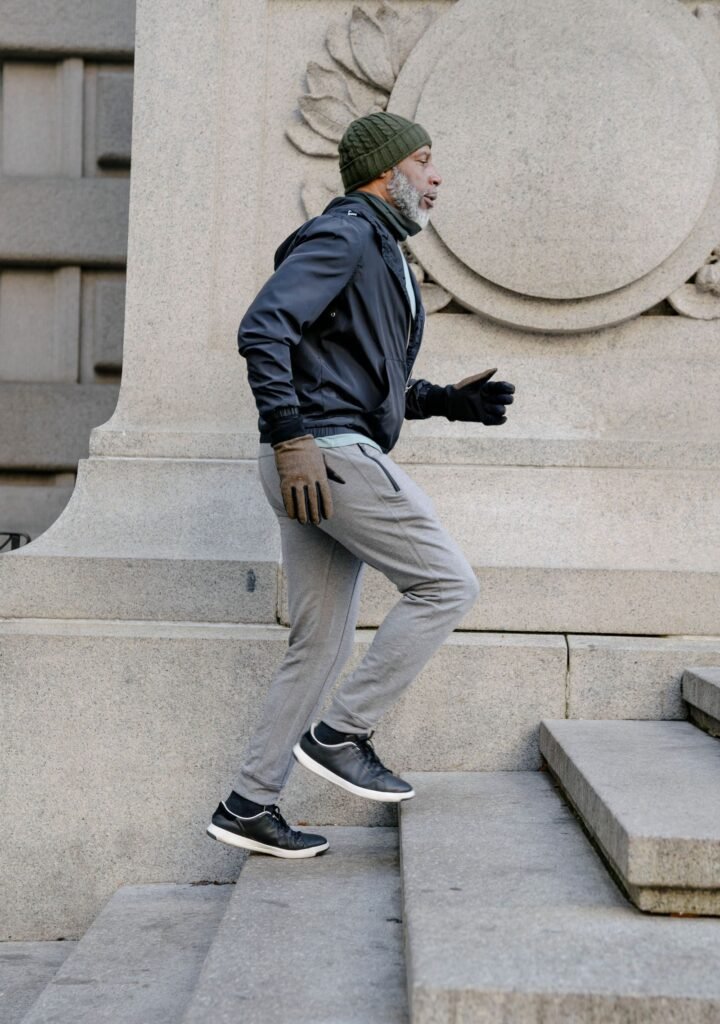
You’ve probably noticed it. Going up the stairs is work, but it’s manageable. Going down is where your knee starts to talk back. You grab the railing a little harder. You lead with your “good” leg. You take each step like the staircase owes you money.
Most people over 50 assume this is the sound of their knees wearing out. Somebody told them it was arthritis, or age, or “just how it goes.” Then they start avoiding stairs, and the avoiding makes it worse.
I want to give you a different explanation, because the one you’ve been handed is incomplete. In my 40-plus years around training, and especially in my own comeback after years of not lifting, I learned that what hurts is often a skill you’ve stopped practicing, not damage you can’t undo.
Going Down Is a Different Job for Your Muscles
When you climb a step, your thigh muscles (the quadriceps) shorten to push you up. That’s called a concentric contraction. It’s the part of exercise everybody thinks about.
When you step down, those same muscles have to lengthen while still holding your body weight, like a brake slowly letting out. That’s an eccentric contraction. Your quads are acting as shock absorbers, lowering you under control instead of letting you drop.
Here’s the problem. Most sedentary adults never train the brake. Sitting, standing, and getting in and out of the car all happen fast, with momentum. So the eccentric strength quietly fades, and the knee joint ends up taking the impact that the muscle used to absorb.
That’s why the stairs feel worse going down. It’s also why stepping off a curb, walking downhill, or lowering yourself into a low chair can feel shaky. Your knee isn’t failing. Your brakes are weak.
The research backs up how much those muscles matter. A 2022 systematic review and meta-analysis in the British Journal of Sports Medicine, pooling 11 long-term studies with 46,819 men and women, found that weak knee extensor muscles were linked to a higher risk of developing painful knee osteoarthritis: about 85% higher odds in women and 43% higher in men. The authors rated the evidence as low quality, so it isn’t the final word, but the direction is clear. Weak thighs and unhappy knees tend to travel together.
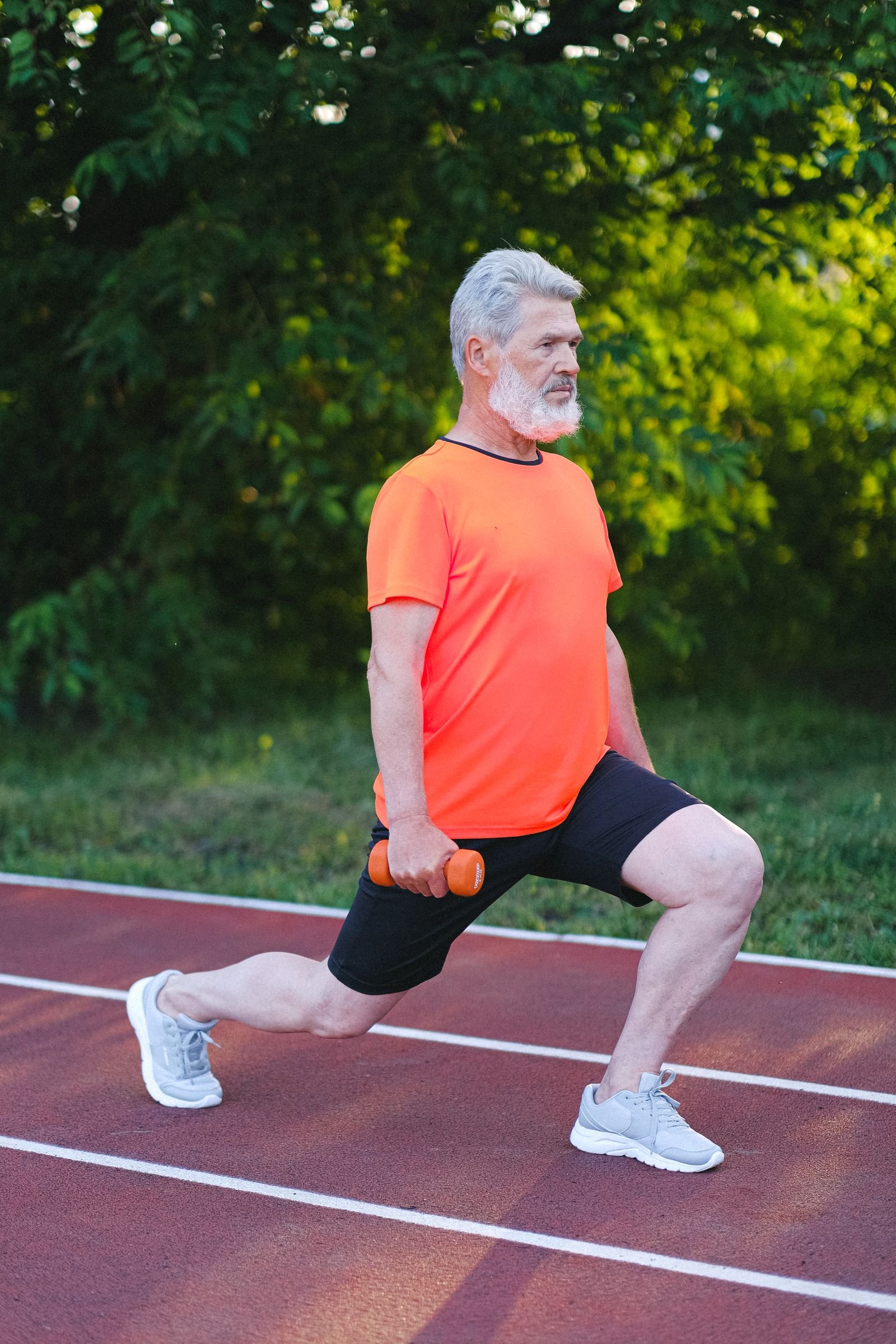
Why Avoiding Stairs Makes Your Knees Worse
When something hurts, the natural instinct is to protect it. So you take the elevator, you plan errands around steps, and you sit more. It feels like you’re being careful.
But your knee cartilage doesn’t have its own blood supply. It gets much of its nourishment from movement, the gentle squeeze and release of loading and unloading the joint. The muscles around the knee stay strong only when they’re asked to work. Rest the knee too much and both of those systems start to fade.
This isn’t just my opinion as a trainer. The 2019 American College of Rheumatology and Arthritis Foundation guideline for osteoarthritis of the hand, hip, and knee strongly recommends exercise for people with knee osteoarthritis. The groups describe a strong body of evidence supporting exercise for almost all patients with OA. They also added a recommendation for balance training and strongly recommended tai chi for the knee and hip.
Think about how many “little stairs” are hidden in your day. Stepping off a curb. Climbing out of the bathtub. Getting down from a bus or a pickup truck. Lowering yourself onto the toilet or into the back seat of a car. Every one of those is an eccentric job for your thighs. When the brakes are weak, all of those small moments get harder and riskier, and that’s when people start to feel old in their own homes.
The good news is that the reverse is also true. Strengthen the brake, and all of those moments get easier at once. One skill, dozens of payoffs.
Read that again if you’ve been told to “take it easy” on your knees. The people who write the treatment rules put movement at the top of the list, not at the bottom.
“Your knee isn’t failing. Your brakes are weak, and brakes can be rebuilt at any age.”
I understand the fear. When my shoulders gave out in my early 40s, with arthritis and torn rotator cuffs on both sides, I stopped training for years because I was afraid of making things worse. Then in my early 60s I found myself dealing with sarcopenia, the age-related muscle loss that sneaks up on you while you’re “protecting” yourself. What finally worked wasn’t more rest. It was finding pain-free angles and building back slowly. Your knees deserve the same approach.
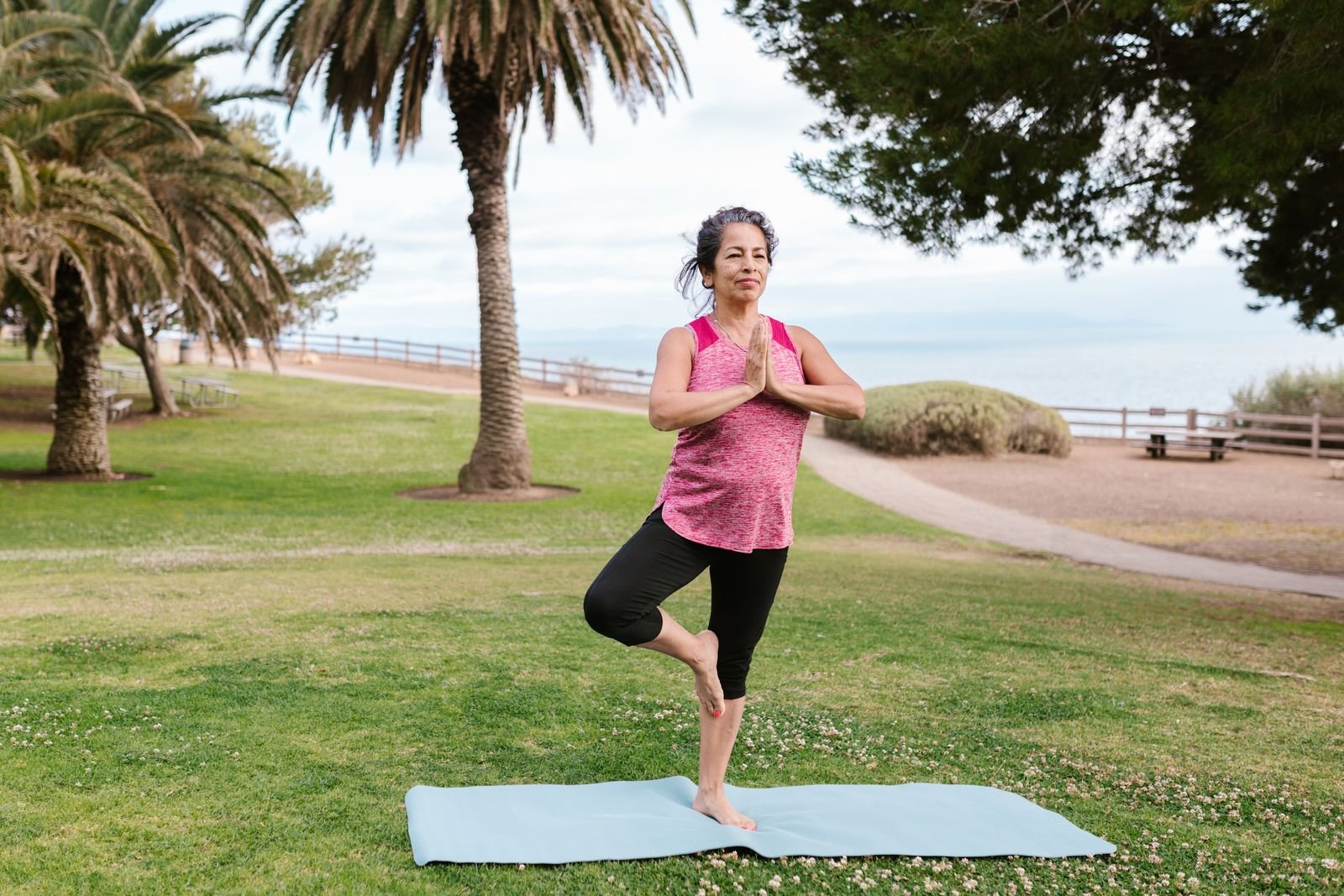
The Slow-Step Plan: Rebuilding Knee Control at Home
You don’t need a gym for this. You need a sturdy bottom step, a railing or countertop to hold, and a little patience. The key word for every exercise below is slow. Speed hides weakness. Slow builds control.
Start with these four movements, two or three days a week:
- Slow sit-to-stand. Sit on a sturdy chair, stand up at a normal pace, then take a full four seconds to sit back down. Don’t plop. Aim for 8 to 10 reps. This is the safest way to start training the brake.
- Wall slides with a pause. Lean your back against a wall, feet a step out, and slide down only as far as feels comfortable, even if that’s just a few inches. Hold for two or three seconds, then slide back up. Do 6 to 8 reps.
- Step-ups, forward and slow. Holding the railing, step up onto the bottom stair with one foot, then lower the other foot back to the floor over three or four seconds. Do 6 to 8 per leg. This is the exact movement you’re trying to get better at.
- Heel taps (the step-down drill). Stand on the bottom step facing down, holding the railing. Slowly bend the standing knee and lower the other heel until it barely touches the floor, then straighten back up. Start with 5 per leg. This one is harder, so build up to it.
Watch your knee as you do these. You want it tracking roughly over your second and third toes, not caving inward. If it caves, go less deep, slow down, and use the railing more. A smaller movement done well beats a bigger movement done sloppy.
Use the 0-to-10 pain scale as your guide. Mild discomfort, around 2 or 3 out of 10, that settles within a day is generally fine and normal when you’re asking tired muscles to wake up. Sharp pain, pain above 5 out of 10, or pain and swelling that’s worse the next morning means you went too far. Back off the depth or the reps next time, but don’t quit.
What Progress Actually Looks Like
Don’t expect stairs to feel brand new in a week. Muscle strength usually takes several weeks of consistent work to build, and your nervous system needs time to relearn the smooth, controlled lowering you used to do without thinking.
Here’s a realistic picture. In the first two weeks, the exercises feel awkward and you might feel some muscle soreness in your thighs. That’s your quads waking up. Around weeks three to six, the slow sit-to-stand gets easier and you’ll likely notice you’re not grabbing the railing quite as hard. By two to three months of steady work, many people find that stairs go from something they dread to something they simply do.
Track something simple so you can see it. Count how many slow sit-to-stands you can do in 30 seconds, or notice how many stairs you take without leaning on the rail. When motivation dips, and it will, those small numbers remind you that it’s working.
A word of caution. If your knee locks, gives way completely, swells up suddenly, or you’ve had a recent injury or surgery, check with your doctor or a physical therapist before starting. The same goes if you have pain at night that doesn’t ease with rest. Those are signs that something beyond weak muscles needs a look.
Take the Stairs on Purpose
Once your basic strength starts coming back, start using the stairs as training instead of avoiding them. Take one flight on purpose each day. Go down slowly, holding the rail, landing softly and controlling every step. Think “quiet feet.” If you can hear yourself landing, you’re dropping instead of lowering.
I know you may not feel motivated to start any of this. Most people I work with don’t. I’ve learned that the only way to start when you’re not motivated is to do it anyway. Five slow sit-to-stands while the coffee brews. One controlled flight of stairs on the way to bed. That’s how the comeback begins.
Your knees aren’t a lost cause. They’re waiting for you to give them a reason to get stronger.
Your Next Step
If you want a simple place to start, grab my free 5-Day Fit & Strong Reset. It’s a beginner-friendly PDF built for adults over 50 who are starting from zero, and all you need is a resistance band. Five short days of joint-friendly strength work, including the kind of slow, controlled leg movements your knees need to handle stairs again.
Visit SilverFitPlus.com to download your free copy of the 5-Day Fit & Strong Reset today.
Already comfortable in a gym and ready for a structured plan? Build Strong After 50 is my paid 12-week strength program, built around pain-free angles for aging joints.
Free 5-Day Guide
Get the Free 5-Day Fit & Strong Reset
A joint-safe, beginner-friendly start for adults over 50. Enter your email and the guide goes straight to your inbox.
No spam. Unsubscribe anytime.
Sources
- Øiestad BE, Juhl CB, Culvenor AG, Berg B, Thorlund JB — “Knee extensor muscle weakness is a risk factor for the development of knee osteoarthritis: an updated systematic review and meta-analysis including 46 819 men and women” — British Journal of Sports Medicine, 2022 — https://bjsm.bmj.com/content/56/6/349
- Kolasinski SL, et al. (American College of Rheumatology / Arthritis Foundation) — “2019 American College of Rheumatology/Arthritis Foundation Guideline for the Management of Osteoarthritis of the Hand, Hip, and Knee” — Arthritis Care & Research / Arthritis & Rheumatology, 2020 — https://rheumatology.org/press-releases/american-college-of-rheumatology-arthritis-foundation-release-updated-treatment-guideline-for-osteoarthritis