
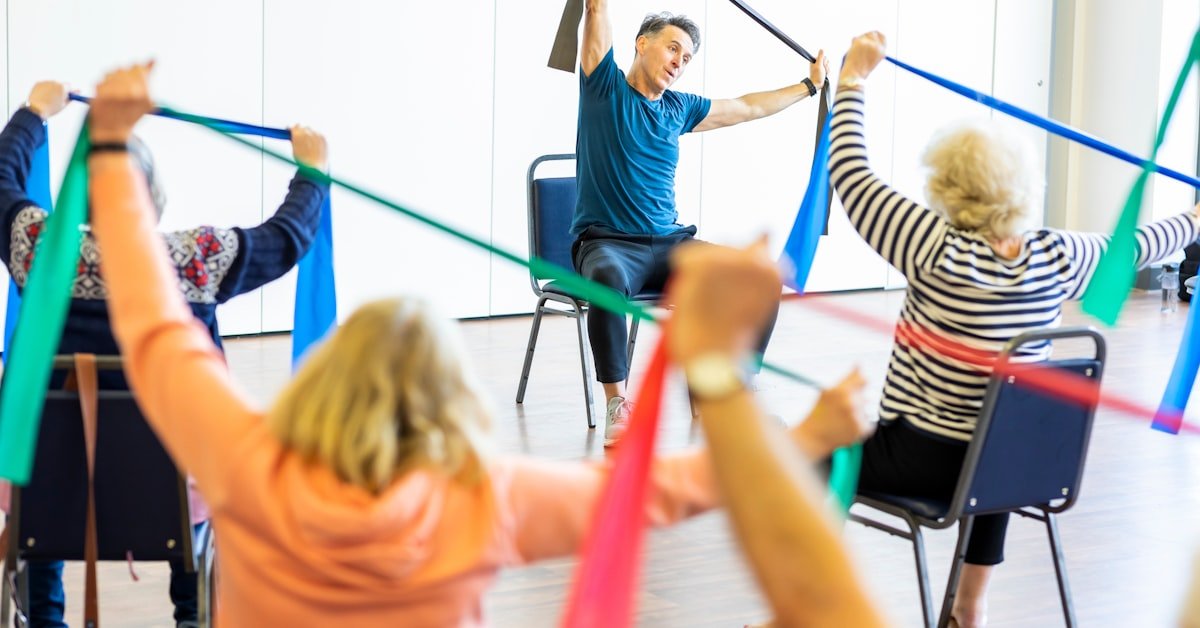
The rotator cuff gets a lot of blame. Bad shoulder? It’s probably your rotator cuff. Can’t lift your arm? Rotator cuff. Woke up in pain after sleeping funny? Could be the rotator cuff.
Here’s what most people don’t know: the rotator cuff isn’t one thing. It’s four muscles — supraspinatus, infraspinatus, teres minor, and subscapularis — that work together to stabilize your shoulder joint. When one of them weakens, gets irritated, or tears, the whole system starts to break down.
I know this firsthand. I developed bilateral shoulder arthritis and torn rotator cuffs in my early 40s. Both shoulders. Stopping made things worse, not better. What I eventually learned is that the shoulder can be trained. You just have to know how.
“The shoulder doesn’t fail because you used it too much. It fails because you used it wrong — or stopped using it at all.”
What’s Actually Happening Inside Your Shoulder
The rotator cuff surrounds the ball of your upper arm bone (the humerus) and holds it against the socket (the glenoid). Every time you raise your arm, reach overhead, or rotate your shoulder, those four muscles work together to keep the joint centered.
After 50, the tendons lose water content and become less pliable. Blood supply decreases, slowing healing. The supraspinatus — the most commonly torn muscle — passes through a narrow space between two bones, and that space can narrow with age-related changes or poor posture.
According to a study in the Journal of Shoulder and Elbow Surgery, rotator cuff tears are present in approximately 50% of adults over 60 — many without symptoms at all. That’s not a reason to panic. It’s a reason to train smarter. The Arthritis Foundation notes that regular, appropriate exercise is one of the most effective tools for managing shoulder pain.
Why the Wrong Exercises Make It Worse
Most people either do nothing (and lose strength until the joint becomes unstable) or they try to push through overhead pressing and end up in more pain. The truth is in between.
Certain shoulder positions compress the already-crowded space where the supraspinatus lives. Exercises that bring your elbow above your shoulder — like behind-the-neck lat pulldowns, upright rows, or overhead pressing with a narrow grip — create impingement risk, especially if your rotator cuff is already compromised.
Pain-free angles matter more than the exercises themselves. A 2021 review in the Journal of Orthopaedic and Sports Physical Therapy found that targeted rotator cuff strengthening at sub-maximal loads significantly improved shoulder function and reduced pain in older adults — without surgical intervention. The key word is targeted.

3 Resistance Band Exercises to Start With
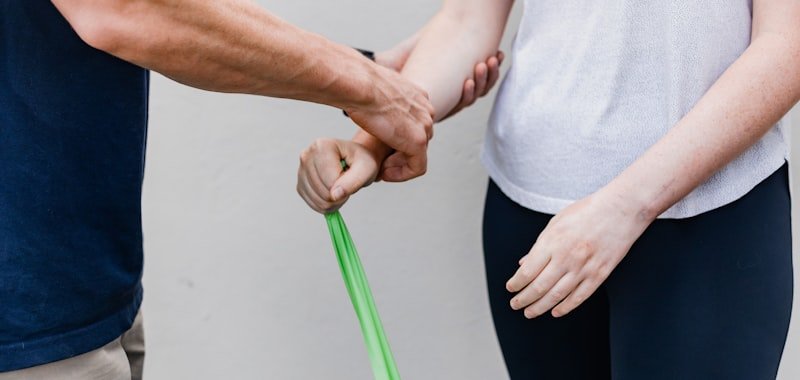
These three movements strengthen the rotator cuff without loading the shoulder in risky positions. A single resistance band is all you need.
1. External Rotation (standing or seated)
Anchor the band at elbow height. Keep your elbow bent 90 degrees and tucked at your side. Rotate your forearm outward, away from your body. Slow and controlled — 3 sets of 12–15 reps each side.
2. Band Pull-Apart
Hold the band in front of you at shoulder height, hands shoulder-width apart. Pull the band apart, squeezing your shoulder blades together. Elbows stay soft. 3 sets of 15.
3. Low-to-High Row
Anchor the band low. Stand tall, pull the band up and back toward your hip — not overhead. This works the lower fibers of the rotator cuff and rear deltoid. 3 sets of 12 each side.
None of these are glamorous. None of them look impressive on social media. But they are exactly what aging shoulders need.
The Role of Posture in Shoulder Health
One factor that rarely gets discussed in conversations about rotator cuff health is posture — specifically, the way forward head posture and rounded shoulders change the mechanics of the entire shoulder girdle. When your head sits in front of your shoulders and your upper back rounds forward (thoracic kyphosis), the space in the shoulder joint where the supraspinatus tendon runs becomes even more compressed than it already is after 50. This is called subachromial impingement, and it is dramatically worsened by poor posture.
This is why the three exercises above work better when paired with basic postural work. Band pull-aparts are already a posture corrector in disguise — pulling the scapulae together and strengthening the mid-back muscles that hold your upper back upright. Adding face pulls (band anchored at head height, pulling toward your forehead with elbows high) and chest openers (doorway stretches held for 30 seconds) makes a meaningful difference over time.
For people who sit for many hours — at a desk, driving, or watching TV — building posture awareness becomes as important as the exercises themselves. The cue is simple: ears over shoulders, shoulders over hips. This is not a perfect fix for structural changes that have developed over decades, but it takes tension off the rotator cuff every time you do it.
Progressive Loading: The Principle Behind Long-Term Shoulder Recovery
The three starter exercises above are exactly that — starters. The research on rotator cuff rehabilitation consistently shows that progressive loading is what produces long-term results. This means gradually increasing resistance or reps over weeks, not staying at the same light band forever because it feels safe.
The concern many people have is that adding load will worsen an existing problem. The reality is the opposite: tendons adapt to load. Collagen fibers in the tendon reorganize in response to progressive tension, making the tendon more resilient over time. A tendon that is protected from all load becomes more fragile, not less. This is sometimes called the tendon loading paradox — the thing that hurts is also the thing that heals it, when done correctly.
The key words are “correctly” and “progressively.” That means starting with pain-free range of motion, adding light resistance, and increasing only when you can complete the movement without pain or compensation. It also means consistency over weeks and months, not days. Most people who quit rotator cuff rehab do so within two or three weeks because they don’t feel immediate progress. The adaptations are happening at the tissue level on a timeline measured in weeks, not sessions.
A good benchmark: if you complete three sets of 15 reps of an exercise with full control and no pain at a given resistance level for two sessions in a row, you are ready to step up slightly — either to a thicker band or a slightly longer range of motion.
When to Talk to a Doctor (and What to Ask For)
Most rotator cuff problems in people over 50 respond well to conservative management — the kind of exercise-based approach described above. But there are signs that warrant a medical conversation:
Sudden sharp pain after a specific incident (a fall, an overhead lift gone wrong, catching yourself from a fall) can indicate an acute tear. Pain that wakes you from sleep consistently, pain at rest that is not decreasing over several weeks of appropriate exercise, and significant weakness — an inability to raise the arm at all or hold it against light resistance — are all reasons to see a doctor and likely get imaging (MRI or ultrasound) to assess the degree of injury.
If you do end up in a medical setting, it is worth asking about physical therapy before cortisone injections and surgery. Cortisone injections can reduce pain and inflammation enough to allow rehab to proceed, but they do not repair tissue and repeated injections have been shown to weaken tendon integrity over time. They are a bridge, not a treatment. Surgery for partial tears in older adults has a more mixed evidence base than many people assume — conservative physical therapy achieves comparable outcomes for most partial-thickness tears, and the recovery from surgery itself is lengthy.
That said, large full-thickness tears in certain muscles, especially when accompanied by significant functional loss, may genuinely require surgical repair. An orthopedic consultation can clarify this — and it is worth getting a second opinion before agreeing to an operation.
Staying Consistent When the Shoulder Talks Back
The hardest part of shoulder rehab is that it is uncomfortable enough to feel wrong, but not so dangerous that you have a clear stop signal most of the time. Pain during training and pain from training are different things, and learning to distinguish between them takes patience. A general guideline: pain that stays at a 3 or below on a 10-point scale during an exercise, and returns to baseline within 24 hours afterward, is typically acceptable. Pain that spikes during movement or lingers for days afterward suggests you have exceeded the current threshold and need to step back.
Tracking this — even informally in a notebook — helps immensely. Logging which exercises you did, any pain levels noticed, and how you felt the next day gives you data to make better decisions and builds confidence that the program is working as tissue changes accumulate over time.
If you’re ready to build a complete program around safe, pain-free training, download the free 5-Day Fit & Strong Reset — a beginner-friendly guide built for people in their 50s and beyond. All you need is a resistance band. Visit SilverFitPlus.com to grab your copy.
Sources
Yamamoto A, et al. — “Prevalence and risk factors of a rotator cuff tear in the general population” — Journal of Shoulder and Elbow Surgery, 2010 — https://pubmed.ncbi.nlm.nih.gov/19540777/
Arthritis Foundation — “Exercise for Arthritis” — arthritis.org
Kuhn JE, et al. — “Effectiveness of physical therapy in treating atraumatic full-thickness rotator cuff tears” — Journal of Shoulder and Elbow Surgery, 2013