
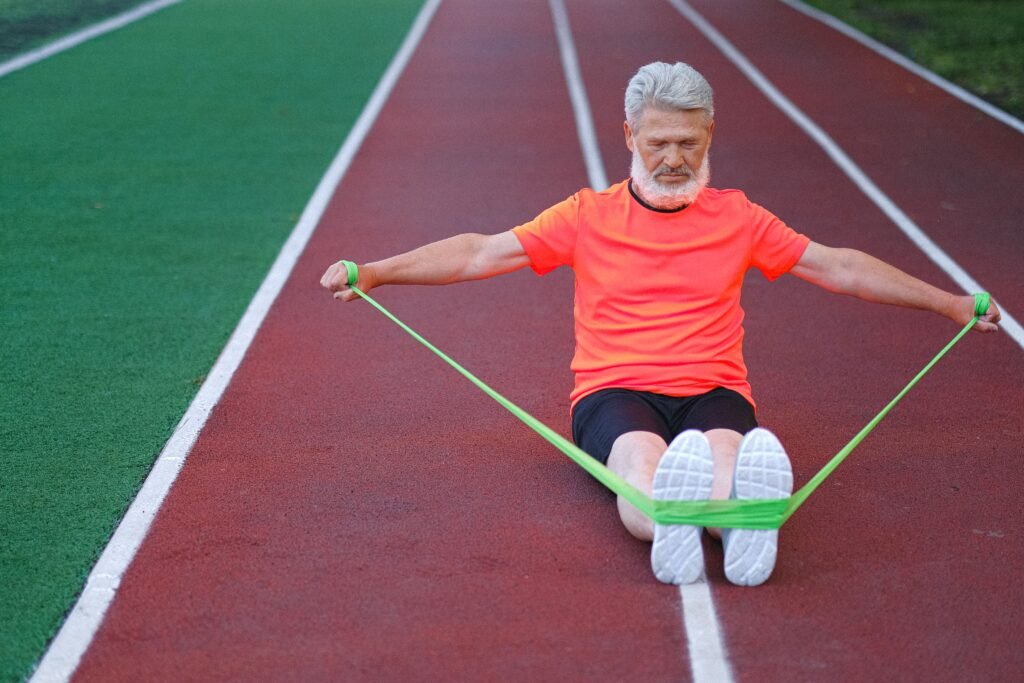
If you’ve been told that fighting type 2 diabetes means cardio, cardio, and more cardio, you’ve only heard half the story. Strength training — actual resistance work, even with light dumbbells or a resistance band — has some of the most consistent evidence behind it for improving blood sugar control in people over 50. And you don’t need to have ever set foot in a weight room to start.
Most people with type 2 diabetes already know they need to move more. The question nobody answers clearly enough is: what kind of movement, how much, and why? The answer to all three of those questions points, more than most people realize, toward picking up something heavy and putting it down again — or at minimum, using your muscles against meaningful resistance, consistently, over time.
What the Research Actually Shows
A meta-analysis of older adults with type 2 diabetes found that resistance training significantly lowered HbA1c — the long-term marker of blood sugar control — along with measurable gains in muscular strength and lean body mass. In a separate 8-week study, patients who did resistance training saw significant drops in blood glucose, insulin, and insulin resistance compared to a control group that didn’t train.
Perhaps most importantly, a head-to-head comparison found that resistance exercise training lowers HbA1c more than aerobic training alone in adults with type 2 diabetes. That’s a significant finding. It doesn’t mean you should skip the walking — the combination of both produces the strongest outcomes. But if your program right now is only cardio and your numbers aren’t moving as much as expected, this is why.
The research also looked at dose: what intensity and frequency produces the best results? The strongest improvements in fasting blood glucose came from moderate-intensity resistance work, done three times a week, in sessions of 30 to 45 minutes. Not marathon gym efforts. Not maxing out on weights. Controlled, manageable effort, repeated consistently over weeks.
Your muscles are the biggest storage tank of your body for blood sugar. Every time you strengthen them, you’re building a bigger tank.

Why Muscle Is the Missing Piece
Here’s the mechanism, in plain terms: your muscles are one of the primary places your body stores glucose after you eat. The more muscle you have, and the more often you use it, the more efficiently your body can clear sugar out of your bloodstream — even outside of workout time. That’s why resistance training doesn’t just help in the moment. It changes your baseline blood sugar response to everything you eat.
When you contract a muscle during exercise, it activates glucose transporters (GLUT4) in the muscle cell membrane. These transporters pull glucose out of the blood and into the muscle for fuel — and they do this without requiring insulin. This is the insulin-independent pathway, and it’s why people with insulin resistance can still significantly improve blood sugar control through resistance training even when their insulin response is impaired.
The adaptation doesn’t stop when the workout ends either. After a resistance training session, your muscles remain in a heightened glucose uptake state for several hours — sometimes up to 24 hours post-exercise. This is why training frequency matters: the more days per week you train, the more of your week you spend in this beneficial metabolic state.
What Happens When You Skip It
After age 30, the average adult loses about 3 to 8 percent of their muscle mass per decade. After 60, that rate accelerates. This is called sarcopenia, and for people managing blood sugar, it’s particularly damaging because less muscle means less glucose storage capacity. Your body has to process that sugar somewhere else — and it ends up elevating blood glucose, stressing the liver, and over time, contributing to the progression of complications associated with poorly managed diabetes.
Inactivity also compounds this at the cellular level. When muscles aren’t used regularly, they become insulin-resistant — meaning even when insulin is present and functioning normally, the muscle cells don’t respond to it as efficiently. Building and maintaining muscle through resistance training is one of the most direct interventions for reversing that resistance and giving your body back its natural blood sugar management tools.
Getting Started Without a Gym
The good news is that you don’t need a gym membership or equipment to get started. Bodyweight exercises that target the large muscle groups are enough to produce meaningful improvements when done consistently. Here’s a practical starting point:
- Start with two to three full-body sessions per week, on non-consecutive days to allow your muscles to recover and adapt.
- Focus on the big muscle groups first — legs, back, and chest — since they store the most glucose and produce the largest metabolic response per session.
- Keep rest between sets short, under 60 seconds if comfortable; shorter rest intervals are associated with better blood sugar outcomes in the research.
- Pair resistance work with a short walk after meals for a combined effect on both post-meal and fasting blood sugar.
- Aim for consistency over 8 or more weeks before evaluating results. Blood sugar adaptation takes time; don’t judge the program after one week.
How to Progress Over Time
The biggest mistake beginners make is staying at the same difficulty level for too long. Your muscles adapt to a given stimulus, and once they have, the training stops producing change. Progressive overload — gradually increasing the challenge — doesn’t mean lifting heavier weights before you’re ready. It can mean doing one more repetition this week than last week, slowing down the movement tempo to increase time under tension, reducing rest time between sets, or adding a second set to exercises where you were doing one.
A simple 8-week structure for someone starting from scratch might look like this: weeks 1 and 2 focused on learning movements with bodyweight only, weeks 3 and 4 adding a light resistance band, weeks 5 and 6 increasing resistance or adding light dumbbells, and weeks 7 and 8 extending session length or adding one additional exercise per session. That represents a substantial progression in two months, and it’s entirely achievable without a trainer or expensive equipment.
Common Mistakes That Slow Progress
Training too hard too soon is the most common one, and it usually results in soreness that discourages people from continuing. Your first month of resistance training should feel manageable — you should finish sessions feeling like you could have done one or two more sets. That means your body is adapting without being overwhelmed.
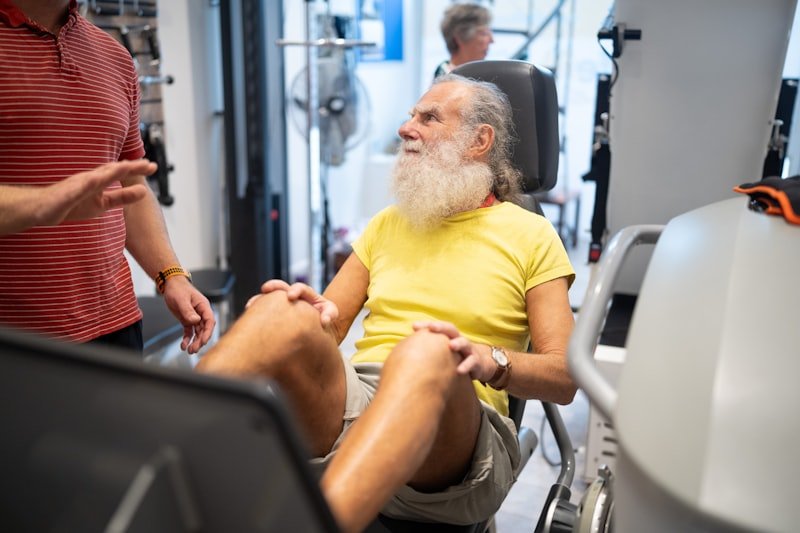
Skipping lower body work is the second most common mistake. People tend to gravitate toward upper body exercises because they feel more familiar. But your legs — quadriceps, hamstrings, glutes — are the largest muscle groups in your body and the biggest contributors to overall glucose uptake. Leg exercises like squats, step-ups, and resistance band leg extensions are some of the most powerful blood sugar tools in the entire program.
I didn’t come back to training through some perfect plan either. I came back through pain-free angles and showing up more days than not. If you’ve been putting this off because you don’t know where to start, that’s exactly what the next step is for.
What to Expect in the First Two Months
The timeline for blood sugar improvement from resistance training is well-documented, but it requires patience that most people underestimate. In the first two to three weeks, you probably will not see dramatic changes in your glucose numbers. What you will notice is that the exercises feel less foreign, that you recover faster between sessions, and that your energy level in the hours after training is noticeably better than before you started.
Weeks three through six are where the metabolic changes begin showing up in measurable ways. Fasting blood sugar typically starts to improve, post-meal spikes become less extreme, and if you are monitoring HbA1c, you may start to see early movement by week eight. Research on 8-week training programs showed significant reductions in insulin and insulin resistance by the end of the program — not preliminary trends, but statistically meaningful changes.
By months two and three, the structural changes are taking hold: you have more muscle mass, your GLUT4 transporter expression is higher, and your body is processing carbohydrates more efficiently at rest. That is the baseline shift the research is pointing to. It is not a cure, but it is a meaningful change in how your body works every single day, produced by 30 minutes of effort, three times a week. That is worth showing up for, and it is entirely within reach starting this week.
Check out Build Strong After 50 — a structured, no-guesswork 12-week program that brings resistance training into your week, built for people getting back into it, not people who never left.
Sources
“Resistance Training for Glycemic Control, Muscular Strength, and Lean Body Mass in Old Type 2 Diabetic Patients: A Meta-Analysis” — PMC — https://pmc.ncbi.nlm.nih.gov/articles/PMC5446383/
“Dose-response relationships of resistance training in Type 2 diabetes mellitus: a meta-analysis of randomized controlled trials” — Frontiers in Endocrinology, 2023 — https://www.frontiersin.org/journals/endocrinology/articles/10.3389/fendo.2023.1224161/full
“Resistance exercise training lowers HbA1c more than aerobic training in adults with type 2 diabetes” — PMC — https://www.ncbi.nlm.nih.gov/pmc/articles/PMC2800839/