

Somebody at your doctor’s office, or maybe a well-meaning friend, has probably told you to “watch the glycemic index.” And then they moved on to the next topic like that phrase actually meant something useful to you. It doesn’t, not without an explanation, and I’m tired of watching people nod along to advice they don’t understand.
So let’s fix that. The glycemic index isn’t complicated once someone breaks it down in plain language, and once you understand it, you’ll look at your plate differently for the rest of your life. Not in a restrictive, joyless way. In a way that actually helps you keep your blood sugar steadier, your energy more consistent, and your long-term risk of complications lower.
This matters whether you’ve already been diagnosed with type 2 diabetes, you’re sitting in that frustrating pre-diabetes gray zone, or you just want to stop the 3 p.m. energy crash that hits after lunch. It also matters because so much of the advice out there gets thrown at you in medical jargon, with no explanation of what to actually do differently at the grocery store. Let’s fix that too.
What the Glycemic Index Actually Measures
The glycemic index, or GI, ranks carbohydrate-containing foods on a scale from 0 to 100 based on how quickly and how high they spike your blood sugar after you eat them. Researchers compare a food’s effect on your blood glucose to the effect of eating pure sugar, which sits at the very top of that scale.
Foods with a high GI get digested and absorbed quickly, which floods your bloodstream with glucose all at once. Foods with a low GI take longer for your body to break down, so the glucose enters your bloodstream gradually instead of all at once. That difference, gradual versus flooded, is the entire concept in one sentence. Everything else is detail.
According to Mayo Clinic, low-GI foods tend to be higher in fiber, protein, or fat, and they include foods like green vegetables, most whole fruits, beans, chickpeas, lentils, and some dairy like plain Greek yogurt. High-GI foods tend to be more refined and processed: white bread, white rice, sugary cereals, and anything made primarily from refined flour or added sugar.
A review examining glycemic index and glycemic load in patients with type 2 diabetes found that choosing lower-GI foods helps optimize postprandial glucose, meaning the blood sugar spike that happens specifically in the hours after a meal. That post-meal number is exactly the one that tends to catch people off guard, because you can eat “the right amount” of calories and still get hit with a steep spike if the carbohydrates you chose happen to be high-GI ones.
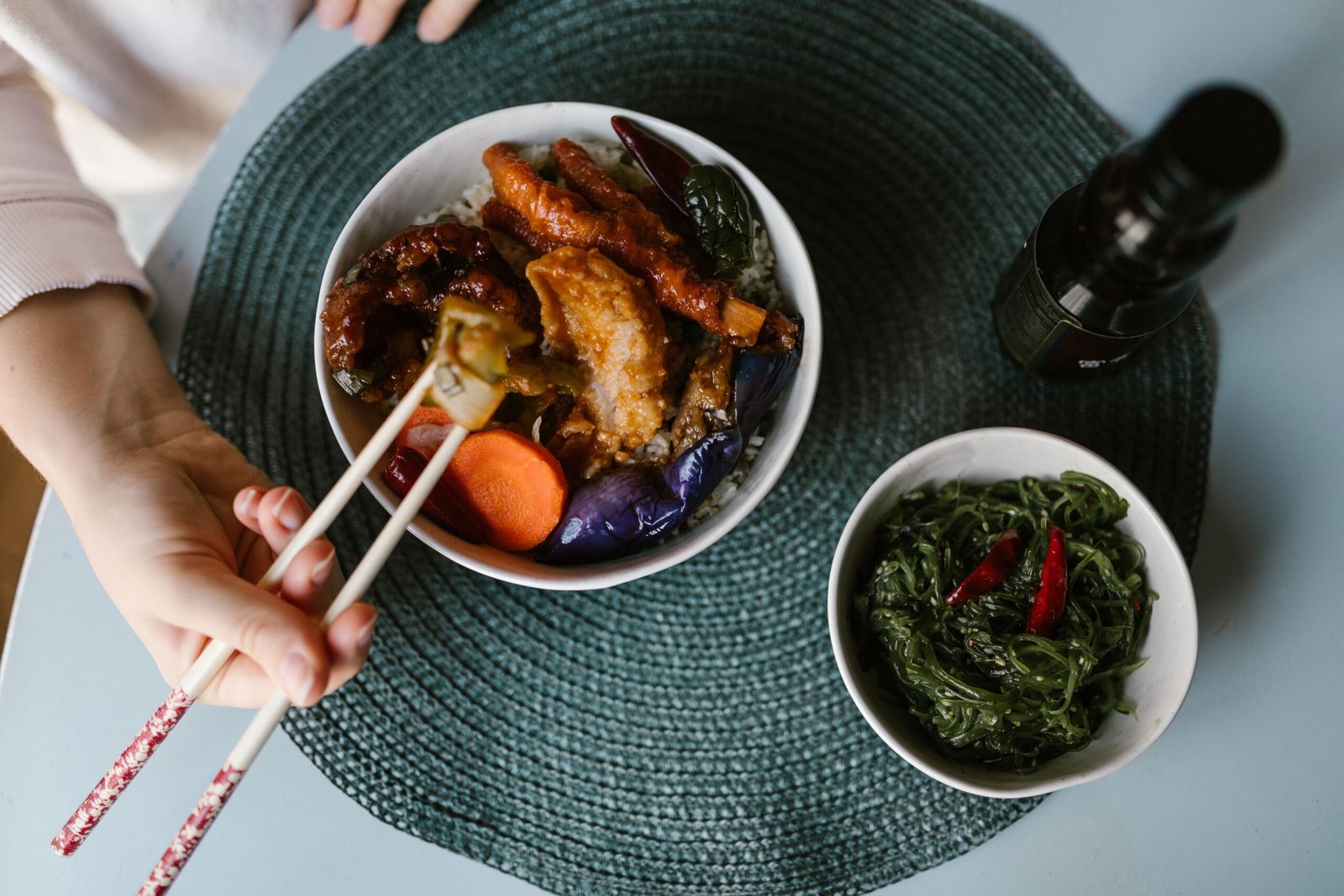
High GI vs. Low GI: What This Looks Like on Your Plate
Theory is nice, but you eat food, not numbers. Here’s how the glycemic index plays out in real meals you’re already choosing between, every single day.
- Bread: White bread and bagels are high-GI. Dense, seeded whole-grain bread or true sourdough runs meaningfully lower.
- Rice and grains: White rice spikes blood sugar fast. Steel-cut oats, barley, and quinoa release glucose more slowly and keep you fuller.
- Fruit: Watermelon and very ripe bananas run higher on the index. Berries, apples, and pears run lower, largely because of their fiber content.
- Potatoes: Regular baked or mashed potatoes are high-GI. Sweet potatoes, and potatoes that have been cooked and then cooled before eating, rank lower.
- Snacks: Pretzels and crackers made from refined flour spike quickly. A handful of nuts or a piece of cheese barely moves the needle.
Notice the pattern running through every one of these. It’s almost never about eliminating an entire food group. It’s about which version of a carbohydrate you’re reaching for, how it was prepared, and what you’re eating alongside it.
You don’t need to memorize a number for every food. You need to notice the pattern: whole, fibrous, and minimally processed beats refined, nearly every time.

Glycemic Load: The Piece Most People Miss
Here’s where the glycemic index gets a little misleading if you stop at the surface. Watermelon has a high GI, similar to white bread. That fact alone makes people think they need to avoid it. But GI only tells you how fast a food raises blood sugar per gram of carbohydrate. It doesn’t tell you how much carbohydrate is actually in a normal serving.
That’s where glycemic load, or GL, comes in. Glycemic load adjusts for portion size, and it’s a far more honest predictor of what a real serving does to your blood sugar. A cup of watermelon is mostly water, so despite its high GI, its glycemic load is low. A large plate of white rice, on the other hand, is both high-GI and high-GL, because you’re eating a large quantity of concentrated carbohydrate at once.
This distinction matters because it stops you from cutting foods you don’t actually need to cut, like fruit, while missing the foods that deserve more attention, like oversized portions of refined grains. If you remember nothing else from the technical side of this article, remember this: GI tells you about the food, GL tells you about the actual meal in front of you. Use GL as your practical guide, and use GI to understand why it works.
Why the Research Says This Matters, and Where It Falls Short
A meta-analysis published in Diabetes Care, the flagship journal of the American Diabetes Association, examined low-glycemic index diets specifically in people managing diabetes. It found that low-GI diets reduced HbA1c, your average blood sugar over roughly three months, by 0.43 percentage points more than conventional or high-GI diets. That might sound small on paper, but in diabetes management, a consistent HbA1c improvement of that size is clinically meaningful, and it comes from a dietary pattern change, not a new prescription.
Here’s the honest caveat, because I’m not going to oversell this to you. The American Diabetes Association’s more recent Standards of Care doesn’t recommend the glycemic index as a primary standalone tool. Their reasoning is practical: GI values can shift based on ripeness, cooking method, and what else you eat in the same meal, and checking your own blood glucose after eating tells you more about your individual body than a generic chart ever will.
So here’s how I’d frame it for you. Use the glycemic index and glycemic load as a starting filter, a rough guide for which foods tend to behave better in your body. Then use your own post-meal experience, or a glucose meter if you have one, as the real feedback loop. The two together are more powerful than either one alone. This isn’t about chasing a perfect number on a chart. It’s about noticing patterns in your own body and adjusting accordingly, meal by meal, week by week.
How to Use This Without Overcomplicating Your Life
You are not going to carry a GI chart around with you for the rest of your life, and you shouldn’t have to. A handful of practical habits get you most of the benefit without the mental math.
Pair carbohydrates with protein, fat, or fiber instead of eating them alone. Toast with peanut butter behaves differently in your body than toast by itself. The protein and fat slow digestion and blunt the spike that would otherwise follow.
Favor whole foods over refined ones as your default, not your rare exception. Brown rice over white, whole fruit over juice, steel-cut oats over the instant packets. These swaps alone handle most of the glycemic index math for you without you ever looking at a number.
Watch your portions of high-GI, high-GL foods rather than banning them outright. A few bites of white rice alongside vegetables and protein is a very different event for your blood sugar than a full plate of it eaten on its own.
Take a short walk after meals when you can manage it. This isn’t about the glycemic index directly, but it works through a related mechanism: your muscles pull glucose out of your bloodstream during activity, which blunts the same post-meal spike you’re trying to manage through smarter food choices in the first place.
None of this requires perfection, and it certainly doesn’t require giving up foods you love forever. It requires attention, a handful of better default choices, and the willingness to keep adjusting as you learn what your own body actually does with different foods.
I’ll leave you with one more piece of encouragement, because the science can start to feel clinical if we stop there. Every meal is a new decision point, not a referendum on the last one. If lunch was a spike, dinner is still a clean slate. You’re not trying to eat perfectly for the rest of your life. You’re trying to shift the odds in your favor, meal after meal, for the rest of your life, and that’s a far more sustainable goal than perfection ever was.
If you want a structured way to put movement to work alongside these food changes, check out Build Strong After 50, my 12-week program. It’s built for real beginners who want a clear, guided plan instead of guesswork.
Sources
- American Diabetes Association — “Low-Glycemic Index Diets in the Management of Diabetes” — Diabetes Care, 2003 — https://diabetesjournals.org/care/article/26/8/2261/22776/Low-Glycemic-Index-Diets-in-the-Management-of
- Mayo Clinic — “Low-glycemic index diet: What’s behind the claims?” — Mayo Clinic, 2023 — https://www.mayoclinic.org/healthy-lifestyle/nutrition-and-healthy-eating/in-depth/low-glycemic-index-diet/art-20048478
- “Glycemic Index (GI) or Glycemic Load (GL) and Dietary Interventions for Optimizing Postprandial Hyperglycemia in Patients with T2 Diabetes: A Review” — PMC, 2020 — https://www.ncbi.nlm.nih.gov/pmc/articles/PMC7352659/