
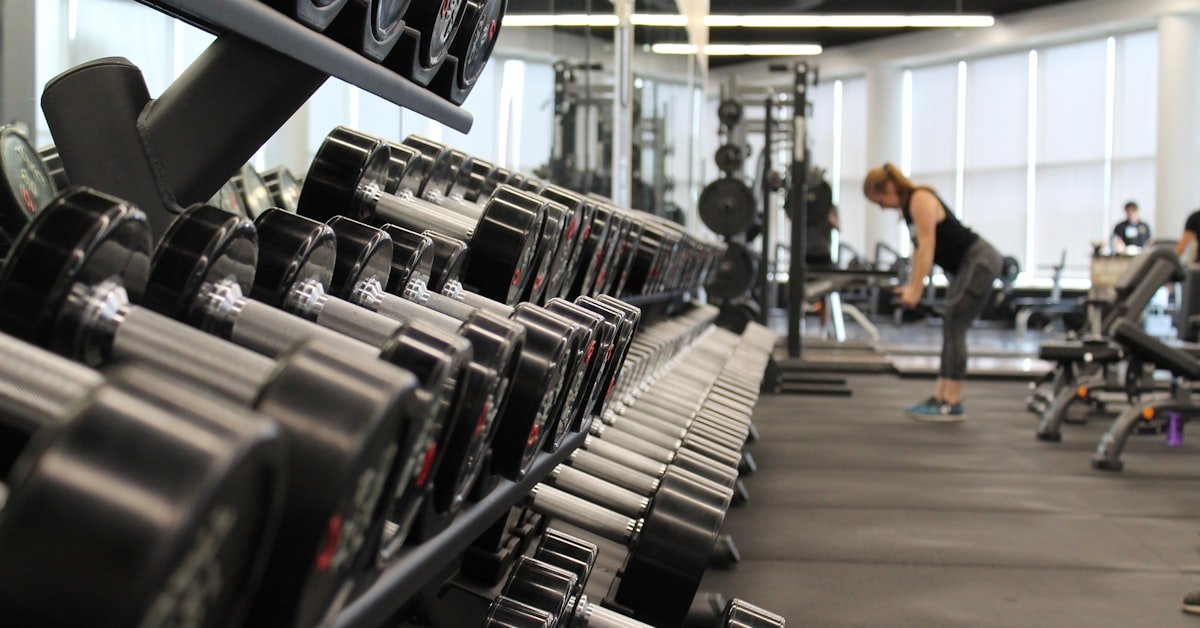
There is no shortage of fitness content telling you what to do. Six days a week. HIIT. Fasting. Cold plunges. Lifting heavy five times a week. Most of it is designed for 25-year-olds, marketed to everyone, and completely disconnected from the physical reality of being 50, 60, or 70.
Here’s what actually works for adults over 50 who want to get stronger, lose fat, move better, and maintain their independence for decades to come.
The Non-Negotiable: Resistance Training

If you only do one thing, make it this. Resistance training — lifting weights, bodyweight exercises, resistance bands — is the most important form of exercise for adults over 50, full stop.
Here’s why: muscle mass declines 3–5% per decade after 30, and the rate accelerates after 50. Losing muscle means losing strength, losing metabolic rate, losing blood sugar regulation, and losing the physical capacity to do the things that make life worth living. Resistance training is the only intervention that directly reverses this process.
Two to three sessions per week is enough. You don’t need to live in the gym. You need to challenge your muscles with progressive resistance consistently over time. Start with bodyweight, move to resistance bands, then to free weights as you build confidence and capacity.
“Muscle is the organ of longevity. Every pound of it you build after 50 buys you years of independence, strength, and quality of life.”
Add Cardiovascular Work That Doesn’t Destroy Your Joints
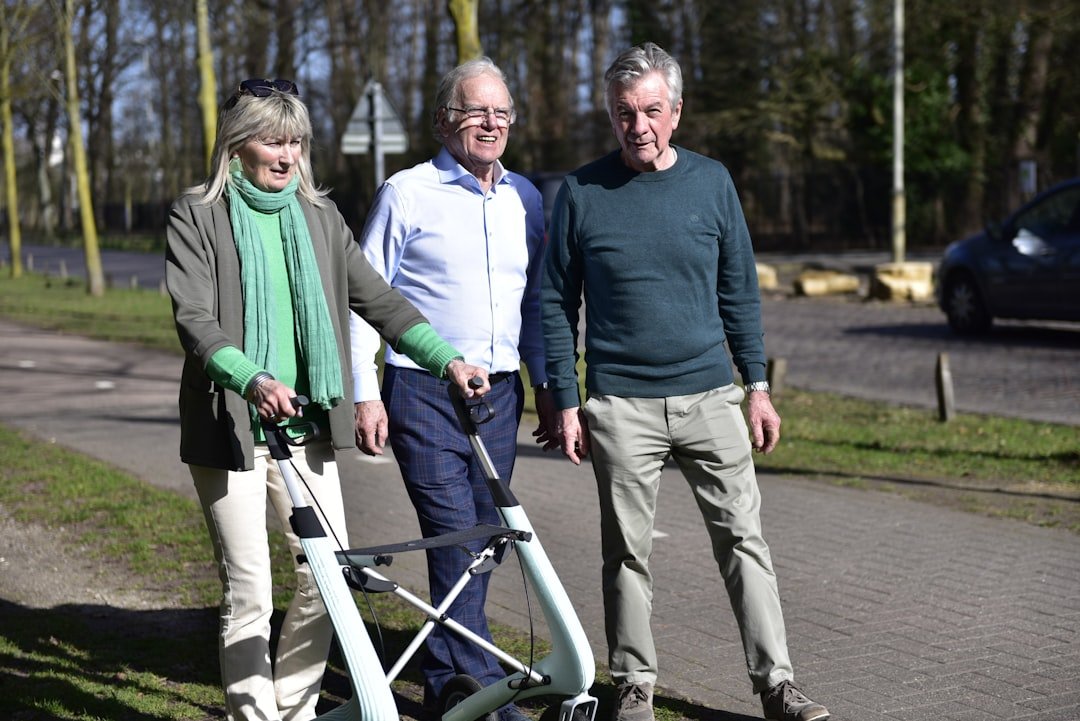
Your heart and lungs matter too. The goal is to find low-impact cardiovascular work that elevates your heart rate without hammering your knees, hips, and spine.
The best options for adults 50+:
- Walking — underrated, effective, and sustainable. Brisk walking for 30 minutes produces measurable cardiovascular and cognitive benefits. Start here if you’re returning from inactivity.
- Cycling — stationary or outdoor, excellent for cardiovascular fitness with minimal joint stress.
- Swimming — the best full-body, zero-impact option if you have significant joint issues. Expensive in terms of access, but worth it.
- Elliptical — gym-based, smooth motion, good alternative to running.
- Low-impact aerobics or dance-based movement — surprisingly effective, and the coordination demand adds cognitive benefit.
Flexibility and Mobility: Don’t Skip This
This is the category most people drop first and miss the most when their body starts to tighten up. After 50, maintaining range of motion in your hips, spine, shoulders, and ankles becomes critical for daily function. Tight hips affect your gait. Tight shoulders affect your posture. Limited spinal mobility affects everything.
Ten minutes of mobility work three to four times a week makes a larger difference to how you feel and move than almost anything else. Yoga, targeted stretching routines, and mobility flows all qualify. The key is consistency over intensity.
Your weekly template:
- 2–3 resistance training sessions (30–45 minutes each)
- 2–3 cardiovascular sessions (20–40 minutes each)
- Daily mobility work (10 minutes)
- At least one full rest day per week
Why Resistance Training Is the Foundation
Among all the forms of exercise recommended for adults over 50, resistance training stands out as the one with the widest and most significant impact. The reason is sarcopenia — the age-related loss of muscle mass that, left unaddressed, proceeds at 1 to 2 percent per year after 50 and accelerates after 60. Sarcopenia is not just a cosmetic concern. It is the underlying driver of reduced strength, compromised balance, increased fall risk, slower metabolism, insulin resistance, and reduced functional independence.
The good news is that it is among the most reversible age-related changes available. Muscle tissue responds to resistance training at any age, and the response in older adults, while somewhat slower than in younger populations, is still significant. Studies of adults in their 70s and 80s have demonstrated meaningful muscle and strength gains from progressive resistance programs within 12 weeks. The biological capacity does not disappear — it just requires more deliberate stimulation.
Practical resistance training for adults over 50 does not require a gym or heavy equipment. Resistance bands, bodyweight movements, and light dumbbells provide sufficient stimulus for most people starting out. What matters most is progressive overload — gradually increasing the challenge over time so the body continues to adapt. Staying at the same resistance forever produces initial gains that plateau within weeks. Adding slightly more resistance, more reps, or more sets over months keeps the stimulus ahead of the adaptation.
Walking: Underrated and Foundational
Walking gets undervalued in fitness conversations because it does not sound serious. It does not have the cultural cachet of running or lifting, and it is easy enough that people assume it cannot be doing much. The evidence says otherwise. Regular brisk walking is associated with reduced all-cause mortality, lower cardiovascular risk, improved glucose metabolism, preserved bone density (particularly in the hip), better mood, and reduced dementia risk — a health profile that matches or exceeds many more intense interventions when the comparison is made against a sedentary baseline.
For adults over 50 who are returning to activity after a long break, walking has another advantage: it has almost no injury risk at moderate intensity and pace. Joints can adapt to the load of walking without the acute stress risk of running or jumping. It can be done outdoors, which adds the well-documented mood and stress benefits of natural environments. It requires no equipment and no scheduling beyond the decision to go.
The target that appears most consistently in research as producing meaningful health benefit is 7,000 to 10,000 steps per day — roughly 3.5 to 5 miles depending on stride length. This does not need to be a single continuous walk. Accumulated throughout the day in shorter bouts, it produces comparable cardiovascular and metabolic benefit. A 15-minute morning walk, a 10-minute after-lunch walk, and a 20-minute after-dinner walk covers most of the target without requiring a single dedicated “exercise session.”
The Sustainability Question
The best workout for adults over 50 is the one they will actually do consistently over months and years. This sounds obvious but is regularly ignored in fitness advice that prioritizes optimization over adherence. An optimized program that gets abandoned after six weeks produces less benefit than a good-enough program maintained for two years.
Sustainability depends on enjoyment, convenience, social context, and alignment with personal values and life constraints. Some people find group exercise motivating and become consistent when they commit to a class schedule. Others prefer solitary activity where they control the pace and timing. Some people do well with structured programs and tracking; others feel constrained by them. The honest answer is that there is no single best approach — there is only the approach that fits the individual well enough that they keep doing it.
The practical implication: when choosing among exercise options, weight your preference and schedule fit heavily. Choosing the most evidence-backed protocol and hating it is a worse outcome than choosing the second-best protocol and looking forward to it. Start with what you enjoy. Build the habit. Then optimize within the habit you have built.
Balance and Flexibility: Often Overlooked, Increasingly Important
Falls are the leading cause of injury-related death in adults over 65 and account for enormous healthcare costs and loss of independence. The physical factors that contribute most to fall risk are reduced balance, slower reaction time, decreased lower body strength, and impaired proprioception — the body’s sense of where it is in space. All of these are trainable.
Balance training does not require specialized equipment or complicated protocols. Standing on one leg for 30 seconds per side, practiced daily, is a simple and effective intervention that has been shown to reduce fall risk in randomized controlled trials of older adults. Adding instability — closing your eyes, standing on a folded towel — increases the challenge progressively as balance improves. Tai chi, with its slow controlled movements and constant weight-shifting, has one of the strongest evidence bases of any intervention for fall prevention in older adults.
Flexibility training, particularly for the hip flexors, hamstrings, thoracic spine, and ankle, improves gait mechanics, reduces injury risk, and helps maintain the upright posture that makes all other movement more efficient. Stretching after exercise, when tissues are warm, is the most effective timing. Holding stretches for 30 to 60 seconds in the major muscle groups — rather than bouncing or brief holds — produces lasting changes in muscle length and joint range of motion over time.
Neither balance nor flexibility training is exciting. Neither will transform your physique or produce the visible results that motivate most people. But both are disproportionately important for the outcomes that matter most after 50: staying upright, staying independent, and staying active. Building them into the edges of your existing routine — a few balance holds during commercial breaks, a 10-minute stretch before bed — is enough to make meaningful progress without requiring dedicated sessions.
The research on fall prevention is particularly compelling: balance training performed three to five times per week for twelve weeks has been shown to reduce fall risk in older adults by up to 40 percent, with effects that persist over time with continued practice.
If this feels like too much to start, that’s fine. Start with less. The 5-Day Fit & Strong Reset gives you a structured entry point — free, just a resistance band, 20 minutes a day. Once you’ve completed it, you’ll have a feel for what your body needs and the confidence to build from there.