
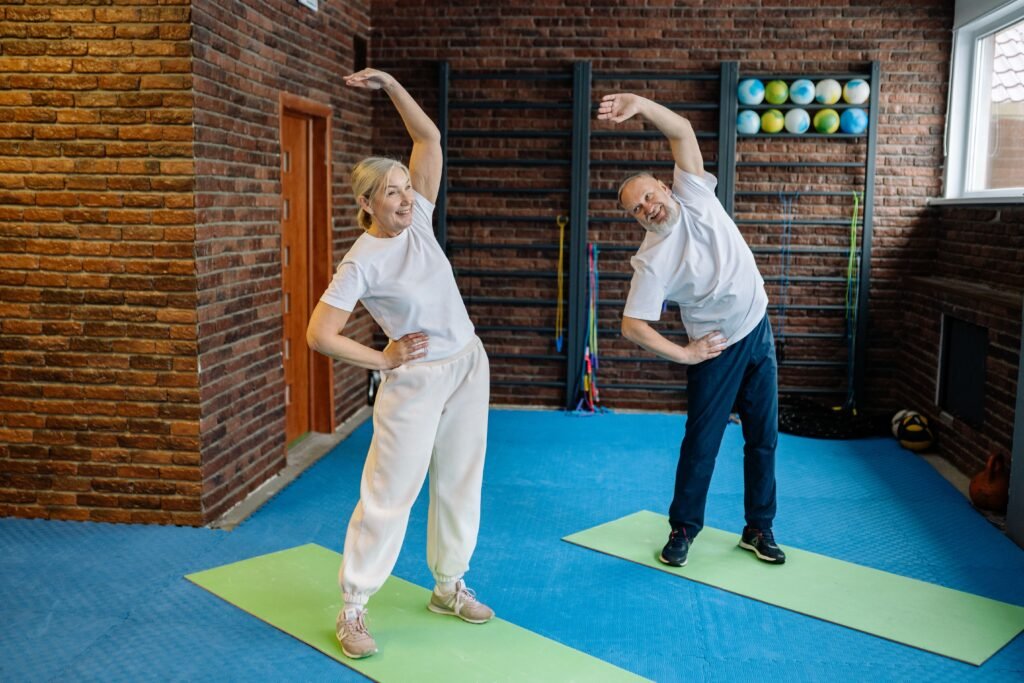
You know that feeling when you start a workout cold and your knees creak, your shoulders feel stiff, and nothing moves the way it should for the first ten minutes? That’s not just normal aging. That’s your body telling you it needed more time before you started loading it.
After 50, the warm-up isn’t optional. It isn’t a formality you get through before the real workout starts. For many of us, the warm-up IS the most important part of the session. Done right, it prevents injury, improves performance, and protects the joints that will carry you for the next 30 or 40 years.
Why Your Body Needs More Time After 50
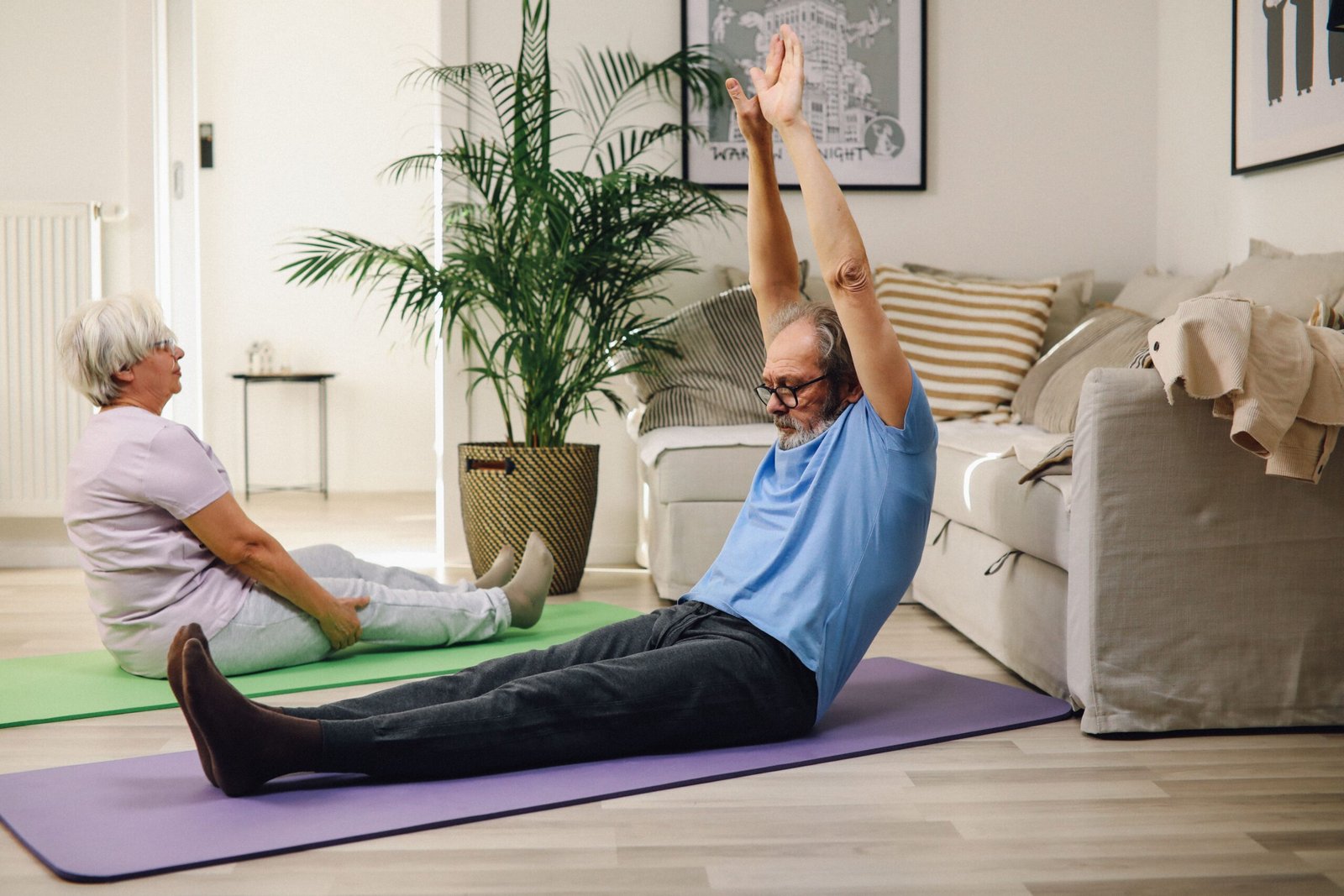
Several things slow down as we age. The production of synovial fluid — the lubricant inside your joints — decreases, and what remains is thicker and takes longer to distribute across the joint surface. Muscle tissue is less pliable at rest and takes longer to achieve optimal temperature for contraction. Tendons and ligaments are less elastic and more vulnerable to strain when cold.
A 25-year-old can roll out of bed and do a heavy squat. You and I cannot. The tissue hasn’t failed — it just requires more preparation. Athletes know this. Most recreational exercisers over 50 don’t — and that gap is where the injuries happen.
“The ten minutes you skip at the beginning of your workout will cost you ten days on the couch. The math is never in your favor.”
Dynamic Mobility vs. Static Stretching: Know the Difference

Most people were taught to warm up with static stretching — holding a stretch for 20–30 seconds. Research over the past two decades has consistently shown this is the wrong approach before exercise. Static stretching a cold muscle can temporarily reduce its force output and increase injury risk.
What works before a workout is dynamic mobility — controlled, active movement through a range of motion that gradually warms the tissue and prepares the nervous system.
Here’s a practical warm-up that takes under 10 minutes and prepares every major joint:
- Hip circles — standing, hands on hips, 10 large circles each direction
- Arm circles — forward and backward, small to large, 10 each direction
- Leg swings — front-to-back and side-to-side, 10 each leg, holding a wall for balance
- Bodyweight squats — slow, controlled, sitting back into the movement, 10 reps
- Hip hinges — soft knees, hinge at the hip, feel the hamstrings load and release, 10 reps
- Cat-cow — on hands and knees, 10 slow breath-linked repetitions
- Shoulder rolls and thoracic rotation — seated or standing, 10 each way
Save the static stretching for after your workout, when the tissue is warm and pliable. That’s when sustained stretches actually improve flexibility and aid recovery.
Making It a Non-Negotiable
The clients I’ve trained who never get injured are not necessarily the most fit. They’re the ones who never skip the warm-up. They’ve accepted that their body requires this, and they’ve built it into the routine so automatically that skipping it feels wrong.
If you’re just getting back into movement after months or years away, a proper warm-up also gives your nervous system time to adjust — to remember the patterns, to activate the stabilizing muscles that may have gone quiet, to prepare mentally for what’s coming.
What Your Body Is Actually Doing During a Warm-Up
A warm-up is not just a ritual or a cautious courtesy to your joints. It is a physiological preparation that changes the performance and safety of everything that follows. In the five to ten minutes of light movement before more intense activity, several things happen simultaneously: core body temperature rises, increasing the speed of nerve signal transmission and muscle contraction; synovial fluid in the joints becomes less viscous and covers the joint surfaces more completely; blood flow to working muscles increases as capillaries dilate; and the range of motion available in muscles and tendons increases as those tissues warm and become more pliable.
Cold, stiff tissue is more susceptible to strain than warm, pliable tissue. This is particularly relevant after 50 because the tendons and ligaments that stabilize joints lose some elasticity with age, and the synovial fluid that lubricates joints takes longer to distribute at rest. A cold start compresses all of these risks into the first few minutes of movement — exactly the period when you are asking your body to perform.
The type of warm-up matters as well. Static stretching — holding a stretch for 30 or more seconds — done before exercise has been shown in multiple studies to temporarily reduce muscle strength and power output. It is better suited to post-workout cool-down. Pre-workout warm-ups should be dynamic: movements that take joints through their full range of motion under light load, like leg swings, arm circles, hip circles, and light marching. Dynamic warm-up activates the muscles without the brief weakening effect of static stretching.
The Cool-Down: The Neglected Second Half
Most people skip the cool-down not because they doubt its value but because the session is over and the motivation to keep going has ended. This is understandable and also a mistake, particularly as you get older.
During exercise, your heart rate is elevated, blood is preferentially shunted to working muscles, and your cardiovascular system is under load. Stopping abruptly — walking off the field, sitting down immediately after a run, stepping off the treadmill and straight to the car — creates a rapid drop in blood pressure as the muscular pumping action that was helping return blood to the heart suddenly stops. This can cause lightheadedness, and in people with any cardiovascular risk factors, it is a genuine concern. A five-minute gradual tapering of activity allows the cardiovascular system to step down safely.
Post-exercise is also the optimal time for static stretching. Muscle temperature is at its peak, tissues are maximally pliable, and the psychological completion of the session creates space for slower, more deliberate movement. Five to ten minutes of holding stretches in the major muscle groups used — hamstrings, hip flexors, calves, chest, and shoulders — supports flexibility, reduces next-day soreness, and signals the nervous system that the work session has ended. For people who have trouble winding down physically in the evening, a proper cool-down is also a transition ritual that supports better sleep onset.
Making the Warm-Up a Non-Negotiable Habit
The most effective approach to warm-up consistency is to stop treating it as separate from the workout. It is not pre-workout — it is the first part of the workout. When you count the warm-up as part of your session time rather than as time subtracted from it, skipping it feels less like cutting a corner and more like skipping the beginning of something.
A five-minute dynamic warm-up before any exercise session is a realistic target. Leg swings, hip circles, shoulder rolls, gentle marching, and a minute of light aerobic movement — walking, stepping, or slow pedaling — covers the physiological bases without complexity. Having a set, brief routine you always do means no decision-making overhead, and the routine itself becomes a psychological on-ramp that signals to the brain that the exercise mindset is beginning. Over time, the warm-up becomes the cue for the session, and the session becomes habitual.
Joint-Specific Considerations for Warm-Up After 50
Certain joints deserve particular attention in a pre-exercise warm-up for adults over 50, because they are the most commonly symptomatic and the most dramatically affected by cold-tissue starts. The hips, knees, and shoulders are the primary ones.
Hip warm-up: the hip joint is a ball-and-socket with a wide natural range of motion that many people have lost through years of sitting. Before any lower body exercise, hip circles, leg swings (forward-back and side-to-side), and gentle squat-to-stand movements restore the available range and lubricate the joint. This is especially important before walking, cycling, or any leg resistance work.
Knee warm-up: the knee is a hinge joint with very little tolerance for twisting forces when cold. Straight-leg raises, mini squats, and gentle knee circles performed standing warm the tendons that cross the joint — the quadriceps, hamstrings, and IT band — and prepare the patellar tendon for load. People with knee arthritis or a history of meniscus issues benefit most from this preparation.
Shoulder warm-up: arm circles, band pull-aparts at light resistance, and controlled overhead reaches warm the four muscles of the rotator cuff and the surrounding musculature. Skipping shoulder warm-up before any pressing, pulling, or overhead movement is one of the most common injury triggers in gym settings for people over 50 — the supraspinatus tendon, already vulnerable after decades of use, is particularly sensitive to cold loading.
Spending 60 to 90 seconds on each of these areas before a session costs very little time. The payoff is measured in sessions completed without interruption — which is ultimately the variable that determines long-term results.
A body that trains consistently without injury accumulates far more total training volume over years than one that cycles through setbacks and recovery periods — and total accumulated volume is ultimately what drives long-term strength and mobility adaptation.
The 5-Day Fit & Strong Reset includes proper warm-up protocols built into every session. Every movement is designed with joint health in mind. If you’ve been putting off restarting your fitness because you’re not sure how to move safely — this is the starting point. It’s free, just a resistance band required, and every day takes about 20 minutes. Start there.