
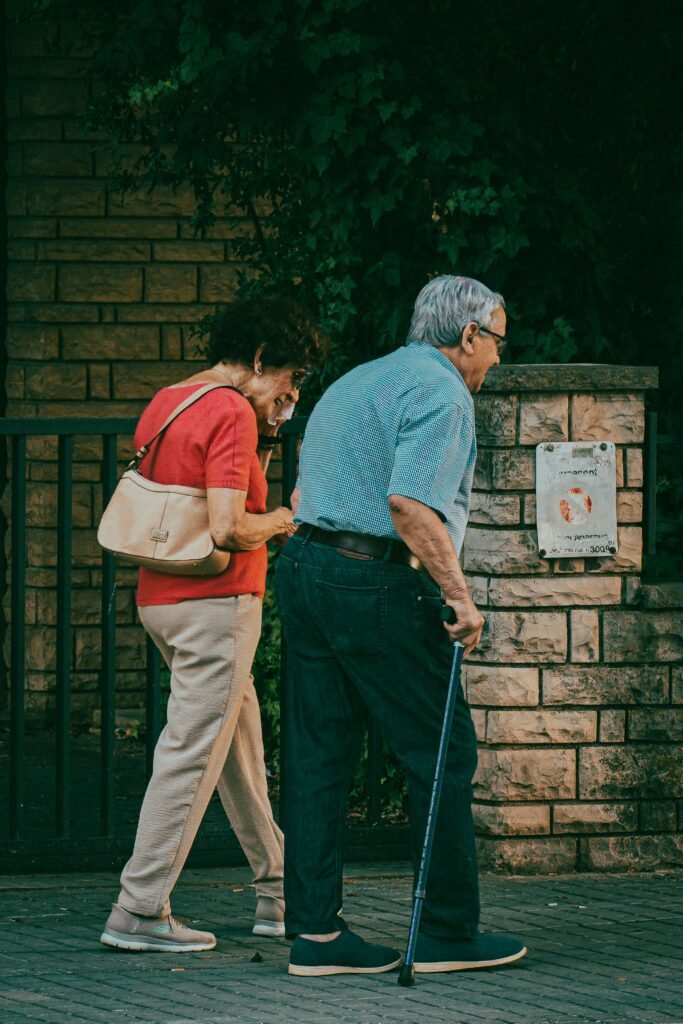
You just finished dinner. Your body is flooded with the carbohydrates you ate, your blood sugar is climbing, and your instinct is to sit down, relax, maybe watch some TV. That instinct is working against you.
There’s a simple, free, almost embarrassingly low-effort habit that can blunt that post-meal blood sugar spike more effectively than almost anything else you could do in that moment: walk. Not a run. Not a workout. A walk, for about ten minutes, starting shortly after you eat.
I’ve spent over 40 years in fitness, and I’ve watched people chase complicated fixes for blood sugar problems while ignoring the simplest lever they have. If you’re managing type 2 diabetes or pre-diabetes, or you’ve just been told your numbers are creeping in the wrong direction, this is one of the easiest changes you can make starting today.
I’m not a doctor, and nothing here replaces your treatment plan. But I’ve spent decades helping sedentary adults find the smallest possible change that produces the biggest possible result, and this one belongs near the top of that list for anyone dealing with blood sugar. It doesn’t ask you to overhaul your diet overnight or commit to an hour at a gym you don’t want to walk into. It asks you to stand up for ten minutes.
What Actually Happens When You Walk After Eating
When you eat, your digestive system breaks carbohydrates down into glucose, which enters your bloodstream. Your pancreas releases insulin to help move that glucose into your muscles and cells for energy. In type 2 diabetes, that process doesn’t work efficiently, so glucose lingers in the blood longer and rises higher than it should.
Here’s where walking comes in. When your muscles contract during movement, they can pull glucose out of your bloodstream directly, through a pathway that doesn’t rely entirely on insulin. Essentially, you’re giving your body a second door to move sugar out of your blood, one that works even when the insulin door is stuck.
A landmark 2016 study published in Diabetologia by researchers Reynolds, Mann, Williams, and Venn followed 41 adults with type 2 diabetes, average age 60, in a randomized crossover trial. Advice to walk for just 10 minutes after each main meal lowered post-meal blood sugar significantly more than advice to simply walk 30 minutes once a day, even though both groups technically met general activity guidelines. The effect was strongest after dinner, when the meal was largest and people were most likely to sit still afterward, with blood sugar dropping by roughly 22% in the three hours following the walk.
A 2023 systematic review and meta-analysis in Sports Medicine, led by Engeroff and colleagues, confirmed the pattern across multiple studies: exercise performed after a meal produces a meaningfully better blood sugar response than exercise done before eating or at some disconnected point in the day. Timing isn’t a minor detail. It’s the whole mechanism.
This is genuinely different from saying “exercise is good for you,” which you’ve heard a thousand times and which, frankly, doesn’t tell you anything actionable. This is specific: eat, then move, within about half an hour, for about ten minutes. It’s a precise enough instruction that you can actually follow it, and precise enough that researchers have been able to measure exactly how much it helps.

The only way to start when you’re not motivated is to do it anyway.
How to Actually Do This (It’s Simpler Than You Think)
You don’t need special shoes, a treadmill, or a fitness tracker. You need to stand up within about 30 minutes of finishing a meal and walk at a comfortable, sustainable pace for 10 to 15 minutes.
That’s genuinely it. A walk around the block, laps through your house or apartment, a stroll around the yard while you check on the garden. The specific location doesn’t matter. The timing does.
- Right after dinner, the meal that’s usually largest and eaten latest, is the single highest-value time to walk if you can only manage it once a day.
- If a full 10-minute walk isn’t realistic some days, even short movement breaks help. Research on postprandial exercise has found that a few minutes of walking every 30 minutes can be nearly as effective as one longer continuous walk.
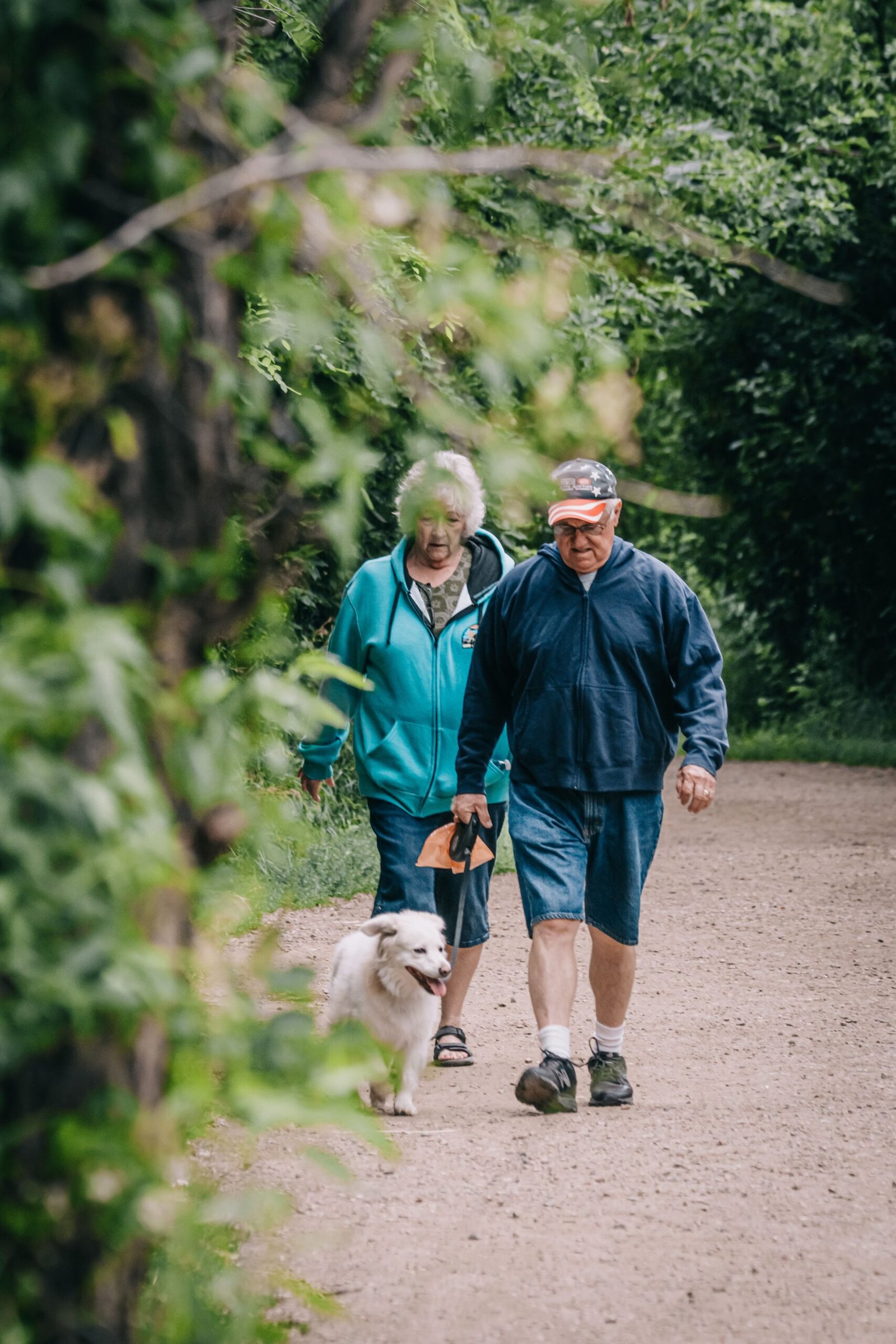
- Pair it with something you already do. Walk while on a phone call, walk the dog after dinner instead of before, walk while your favorite show is streaming on a phone or tablet in hand.
- Consistency beats intensity here. A comfortable pace done every day will do more for your numbers than an occasional intense walk done once a week.
If you use a continuous glucose monitor or check your blood sugar regularly, this is one of the most satisfying habits to test. Many people can watch, in real time, how a walk after a meal keeps a spike from climbing as high or as long as it would sitting still. That kind of direct feedback loop is powerful. It turns an abstract health goal into something you can actually see working, meal by meal, which makes the habit far easier to stick with than advice you’re just supposed to trust on faith.
Why This Matters More As You Get Older
Diabetes and pre-diabetes become dramatically more common with age, and the numbers are sobering. According to the CDC’s most recent National Diabetes Statistics Report, roughly 29% of adults 65 and older are living with diabetes, and more than half of that age group has pre-diabetes, often without knowing it.
Aging also brings changes that make blood sugar management harder on its own: muscle mass naturally declines, activity levels tend to drop, and insulin sensitivity decreases even in people without a diabetes diagnosis. That combination means the same slice of bread or bowl of pasta can spike your blood sugar higher at 60 than it did at 30.
The good news is that the post-meal walk works with your aging body instead of against it. It doesn’t require the joint stress of high-impact exercise. It doesn’t require a level of cardiovascular fitness you may feel you’ve lost. It meets you exactly where you are, which is the whole point. You don’t need to be an athlete to make your muscles pull glucose out of your blood. You just need to move them.
This also matters because of what unmanaged blood sugar does over time. Chronically elevated glucose contributes to nerve damage, vision problems, kidney strain, and cardiovascular disease, the kind of complications that quietly build for years before they show up as a diagnosis. Every walk you take after a meal is a small deposit against that future, even though you won’t feel the payoff immediately. That delay is exactly why so many people give up on habits like this before they’ve had a chance to work. Don’t be one of them.
This Isn’t a Replacement, It’s a Foundation
I want to be honest with you about what a post-meal walk can and can’t do. It is not a substitute for the medication your doctor has prescribed, and you should never adjust insulin or other diabetes medication based on anything you read in a blog post. Talk to your physician about how movement fits into your overall treatment plan.
What it is, is one of the highest-leverage, lowest-cost habits available to you. It costs nothing, requires no equipment, and stacks on top of whatever else you’re already doing, whether that’s medication, dietary changes, or a broader exercise routine. Small, boring, repeatable habits are what actually change long-term health outcomes. Not dramatic overhauls that burn out in three weeks.
It also pairs naturally with other changes you may already be trying to make. If you’re watching portion sizes, working on the glycemic load of your meals, or trying to get consistent sleep, the post-meal walk doesn’t compete with any of that. It stacks on top of it, quietly making everything else you’re doing work a little better.
Start tonight. After whatever you eat for dinner, stand up and walk for ten minutes. Do it again tomorrow. You don’t need to feel motivated to do it. You need to do it, and let the results build the motivation for you.
A post-meal walk is a great first step, but it’s just that: a first step. Building real, lasting strength and better blood sugar control usually means adding some form of regular resistance training on top of your daily walks. If you’re ready to build more consistent movement into your life beyond the post-meal walk, the free 5-Day Fit & Strong Reset is a beginner-friendly program that uses just a resistance band to get you moving safely, no gym required. Want a complete, structured plan? Check out Build Strong After 50, my 12-week strength program. Visit SilverFitPlus.com to start with whichever fits your life right now, and start turning today’s ten-minute walk into a habit that carries you forward.
Sources
- Reynolds AN, Mann JI, Williams S, Venn BJ — “Advice to walk after meals is more effective for lowering postprandial glycaemia in type 2 diabetes mellitus than advice that does not specify timing: a randomised crossover study” — Diabetologia, 2016 — https://link.springer.com/article/10.1007/s00125-016-4085-2
- Engeroff T, Groneberg DA, Wilke J — “After Dinner Rest a While, After Supper Walk a Mile? A Systematic Review with Meta-analysis on the Acute Postprandial Glycemic Response to Exercise Before and After Meal Ingestion” — Sports Medicine, 2023 — https://link.springer.com/article/10.1007/s40279-022-01808-7
- Centers for Disease Control and Prevention — National Diabetes Statistics Report — 2024/2026 update — https://www.cdc.gov/diabetes/php/data-research/index.html