

You have been trying. You swapped the soda for juice, the butter for the ‘heart-healthy’ spread, the pastry for a bowl of instant oatmeal and a banana. You read the front of the box, saw the word ‘natural,’ and felt good about it.
Then your meter, or your doctor, tells you your numbers are still climbing. If that sounds familiar, I want you to hear this first: it is not because you are failing. It is because the food world is very good at making products sound healthier than they behave inside your body.
I am not a doctor, and nothing here replaces your own medical team. But after more than 40 years in fitness and a lot of years of helping people over 50 sort through bad advice, I can tell you this. Knowing which foods spike your blood sugar fastest, and which ones only pretend to be healthy, is one of the most useful things you can learn.
Why Some Foods Hit Your Blood Sugar Like a Freight Train
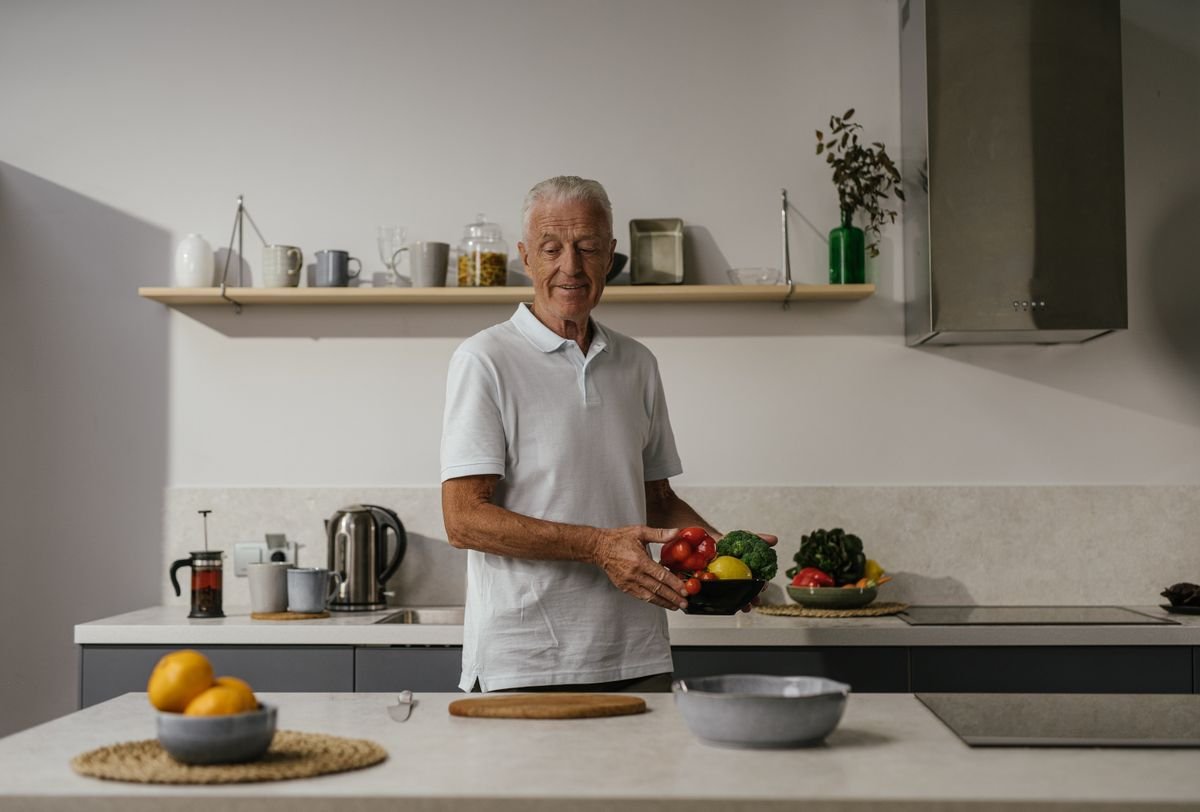
When you eat, your body breaks carbohydrates down into glucose, and glucose enters your bloodstream. How fast that happens depends on the type of carbohydrate, how processed it is, and what else is on the plate with it.
Fast-digesting carbohydrates, especially refined starches and sugars in liquid form, arrive in your blood quickly. Your pancreas has to release a surge of insulin to keep up. If you have prediabetes or type 2 diabetes, your cells respond poorly to that insulin, so the glucose lingers and your numbers rise higher and stay up longer.
Fiber, protein, and fat slow this process. That is why an apple and a glass of apple juice, though they start from the same fruit, can behave very differently once they are inside you. One comes packaged with fiber that slows things down. The other mostly does not.
There is also a timing effect worth knowing about. A carbohydrate-heavy meal eaten on an empty stomach, with nothing to slow it down, tends to push glucose up faster than the same food eaten as part of a mixed meal. That is one reason a bowl of plain cereal can hit harder than a plate with eggs, vegetables, and a slice of toast.
None of this means you must give up carbohydrates. Your body needs fuel, and plenty of carbohydrate-containing foods, like beans, berries, and whole grains, are good for you. The goal is to choose them wisely, not to fear them.
I covered the glycemic index in a separate article, so I will not repeat the whole system here. Today I want to focus on the practical question: which everyday foods and drinks should you watch most closely?
You cannot fix what you cannot see. Learning which foods push your numbers up is the first real step toward taking control.
The Usual Suspects, and the Disguised Ones

Some culprits are obvious. Regular soda, sweet tea, sports drinks, candy, and pastries all deliver a lot of fast sugar. But the sneaky ones are the foods that wear a health halo.
Here are the ones I see trip people up the most:
- Sugary drinks of every kind. This is the single clearest offender. A large analysis published in the BMJ in 2015 by Imamura and colleagues pooled data from many studies. It found that each daily serving of a sugar-sweetened beverage was linked to an 18% higher incidence of type 2 diabetes before adjusting for body weight, and 13% after.
- Fruit juice, even the 100% kind. In that same BMJ analysis, juice showed a smaller link, about 7% higher incidence after adjusting for body weight, but the authors rated that evidence as low quality and unstable across study types. The honest takeaway: juice is not proven to be as harmful as soda, but it still delivers sugar without much fiber to slow it down. Whole fruit is the safer choice.
- Instant and flavored oatmeal. Plain oats are a solid food. The single-serve packets loaded with sweeteners and quick-cooked into mush are a different animal.
- White bread, bagels, and ‘wraps.’ A giant bagel can carry the carbohydrate load of several slices of bread. Many wraps are not much better.
- Granola and ‘healthy’ cereals. Many are essentially dessert with a wholesome label. Check the sugar line.
- Low-fat packaged foods. When manufacturers pull the fat, they often add sugar or starch to keep the taste. ‘Low-fat’ does not mean ‘low-spike.’
- Dried fruit and fruit smoothies. The fiber is partly broken down, the portion shrinks, and it is easy to eat far more sugar than you would ever eat as whole fruit.
One more thing about that list. If you have been drinking juice thinking it was the responsible choice, please do not feel foolish. The marketing is built to make you think exactly that. You were doing what the box told you to do. Now you simply know more.
Notice that artificial sweeteners are not on the list as a free pass either. The same BMJ analysis found artificially sweetened drinks were linked to higher diabetes incidence before adjustment, but the link shrank to 8% after accounting for body weight, and the authors flagged the evidence as low quality and prone to bias. The science there is unsettled. I would not call diet soda a health food, but I would not panic over it either.
Here Is the Twist: Your Body Is Not Your Neighbor’s Body
One of the most eye-opening studies on this topic came out of the Weizmann Institute of Science in Israel. Zeevi and colleagues, publishing in the journal Cell in 2015, monitored the blood sugar of around 800 people and found something striking. Different people had very different blood sugar responses to the exact same foods.
In other words, a food that barely moved one person’s glucose could send another person’s sky-high. Factors like gut bacteria, lifestyle, and individual physiology all played a part. The researchers even built a model that could predict personal responses better than simply counting carbohydrates or calories.
What does that mean for you? It means generic food lists are a starting point, not the final word. The best test is your own body. If you have a glucose meter or continuous monitor from your doctor, check your numbers one to two hours after a meal. If you do not, ask your doctor whether testing makes sense for you.
If you want to run your own two-week experiment, here is a simple way to do it. Pick one breakfast you eat often. Test your blood sugar before the meal and again about two hours after. Write the numbers down. Then change one thing, such as swapping the juice for water or adding eggs, and test again a few days later. You are not chasing perfection. You are collecting evidence.
Do this with your doctor’s guidance, especially if you are on medication. They can tell you what range to aim for and when a number deserves a phone call.
A food that spikes your numbers might be perfectly fine for your friend, and the reverse is also true. Your data beats anyone’s rulebook, including mine.
Five Moves That Blunt the Spike Without Giving Up Food
The good news is that you do not have to live on boiled chicken and sadness. You can often tame a food’s effect with a few smart habits:
- Swap the drink first. If you change only one thing, change what you drink. Water, sparkling water, unsweetened tea, and black coffee do not raise your blood sugar the way soda and juice do.
- Pair carbs with protein, fiber, or healthy fat. Eat the bagel with eggs, the fruit with a handful of nuts, the oatmeal with Greek yogurt and nuts. The extra company slows digestion.
- Choose whole over processed. Steel-cut or old-fashioned oats over instant. Whole fruit over juice. Beans, lentils, and intact whole grains over refined starches.
- Watch the portion, not just the food. Even a decent carbohydrate eaten in a huge portion can send your glucose soaring.
- Move after you eat. A short walk after a meal helps your muscles pull glucose out of the blood. Ten minutes counts.
Read labels with a skeptical eye. Look at ‘Total Carbohydrate’ and ‘Added Sugars,’ not the claims on the front of the package. Words like ‘natural,’ ‘wholesome,’ and ‘made with real fruit’ are marketing, not nutrition.
And if you take diabetes medication, especially insulin, talk to your care team before making big changes to what you eat. Your doses may need to be adjusted as your habits improve.
It also helps to remember that blood sugar is not only about food. Sleep, stress, and movement all move the needle too, and I have written about each of them. If one meal goes badly, it does not erase your progress. Look at the pattern over weeks, not the number from a single bad afternoon.
Here is my honest encouragement. You do not need to overhaul your whole kitchen this week. Pick one thing: the drink, the breakfast, the snack. Change that one thing for two weeks and see what happens to your numbers. Small, specific wins beat sweeping resolutions every time, and your body responds faster than you might expect.
I came back to training after years away, and I learned that progress after 50 rarely comes from dramatic gestures. It comes from stubborn, ordinary choices repeated until they are simply how you live. Your food choices work the same way.
Food is only half the battle. Muscle helps your body handle blood sugar, and you can build it at home. Grab my free “5-Day Fit & Strong Reset,” a beginner-friendly PDF that uses a simple resistance band. Ready for a complete, structured plan? Check out Build Strong After 50, my 12-week strength program. Visit SilverFitPlus.com to get started.
Sources
- Imamura, F., et al. — “Consumption of sugar sweetened beverages, artificially sweetened beverages, and fruit juice and incidence of type 2 diabetes: systematic review, meta-analysis, and estimation of population attributable fraction” — BMJ, 2015 — https://www.bmj.com/content/351/bmj.h3576
- Zeevi, D., Korem, T., Zmora, N., et al. — “Personalized Nutrition by Prediction of Glycemic Responses” — Cell, 2015 — https://www.weizmann.ac.il/immunology/elinav/personalized-nutrition-prediction-glycemic-responses