
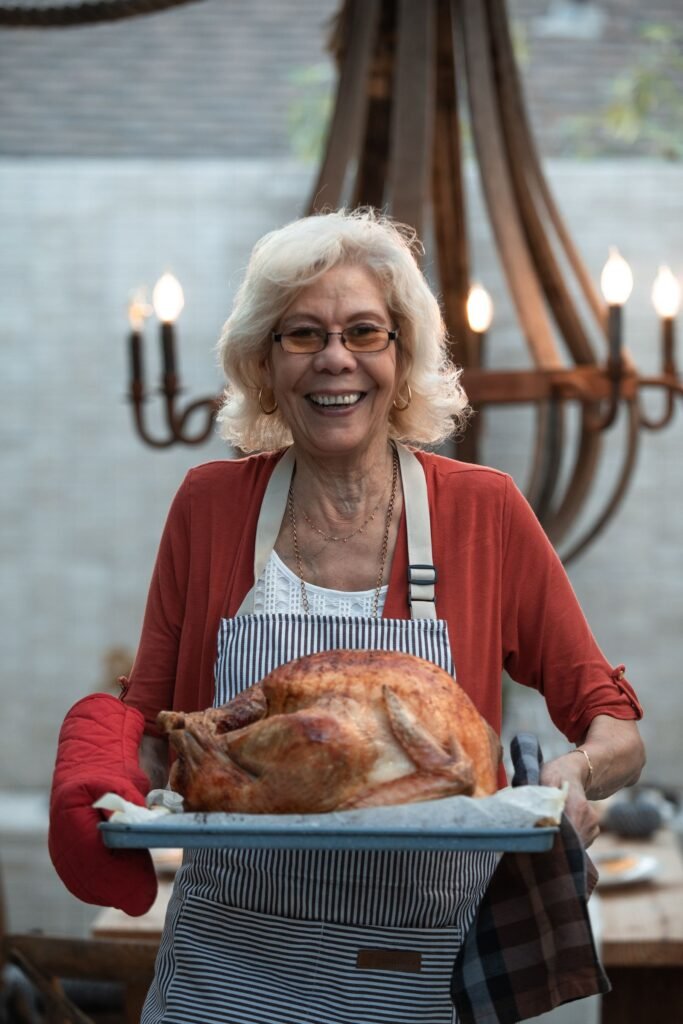
Thanksgiving is ten days away. If you’re over 50 and you’ve been meaning to “get back on track” for a while now, there’s a good chance you’ve already made a quiet deal with yourself: I’ll start after the holidays.
I know that deal. I’ve made it myself. And I want to talk you out of it, not by taking the pie off your plate, but by showing you what the research says actually happens between now and New Year’s Day.
Here’s the short version. The holidays aren’t dangerous because of one big meal. They’re dangerous because of what they quietly lock in. Once you understand that, you can enjoy every bite of Thursday and still walk into January stronger than you are today.
The Holiday Weight Myth, and the Part That’s True
You’ve probably heard that the average person gains five to ten pounds over the holidays. That number gets repeated every November, and it’s wrong.
Researchers at the National Institutes of Health tested it. In a study published in the New England Journal of Medicine, Jack Yanovski and his team weighed 195 adults before Thanksgiving, after New Year’s, and again later in the year. The average holiday gain was less than one pound, and fewer than 10% of people gained five pounds or more.
So that’s the good news. Here’s the part that matters. When the researchers followed people for a full year, that holiday pound didn’t come back off. It stuck. About half of the weight people gained over the entire year was put on during those six weeks.
One pound doesn’t sound like much. But do the math over ten or fifteen holiday seasons. That’s the slow creep so many people over 50 can’t explain. Nobody ever ate their way into it in one sitting. It was a pound here and a pound there, never given back.
And after 50, the pound that arrives while you’re sitting more, walking less, and eating less protein isn’t a neutral trade. You’re not just adding a little. You’re often swapping strength for softness at the exact age when muscle gets harder to rebuild.

Build Your Holiday Plate Around Protein, Not the Rolls
I’m not going to tell you to skip the stuffing. I’ve sat at enough holiday tables to know that advice gets ignored by the second helping, and it should. Food is part of how families show love.
What I am going to tell you is to change the order of operations. Make protein the anchor of the plate, and let everything else fill in around it.
Here’s why that matters at our age. An international expert panel called the PROT-AGE Study Group reviewed the evidence on protein and aging and concluded that older adults need more than the standard recommendation. Their target was at least 1.0 to 1.2 grams of protein per kilogram of body weight per day for healthy older people, and more for those who are ill or very inactive.
For a 170-pound person, that works out to roughly 77 to 93 grams of protein a day. Most people over 50 don’t get close, and holiday eating makes it worse. The typical Thanksgiving plate is mostly potatoes, bread, stuffing, casseroles, and dessert, with turkey as a side dish.
And not every family table centers on turkey. Maybe yours has ham, roast pork, tamales, fish, or a big pot of beans and rice. The rule is the same. Find the protein on the table, put it on your plate first, and build out from there.
The fix is simple, and it doesn’t require willpower so much as a plan:
- Serve the turkey (or ham, or fish) first, and give yourself a palm-sized portion or a little more before anything else goes on the plate.
- Add a vegetable you actually like next. Green beans, roasted Brussels sprouts, a salad, whatever your family makes.
- Then take the sides you love most, and skip the ones you’re only eating because they’re there.
- Eat your protein and vegetables first, before the bread and the sweet potatoes. You’ll feel fuller sooner, and you’ll still get every flavor you came for.
- Save the dessert you really want. One slice of the pie your sister makes beats three cookies from a store-bought tray.
None of that is dieting. It’s just deciding what matters before the serving spoons start moving. If you want the deeper dive on daily protein, I wrote about the protein mistake most people over 50 make earlier this year.
One meal never made anyone weak or soft. It’s the six weeks of “I’ll start in January” that does the damage.
The Real Danger Zone Is the Six Weeks, Not the Thursday
Thanksgiving is one day. The holiday season is closer to six weeks. It’s the leftovers on Friday, the cookie tins at work, the parties, the late nights, the cold mornings when the couch wins. That’s when routines fall apart.
Researchers who study holiday weight have noticed something else. The people who come through the season in good shape usually aren’t the ones with iron discipline. They’re the ones who kept a few small habits going when everything else got busy.
So instead of a big holiday diet, pick two or three anchors and protect them no matter what:
- Eat a real breakfast with protein on Thanksgiving morning. Eggs, Greek yogurt, cottage cheese. Showing up to the table starving is how plates get piled high.
- Plan the leftovers. Turkey, vegetables, and a modest scoop of sides makes a good lunch. Pie for breakfast three days in a row does not.
- Weigh yourself once a week through the season, same day and time. Not to punish yourself, just to catch a creeping pound early, while it’s easy to reverse.
- Go easy on holiday drinks. Alcohol adds calories, dulls the brakes on eating, and wrecks sleep, and poor sleep makes the next day’s food choices worse.
If you live alone or you’re traveling, the same anchors apply. You can’t control what someone else serves, but you can control the breakfast before you leave, the walk after you eat, and what you bring home in the to-go container.
Notice that none of this asks you to be perfect. It asks you to stay in the game. Being in the game for six weeks beats being perfect for two days and then giving up.
Move Before You Eat, and Move After You Eat
Here’s where I get to be a trainer and not just the guy reading research papers. Food is only half of this. What you do with your body around the meal matters just as much.
Muscle is the tissue that soaks up the energy from a big meal. The more of it you use, the better your body handles the food. That’s why I want you doing two things this Thanksgiving.
First, train in the morning. Not a punishing workout. Fifteen or twenty minutes with a resistance band: some squats to a chair, band rows, wall push-ups, and a few glute bridges. You’ll go into the meal having told your muscles they still have a job, and that protein on your plate will have somewhere useful to go.
Second, walk after you eat. Even ten minutes. Get the family out the door, grandkids included, before the football game. I’ve written about why the post-meal walk works so well for blood sugar, and the holiday table is the best place I know to put it to use.
I learned the hard way what happens when you stop moving. I trained from the age of 14, then bilateral shoulder arthritis and torn rotator cuffs shut me down in my 40s, and I stopped for years. By my early 60s I was dealing with sarcopenia, the age-related loss of muscle. I didn’t lose that strength in one bad meal or one bad week. I lost it one skipped season at a time.
Coming back meant finding pain-free angles and starting small. It also meant letting go of the idea that I needed the perfect moment. There’s never a perfect moment, especially not between Thanksgiving and New Year’s.
Don’t Wait for January
Every year, millions of people decide to start after the holidays. And every January, the gyms fill up and empty out again by February. The people who make it aren’t the ones who started on January 1st. They’re the ones who never stopped in November.
You don’t have to give up the turkey, the pie, or the time with the people you love. You just have to keep a few promises to yourself while you enjoy it. Protein first. A walk after. A short workout in the morning. That’s it.
Will you feel motivated on the morning of Thanksgiving? Maybe not. That’s fine. As I always say, the only way to start when you’re not motivated is to do it anyway.
Start Your Comeback Today
Want a simple plan to carry you through the holidays? Grab my FREE 5-Day Fit & Strong Reset. It’s a beginner-friendly PDF built for adults over 50 who are starting from scratch. All you need is a resistance band and about 20 minutes a day, which makes it perfect for a busy holiday week. Visit SilverFitPlus.com to download it today.
If you’re already comfortable in a gym and want a complete plan for the new year, take a look at Build Strong After 50, my 12-week strength program for people whose joints have some miles on them.
Free 5-Day Guide
Get the Free 5-Day Fit & Strong Reset
A joint-safe, beginner-friendly start for adults over 50. Enter your email and the guide goes straight to your inbox.
No spam. Unsubscribe anytime.
Sources
- Yanovski JA, Yanovski SZ, Sovik KN, et al. — “A Prospective Study of Holiday Weight Gain” — New England Journal of Medicine, 2000;342:861-867 — https://pubmed.ncbi.nlm.nih.gov/10727591/
- Bauer J, Biolo G, Cederholm T, et al. (PROT-AGE Study Group) — “Evidence-Based Recommendations for Optimal Dietary Protein Intake in Older People: A Position Paper From the PROT-AGE Study Group” — Journal of the American Medical Directors Association, 2013 — https://pubmed.ncbi.nlm.nih.gov/23867520/
- American Institute for Cancer Research — “Holiday Weight Gain: Exploring the Nuance” — AICR Blog (review of holiday weight gain studies) — https://www.aicr.org/resources/blog/holiday-weight-gain-exploring-the-nuance/